
Augusta Savage... The Voice of the Black Woman in American Art
Augusta Savage, a twentieth-century artist, combined creativity with confronting social challenges. Linked to the Harlem Renaissance, her works reflected identity, African American culture, and art's role in society.
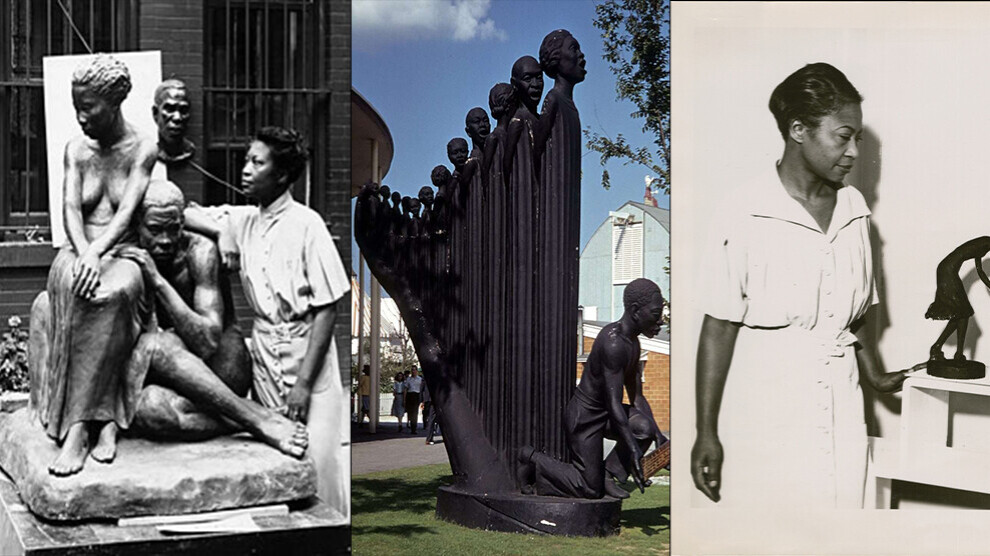
News Center – Augusta Savage is considered one of the most prominent African American sculptors of the twentieth century. Her name is linked to the "Harlem Renaissance," the cultural movement that flourished in New York during the first decades of the twentieth century.
Augusta Savage's contributions were not limited to sculpture; she also worked in the field of art education and contributed to providing opportunities for Black artists, especially youth and women.
Augusta Savage, who was born in Florida in 1892, began shaping clay since her childhood despite her father's opposition. She later moved to New York, where she studied art at Cooper Union, and began in the 1920s working on sculpting busts, including works of African American figures.
Augusta Savage faced racial and professional discrimination during her career. In 1923, she was denied an opportunity to study in an art program in France because of her skin color. But she continued her path, and later obtained a scholarship that allowed her to study in Paris and display her works there.
One of her most famous works is "Gamin," a bust of a Black child she completed in 1929. The child appears in simple clothing with features combining innocence and seriousness. The work gained wide fame, appeared on the cover of "The Crisis" magazine, and is viewed as an example of Augusta Savage's interest in presenting Black figures in a human image far from stereotypes.
Her most famous work is "The Harp," whose original title was "Lift Every Voice and Sing," which she completed for the New York World's Fair in 1939. Augusta Savage drew inspiration for the work from the anthem bearing the same name and depicted a group of Black singers in a formation resembling the strings of a harp.
She also took an interest in the role of women and Black artists in cultural life, founding the "Savage Studio of Arts and Crafts" in Harlem.
Augusta Savage died in 1962, but her legacy transcended the works she left behind. She contributed to changing the presence of African American artists in art institutions and linked creativity, education, and defending artists' right to access opportunities.