
Iraqi Athlete Malak Al-Taie: A Will That Forged the Title of “Strongest Arab Woman”
From cycling in a conservative society, Malak Al-Taie defied norms to become a champion coach and athlete, symbolizing Iraqi women's strength and determination.
RAJAA HAMID RASHID
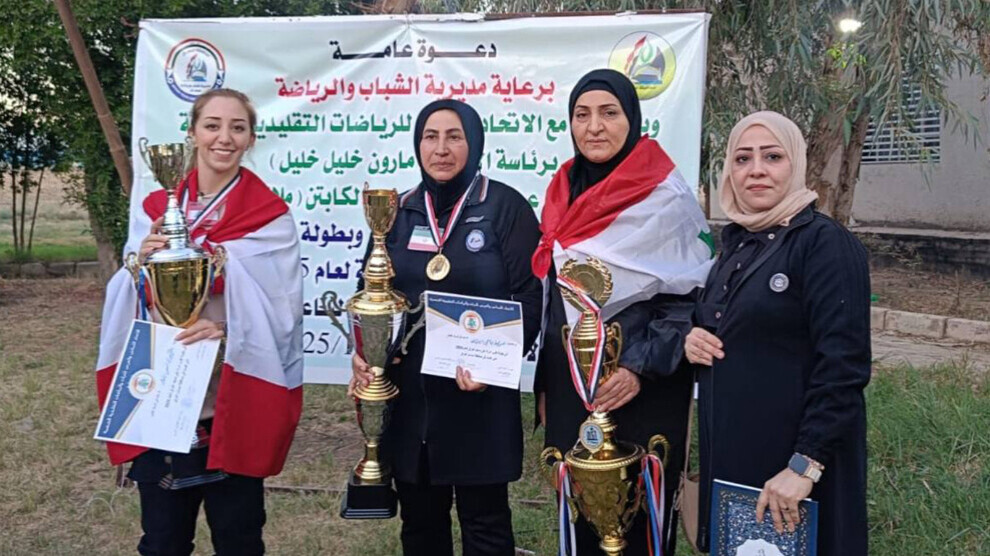
Iraq — Iraqi athlete Malak Al-Taie, from the city of Amara in southern Iraq, managed to carve an exceptional path in the world of women's sports, defying social constraints and weak institutional support, to become one of the most prominent female sports figures in the country and to be crowned with the title of "Strongest Arab Woman" in strength sports.
Malak Al-Taie's beginnings go back to her middle school years, when she practiced various school sports activities. However, her passion for sports began even earlier through cycling. Although cycling for girls was considered unusual in the tribal environment of Amara, that did not prevent her from continuing her hobby and participating in various sports activities.
Defying Customs
Malak Al-Taie says: "I loved cycling and used to go out at night to ride around and challenge the wind. I did not allow social customs to stand as a barrier to my ambition." She added that she later turned to basketball, achieving notable results in school tournaments, before marrying a professional basketball player at the age of sixteen, which further strengthened her connection to sports and her continued practice for many years.
Later, she opened a women's sports hall in Amara, from which a new phase in her sports career began. There, she discovered kabaddi—a popular sport with roots in South Asian countries, particularly India, which later evolved into an internationally recognized competitive sport.
Arab Achievements
Malak Al-Taie noted that she founded the "Maysan" women's kabaddi team, which included seven players, and took on the role of coach. She also worked as a coach for the national women's team at both local and national levels. She led her team to participate in tournaments within Iraq and abroad, including Lebanon and Iran, achieving advanced positions, including third place locally with the "Maysan" team, third place in a tournament held in Iran, and second place in a tournament held in Lebanon.
However, the path was not easy, as she faced great difficulties in convincing families to allow their daughters to participate in sports. She recounts: "I used to visit families personally and introduce myself and my family so they would feel reassured about their daughters. When traveling outside the province, I would sign written pledges taking full responsibility for the players."
Limited Resources and Weak Support
Malak Al-Taie explained that she encountered weak material and moral support from sports federations, which led her to step away from official competitions for a period of time. She affirmed that she personally bore the costs of many international participations and sometimes had to make personal sacrifices to secure the team's requirements.
She noted: "During my management of the women's sports hall, I began organizing internal competitions in strength sports and weightlifting with symbolic prizes, and I noticed increasing interest from women in this type of competition. The turning point came when I received an invitation to participate in a women's strength sports tournament in Lebanon. There, I succeeded in winning first place from my first participation, followed by Arab and international achievements."
She later joined the Arab Federation for Popular and Heritage Games as a representative of Iraq, contributing to the inclusion of a number of Iraqi popular games within its activities. She also participated in preparing programs and committees concerned with women's popular and heritage sports across the Arab world.
Her achievements did not stop at Lebanon; she won consecutive titles in tournaments held in Tunisia, Iran, and Iraq, maintaining the title of "Strongest Arab Woman" for four consecutive years. She was also crowned again during the eleventh edition of the "Strongest Arab Woman" tournament hosted by Amara, with the participation of representatives from seven Arab countries.
Future Ambitions
Malak Al-Taie described that experience, saying: "We faced a shortage of some equipment for popular games practiced in other Arab countries, so we manufactured them locally at our own expense." She affirmed that her family was her greatest support throughout her journey, in the absence of official support, adding that her love for sports gave her the ability to balance her various roles as an athlete, coach, business owner, and mother.
Today, she is preparing for a new challenge by participating in an upcoming tournament in Malaysia, with her sights set on achieving a new title to add to her record of accomplishments.
Malak Al-Taie concludes by saying: "Iraqi women are strong and capable of achieving a great deal despite customs, traditions, and challenges. What I have achieved so far is not the end of the road—I still have many ambitions and goals I am striving to reach."