
Chess Champion Overcomes Challenges and Carves Her Path to International Tournaments
From a curious child to an African champion, Egyptian chess player Joy Romani’s inspiring journey combines talent, passion, determination, and unwavering family support.
IMAN SAMIR ALI
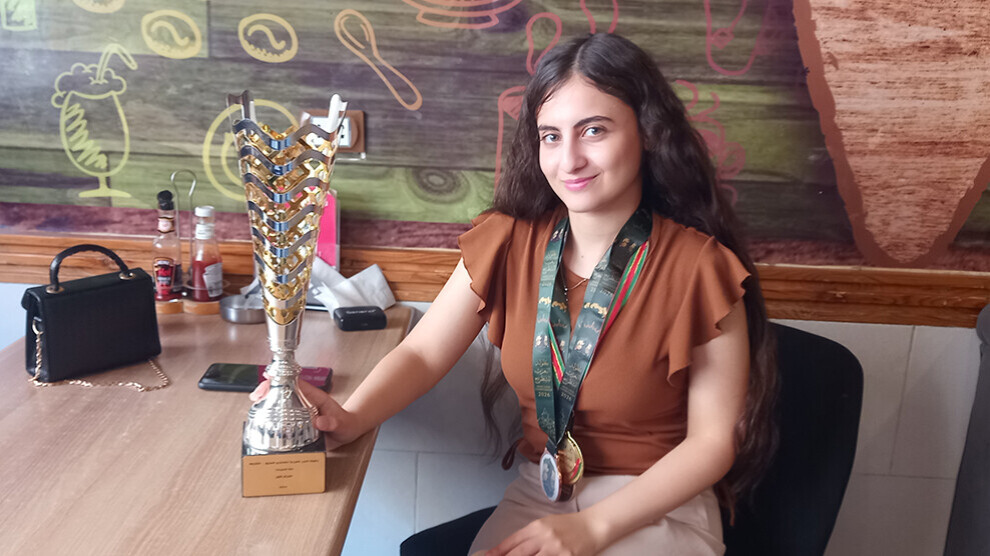
Egypt_ At just 17 years old, Egyptian chess player Joy Romani has made a prominent name for herself in the world of chess, achieving a number of championships and titles at both the Arab and African levels, despite the difficulties she faced in her early years—especially the limited availability of chess and its tournaments in Upper Egypt.
Joy Romani began her relationship with chess at an early age, after watching her parents play. Her father soon taught her the basics and quickly noticed her ability to grasp and learn quickly, moving her from simply learning the rules to competing in tournaments.
She says that at the age of seven, she participated in the national championship and won first place, qualifying for the African Championship, where she achieved fourth place in her first participation. Although the result was not satisfactory for her, it became a turning point that pushed her to intensify training and work on developing her level, later enabling her to win first place in the African Championship twice.
Joy Romani emphasizes that her choice of chess was not related to being a girl, noting that thinking and competitiveness do not differ between males and females—what matters is what the player can offer on the board.
She Tried Multiple Fields
Before settling on chess, she tried various fields, including painting, music, piano, and theater acting. She also won first place nationally in painting twice. However, chess was where she found her true passion, especially for the competition and the constant challenge it offers.
Joy Romani says what attracted her most to chess was facing strong players and trying to overcome them, along with learning how to handle defeat and move past it, considering that loss is an essential part of any player's journey toward development.
She faced an additional challenge in the limited availability of chess and its tournaments in Upper Egypt during her early years. She could not easily find training places or local tournaments to participate in, which forced her to travel frequently to Cairo to compete and train.
The long journeys were challenging for a young child; some trips took about seven hours by train to Cairo, and up to ten hours when traveling to Port Said. Travel also meant being away from her family for periods, which sometimes made her think about stopping.
Family Support Was a Crucial Factor
But family support was crucial to her continuation. Her father accompanied her on tournament trips and encouraged her to keep going, while her mother, sister, and grandmother played an important role in her psychological support, especially after difficult losses.
Joy Romani explains that her father focused primarily on the technical side and training, while her mother, sister, and grandmother were her emotional support—something that significantly helped her overcome moments of frustration and collapse after losing some decisive matches.
She believes that success in chess does not depend solely on technical skill; a player also needs a great ability to control emotions and handle pressure and loss.
Her experience reveals that the path to championships is not without difficult moments, and that having family by a player's side can be essential to their continuation, especially when loss comes after long effort and high expectations.
Today, Joy Romani continues her chess career, carrying with her a journey that began in Upper Egypt, overcoming the scarcity of tournaments, travel difficulties, and psychological challenges to compete at the Arab and African levels and achieve various medals and accomplishments—proving that passion, support, and determination can turn a small talent into a promising athletic career.