With different programs… a remarkable women’s presence in Algeria’s local elections
Algeria’s local elections see over 19,000 female candidates with diverse qualifications presenting economic and social programs supporting women and local developemt, facing the deletion mechanism challenge to prove worthiness be beyond quotas.
RABAA KHREIS
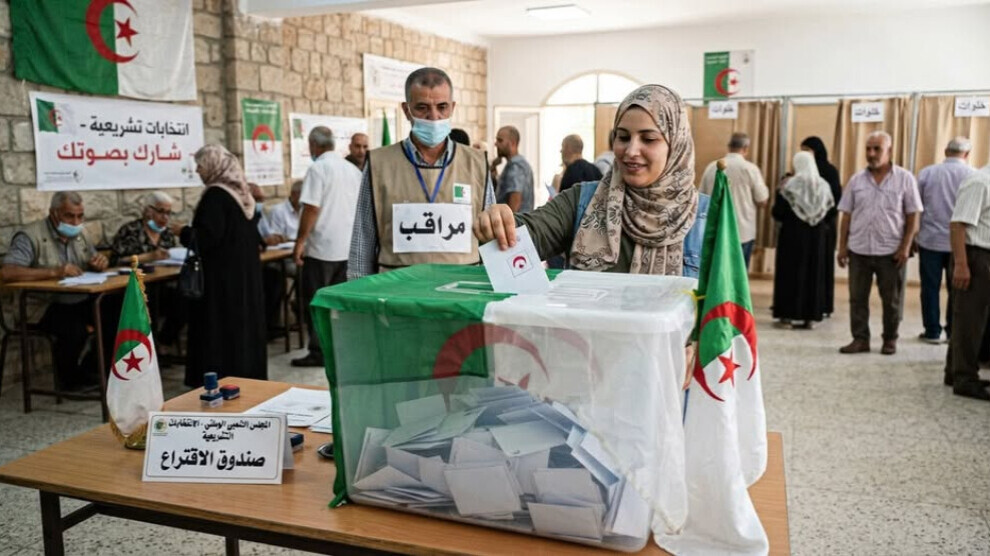
ALGERIA— With the launch of the electoral campaign for the local elections in Algeria scheduled for November 28 of the current month, female candidates have strongly imposed themselves on the political scene through intensive popular rallies and a remarkable digital presence, aiming to win voters' trust with development programs. Amid this active women's movement, a fundamental question arises: Will this dynamic succeed in breaking traditional barriers and raising the percentage of women's representation in local councils?
With the launch of the campaign for the local elections, with the participation of more than 162,000 candidates for membership in the municipal and provincial people's assemblies, a strong female elite emerged from diverse academic and knowledge backgrounds, carrying electoral programs aimed at comprehensive economic and social empowerment, by proposing practical projects to support "stay-at-home women" and integrate them into the investment fabric, in addition to accompanying incubators and startups led by women and creating spaces dedicated to promoting traditional industries and handicrafts to enhance the incomes of families and municipalities alike.
More than 19,000 women enter the race
According to the detailed figures presented by the Independent National Electoral Authority in Algeria, 141,388 candidates are competing in these elections for membership in the municipal people's assemblies and 21,476 candidates for membership in the provincial people's assemblies. These statistical data show a prominent presence of women, as the number of female candidates reached 19,327 out of the total competitors.
In a reading of the composition of the electoral lists, a clear convergence appears in women's representation among the various 25 political formations participating in the elections, foremost among them the National Liberation Front, the National Democratic Rally, the Movement of Society for Peace, the Workers' Party, and the Front of Socialist Forces. Female candidates are distributed in these lists at a rate ranging between one woman and eight women per list, with university competencies predominating in these candidacies, in a clear indicator reflecting the determination of Algerian women to impose a qualitative and effective presence in managing local affairs.
Ambitions and stakes
Candidate Hadjer Rebihi, in her fourth decade, is considered a living model of this professional and academic diversity that distinguishes the electoral lists, as she combines in her career technical training, financial experience as an inspector in the tax sector, in addition to her media passion crowned with a certificate in journalistic and artistic writing techniques from a specialized institute.
Hadjer Rebihi points out that this step represents her first launch, explaining: "I have never participated in elections before; this is the first time I am entering the political arena."
Between the stakes of local development and closeness to residents' concerns, the motives for her candidacy emerge, as she hopes her town will develop. She says: "By virtue of my work as an employee in the field of taxes and my daily contact with citizens, this pushed me to enter this competition under the banner of the Movement of Society for Peace party."
Regarding the most prominent axes of her electoral program, Hadjer Rebihi places residents' concerns at the top of her commitments, affirming: "If our campaign is crowned with success, our priority is the simple citizen and improving the living conditions of the town's residents, in addition to studying stalled projects and implementing them as quickly as possible."
Her talk did not stop at the limits of her local program; she also addressed the diagnosis of the reality of Algerian women's political participation in the current elections, expressing her optimism about the new momentum the electoral scene is witnessing.
Hadjer Rebihi said that "the most striking thing in this electoral station is the strong women's presence in the municipal elections, compared to previous years. Despite the challenges and obstacles that still stand in their way due to patriarchal mentality, women today are making exceptional efforts in field political work, and have succeeded, thanks to their competence and determination, in strongly proving themselves as an active party and a difficult number in the electoral equation."
Eyes are turning this time toward women's share in elected councils, in light of the new voting mechanism based on "deletion" within closed lists and the decline of the strict mandatory nature of the quota system. After seats were guaranteed in previous elections thanks to the quota law, female candidates today face a direct popular test that requires convincing the voter of their competence to avoid having their names deleted, making election day a real measure of the street's acceptance of local female leadership.