
Right to Hope for Leader Öcalan Tops Demands in Peace and Democratic Society Process
As Turkey's framework law advances, Kurdish political actors and civil society insist that Abdullah Öcalan's legal status and the "right to hope" principle are essential to achieving a lasting democratic resolution.
ARJIN DELIK ÖNGÜL
Amed — The Turkish parliament has approved the draft law titled "Strengthening National Solidarity and Social Integration," prepared within the framework of the "peace and democratic society" process, with 467 votes in favor, 87 against, and 7 abstentions.
Attention now turns to the Turkish parliament's role in the coming phase and the arrangements it may propose regarding justice, freedoms, and political rights.
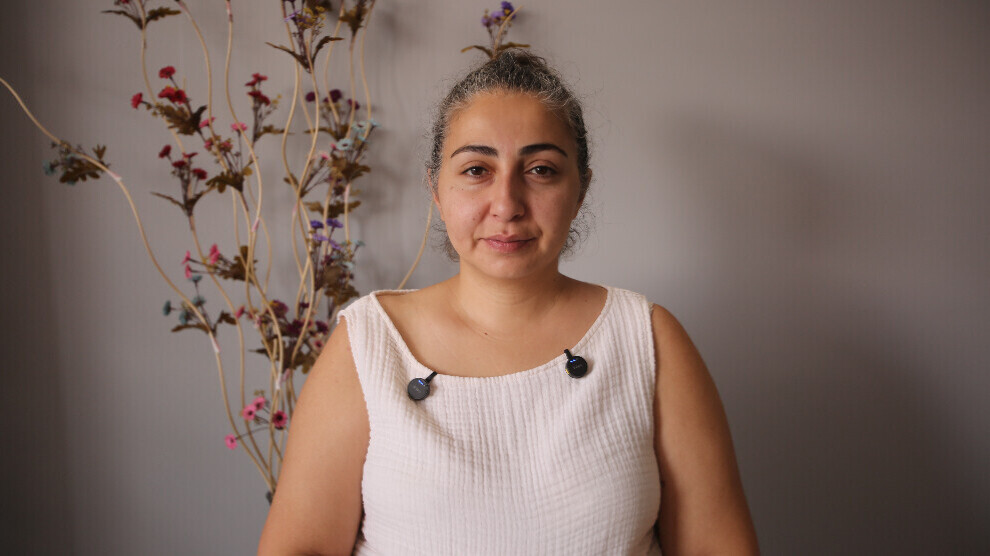
Lawyer Özüm Furgun, a member of the Lawyers' Association for Freedom (ÖHD), stated that the issue of establishing a democratic ground for the Kurdish issue should be addressed within two separate frameworks. "Laying down arms and ending armed conflict represent the beginning of a new phase. However, the resolution of the Kurdish issue can only be achieved through democratic integration and a democratic solution."
She noted that the Kurdish issue is not limited to releasing detainees and returning displaced persons. "I believe this is an incomplete but necessary step toward democratic integration, a democratic constitution, democratic laws, and a democratic Turkey. However, if we look at the essence, we cannot say this is the final and clear solution to the Kurdish issue—we can say it is the beginning of a solution."
The Status of Leader Abdullah Öcalan and the Right to Hope
The exclusion of leader Abdullah Öcalan and other senior leaders from the law's scope was one of the most prominent aspects of criticism. In this context, Özüm Furgun stated that the issue of the "right to hope" reveals a clear legal and political contradiction, explaining that leader Öcalan's role in the process has been practically acknowledged, after he put forward his initiative and declared his position, and the movement responded to this will and made decisions based on it, contributing to the launch of a new political path. However, this recognition has not yet translated into a clear legal status.
She believes this discrepancy places the state and government before a genuine political and legal dilemma. On one hand, leader Öcalan is treated as an influential party in the peace process; on the other, he is excluded from any legal treatment concerning his status within the peace law. She considers that involving a person in a peace process as an active party, then ignoring their legal status when drafting the legislative framework regulating this process, represents a contradiction that is difficult to justify politically or legally.
She believes that the right to hope will be placed on the parliament's agenda in the coming phase, and that leader Öcalan will obtain a legal status. "This is not a political expectation, nor personal hope, nor an ideological position—it is simply a legal reality. The framework law is the beginning, and complementary steps will follow. Among the issues that should be addressed in the coming phase is the right to hope."
"The Law Does Not Carry the Character of Amnesty"
Özüm Furgun criticized interpretations attempting to present the law to the public as "amnesty," saying: "There is certain misinformation in public opinion. There is an image as if this law represents amnesty. But it is not. Rather, it concerns the evaluation of the status of prisoners who have been sentenced, investigated, prosecuted, or whose trials are ongoing, within the framework of the activities of the PKK and the KCK system."
She added: "There should be a process through which they can live freely, find work, and practice politics without being excluded. A democratic process cannot tolerate an approach that, on one hand, releases people from prisons and, on the other, considers returning them there. This is not correct or legally appropriate either. What is required here is to resolve this multi-faceted issue step by step."
"There Are Conditions for Democracy"
She explained: "If we are talking about democracy, we must also talk about how these people will exercise their rights after their return. If you open an investigation against a person for a political statement and make them face the threat of imprisonment, that is not free politics, nor is it democratic politics."
She noted that many steps are still required for democratic integration. "While the appointment of trustees and investigations continue, or in the presence of administrative laws preventing people from returning to their positions, we must see the shortcomings in the framework law, in the democratic process, and in the resolution of the Kurdish issue."
"It Would Be Absurd to Leave the Final Decision to Security Apparatuses"
The linking of the law's implementation to evaluation by security apparatuses and administrative mechanisms was also a point of criticism. "One of the institutions that will monitor the dissolution of the organization and the surrender of weapons will be security institutions, because this involves a real security determination. However, transferring the final legal decision regarding whether people's freedom or criminal liability has been lifted to security apparatuses creates an absurd situation."
She recalled Articles 2 and 9 of the Turkish constitution, concerning the rule of law and the judiciary. "Broad discretionary power is a problem in terms of legal certainty, and therefore in terms of the rule of law."
She affirmed that the law is a "transitional law," but this transitional law should not be a continuation of a "security law." She said: "Security law has continued in Turkey for many years. This transitional law should only be used as a means to transition to a democratic rule of law."
"Bar Associations, Civil Society Organizations, and Women Must Be Involved"
Özüm Furgun also addressed the inadequacy of oversight mechanisms for the law's implementation, considering that limiting participation to structures formed by parliament or state institutions is "a deficiency and a mistake." She said the most fragile issue in peace processes is the "crisis of trust," and that restoring this trust can be achieved through independent and neutral mechanisms. "Parliament is certainly the primary body managing the process, but this is insufficient. There is fragility in trust among everyone, and this trust cannot be built through a structure relying only on the state and parliament."
She added: "Human rights organizations, bar associations, women's organizations, academics, and civil society organizations must participate. These bodies should be able to monitor and prepare reports, and these reports should be published transparently." She affirmed that managing the process with transparency and public participation would make what she described as "peace of identities" less difficult. "Peace cannot be guaranteed by secrecy. The guarantee is social participation and democratic oversight."
Reminder of the 2014 "Resolution Process"
She recalled the "Law on Strengthening Social Integration No. 6551," enacted during the 2014 resolution process, and spoke about the differences between it and the current framework law. "This law currently explains the legal consequences of disarmament. In the 2014 resolution process, there was a different definition; it stipulated that the state undertakes to make arrangements in political, legal, social, economic, psychological, cultural, and human rights fields, and says it will examine these matters."
The current framework law is a concrete step that has been codified regarding the destruction of weapons and the arrangements to follow their surrender. "The current law is more specific regarding the legal consequences of disarmament, while the text concerning the democratic solution in the 2014 law was more specific in some aspects. Peace is not a concept that can be tied to individuals, governments, or political circumstances and handed over to them. It must be institutionalized."
"Sanctions and the Right to Hope Must Be Regulated"
Regarding the steps parliament should take after the law to establish a legal structure for lasting peace, Özüm Furgun said: "Among the steps parliament should take in the coming phase are regulations on the execution of sentences and the right to hope. The trustee system must also be abolished, and local democracy must be guaranteed."
She also called for a return to the principles set out in the European Charter of Local Self-Government and international agreements Turkey has signed, and for a commitment to implement them. She said there are structural problems that make the non-implementation of Constitutional Court decisions practically possible. "I believe these problems should be addressed. Finally, all steps taken should emerge from the security structure."
The Kurdish Issue Is Not Merely a State Security Issue
In concluding her remarks, Özüm Furgun, a member of the Lawyers' Association for Freedom (ÖHD), said: "Cultural, linguistic, and religious rights must be recognized, foremost among them the right to use the mother tongue. I believe we must remove the Kurdish issue from a legal concept that views it only as a matter of state security. The Kurdish issue in Turkey has so far always been seen as a problem of the state's survival, a border issue, a matter of existence, and there has been a system that perpetuates itself through a policy of creating hostility. We must establish a legal system that places citizens' rights and democratic participation at the center. If this is done, the process will mean the democratization of Turkey. I certainly believe that parliament should urgently place these issues on its agenda and accelerate them."