
People's Assembly Elections Reveal Widespread Political Exclusion of Women in Syria
With only 20 women in Syria's 210-seat People's Assembly, demands grow to restructure representation and guarantee women's effective, balanced participation in decision-making.
ASMA MOHAMMAD
Qamishlo — Several activists have affirmed that the reality of women's representation within the People's Assembly reflects the continued clear imbalance in the political participation system. They pointed out that the current formation mechanisms do not guarantee a balanced and effective presence for women in decision-making and legislative positions, but rather keep them within a limited scope that does not reflect their true role in Syrian society.
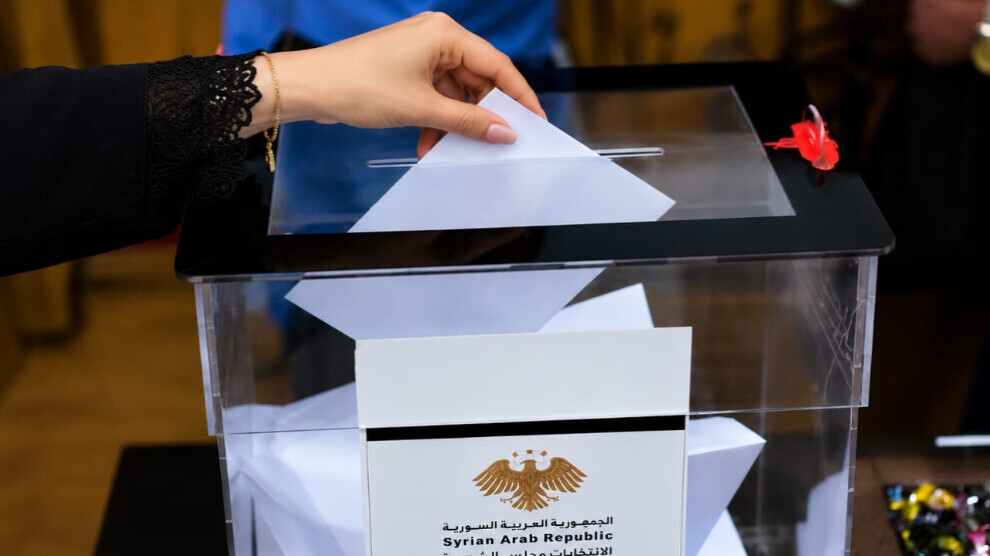
Syria, under the transitional political phase and the accompanying wide-ranging changes in the structure of the political system and legislative institutions, has witnessed People's Assembly elections based on unconventional mechanisms, relying on electoral bodies appointed by the executive authority, in addition to the allocation of one-third of the Assembly's members by direct presidential decision. These mechanisms have sparked widespread debate regarding their compatibility with democratic representation standards and their ability to reflect popular will in all its components.
The elections produced limited women's representation, with the number of women not exceeding 20 out of 210 members, considered a clear indicator of women's weak presence within an institution supposed to reflect the diversity of Syrian society. This decline has opened the door to debate about the fairness of the electoral process and the extent of women's actual participation in decision-making, compared to their significant role during the years of war and the social and political transformations the country has witnessed.
A "Formal" Council
In this context, Amîna Omar, a member of the Coordination Body of the Women's Council in North and East Syria, criticized the mechanisms adopted in the formation of the People's Assembly, considering that they were not based on free direct elections but took place within an organizational structure dominated by an appointive character, which reduced popular participation and produced an unbalanced representation that does not reflect the country's social and political diversity. She pointed out that this electoral formula did not translate the profound transformations witnessed by society in recent years, nor the significant role women played in humanitarian and political work and their bearing of the burdens of war—displacement, forced migration, loss of breadwinners, and arrest.
She explained that women's representation within the Assembly remained very limited, not exceeding 20 women out of 210 members, which she considered a structural exclusion that does not reflect women's actual presence in public life nor the scale of their contribution during the crisis. She stated that the current composition of the Assembly makes it closer to a "formal council" due to the absence of balance in the representation of Syria's various components, which weakens its ability to perform its legislative and oversight functions, which should be based on broad participation rather than limited appointment.
Amîna Omar pointed out that the absence of women within the People's Assembly is not limited to weak numerical representation but directly affects the nature of issues raised, especially those related to women's rights, gender-based violence, children's rights, and family issues, in addition to economic, political, and social files. She considered that the absence of women's voices leads to the marginalization of these issues within the legislative agenda and creates an imbalance in parliamentary priorities.
She affirmed that women's presence in legislative institutions must go beyond mere symbolic presence to include their active participation in shaping public policies, parliamentary committees, and leadership positions, warning that the continuation of their exclusion reinforces one-sided dominance and weakens the principles of partnership and equality.
In her vision for a solution, she called for building a broad feminist alliance comprising women's organizations and civil society institutions to pressure for an effective presence of women at all levels of governance, and to establish clear constitutional guarantees, most notably a women's quota of no less than 50% in official institutions. She stressed the necessity of women's participation in drafting the constitution and in legislative and oversight committees to ensure the integration of their vision in decision-making.
Amîna Omar concluded by affirming that the continued exclusion of women weakens the path of building a modern state and affects the country's image before the international community. She called for a review of the electoral system to ensure fair representation that restores women's natural role as essential partners in legislation and decision-making.
Contradiction with the Path of Transition Toward Democracy
For her part, Sama Bakdash, spokesperson for the Democratic Union Party (PYD), stated that Syria is going through a sensitive transitional phase, with the country moving toward rebuilding a new political system after decades of centralized and exclusionary rule, during which women were among the most marginalized groups in political participation and decision-making. She explained that the changes accompanying the current phase have not ended this approach, as women's presence remains weak in the formation of the government and the legislative council, reflecting a flaw in the political vision regarding their role in the state.
She pointed out that the recent elections revealed the limited participation of women, with their presence remaining formal and ineffective, often through narrow appointments that do not express genuine partnership. She considered that this reality poses a danger to the nature of the legislative council, because the exclusion of women practically means the exclusion of half of society from decision-making—which contradicts any path claiming to move toward democracy.
She noted that the experience of women in North and East Syria represents a different model, where they have become an essential part of the Autonomous Administration and governance institutions, participating in negotiations and political bodies, in addition to their military role within the Women's Protection Units (YPJ). She affirmed that this experience has established important gains such as the co-presidency system and women's councils—gains that must be constitutionally and legally entrenched to ensure no regression.
Unifying Efforts
She warned against repeating the experiences of other countries where women were marginalized during similar transitional phases, affirming that the real challenge lies in transforming women's current participation into permanent guarantees within the upcoming Syrian constitution. She called for unifying efforts among women's organizations in Syria, which have expanded in recent years, to build a shared vision and strengthen coordination between them.
She pointed to the importance of benefiting from international frameworks such as CEDAW and Resolution 1325 to support women's participation in peace processes and decision-making, with the necessity of activating this support through clear internal political mechanisms. She stressed that building a broad national feminist alliance could constitute a real pressure force to ensure women's representation in parliament, constitution drafting, and sovereign institutions, and to transform feminist demands from the level of discourse to implementation.
Sama Bakdash concluded by affirming that building a genuine democratic system cannot be achieved without equal and effective participation of women at all levels of governance.