
"Framework Law” Discussions Affirm the Need for Leader öcalan’s Physical Freedom
Article by BERIVAN ZILAN
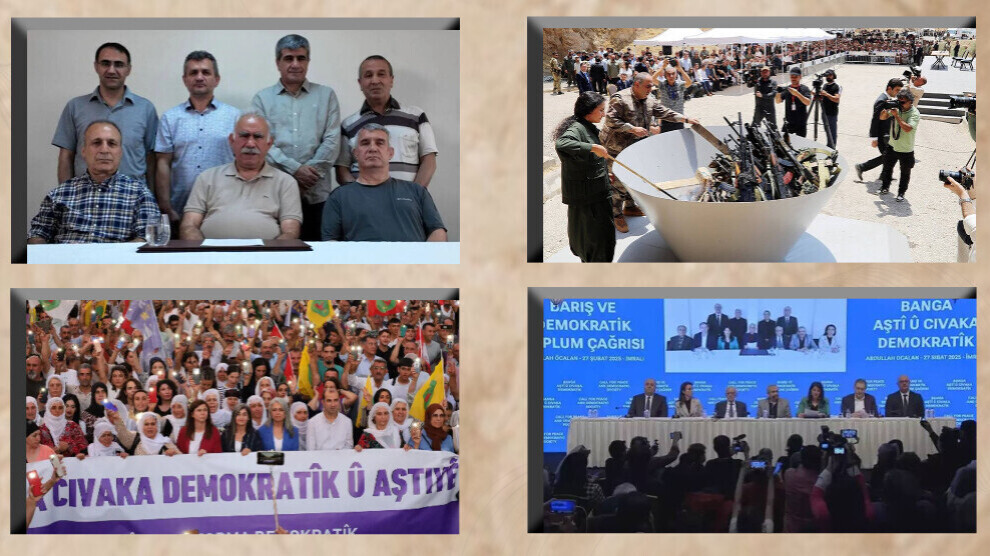
Following the meeting held between the İmralı delegation of the Peoples' Equality and Democracy Party (DEM Parti) and leader Abdullah Öcalan on July 20, discussions surrounding the "Framework Law" project have intensified, and following the delegation's meeting with party representatives, legal preparations have come to the forefront.
With the framework law expected to be introduced in parliament soon, the process is anticipated to enter a new phase — one that will not only affect the Freedom Movement, but will also carry implications for regional developments.
The call issued by leader Öcalan on February 27 had a significant impact on regional dynamics, coming as the result of long-term planning and effort. It is important to explain how leader Öcalan, as chief negotiator, wants to give the process fresh momentum — both for Kurdish public opinion and for external actors — as his assessments and messages during meetings reveal the foundation underlying his moves.
Discussions on the Framework Law
The essence of the initiative lies in reviving the historic Kurdish-Turkish alliance in a way that serves all the peoples of the region. The Freedom Movement has, through its previous steps, demonstrated its readiness for a brotherhood built on equal citizenship and dignity — but this brotherhood is not merely a political partnership; it is a historical necessity that imposes mutual obligations.
Turning this alliance into a permanent legal foundation through new legislation represents an essential step toward building a democratic republic, and this is necessary both to confront ongoing regional threats and to advance the course of democracy in Turkey.
Despite the discussions around the framework law, the Kurdish issue remains unresolved, as the state continues to view the matter through a security lens, focusing on disarming the movement — while the fundamental reason for the PKK's emergence was the existence of the Kurdish issue itself.
Turkish officials don't even use the term "Kurdish issue," while political and diplomatic efforts continue aimed at preventing Kurds from making gains in the region. As such, the continued denial of the Kurdish issue stands in the way of achieving democracy, and undemocratic practices in Turkey will persist as long as this issue remains unresolved.
Campaigns against the opposition, declining trust in the judiciary, poverty, and social deterioration have all been linked to the Kurdish issue, and leader Öcalan, through his recent initiative, is trying to open a path toward legal and political solutions. Understanding this dimension of the process is important, and political struggle and community organizing must be strengthened, since the success of the negotiations is tied to the strength of community organization and to linking struggle with negotiation.
Leader Öcalan's Legal Status and Physical Freedom
Among the most prominent issues related to the framework law is leader Öcalan's legal status, as the law cannot gain acceptance among Kurdish public opinion unless his physical freedom and free working conditions as chief negotiator are secured. The absence of legal guarantees allows for the repetition of past practices — such as prolonged bans on meetings with him, prevention of visits from his family and lawyers, and the continuation of his imposed isolation.
The issue is not limited to transferring him to a new facility on İmralı or allowing him to meet with certain journalists; it concerns securing a legal status that prevents arbitrary measures in the future — since updating the Kurdish-Turkish alliance, in line with leader Öcalan's vision, aims to democratize Turkey and prevent regional threats. His physical freedom should therefore be a fundamental priority.
Turning Armed Struggle Into Political Struggle
One of the core issues discussed within the framework of the law is the matter of classification (legal designation). Leader Abdullah Öcalan has previously spoken of a "law comprehensive in both political and legal terms." Kurdish people therefore expect a legal framework that comprehensively addresses political rights and freedoms, rather than focusing solely on individual participation.
Many party members chose the path of armed struggle as a result of the absence of a political space, and today, with the change in the strategy of struggle, they seek to continue their path through political action. Without opening up this space, there can be no talk of equal, dignity-based participation.
Likewise, discussions about sending certain leadership figures to other countries, or subjecting returnees to monitoring measures or rehabilitation programs, are out of step with the nature of this stage and fail to address the root of the problem. What is required is comprehensive democratic integration that allows all party members to participate in building a democratic republic on the basis of equality.
Although the anticipated framework law may not include all the demands of Kurdish public opinion, it is expected to be placed on the Turkish parliament's agenda in the coming period. Leader Öcalan has offered an initial assessment that opens the way for this law, while the success of the coming phase will depend on the level of struggle and community effort that is invested.
Women retain a central place in this process, as a founding and leading force within it — as women, being among those most in need of peace, will continue to play an essential role in building a peace grounded in dignity.