
The role of female candidates in the Deir al-Balah elections and the challenges of women's representation
Despite limited female participation, Deir al-Balah municipal elections are key for post-war recovery, as female candidates seek service change and women's empowerment, amid questions about representation adequacy.
Rafif Aslim
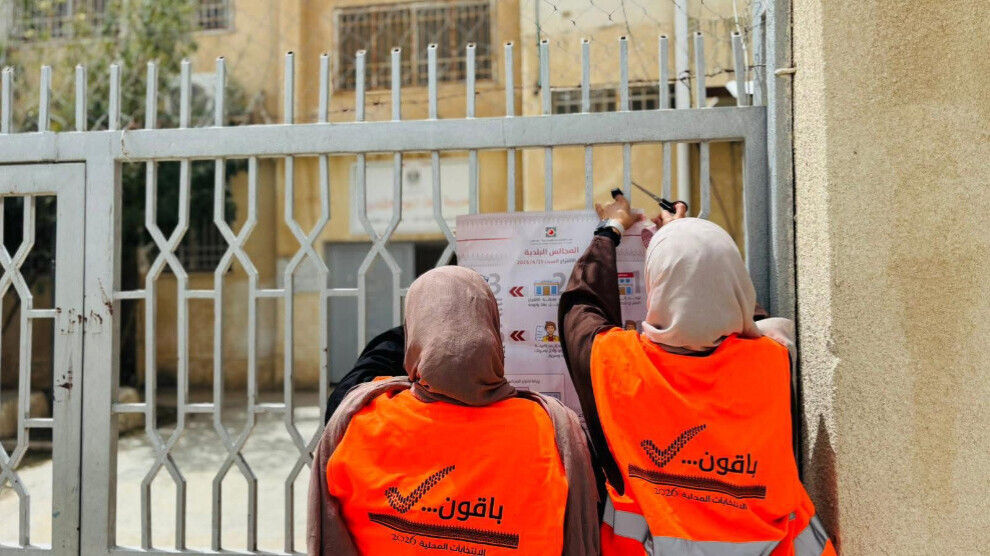
Gaza — The Central Elections Commission decided to hold local elections this April in the city of Deir al-Balah in the central Gaza Strip only, as the current conditions in the city prevent holding local elections in all its bodies, concurrently with their holding in the West Bank.
Four electoral lists are running in the Deir al-Balah municipal elections scheduled for April 25, 2026, with 64 candidates, of whom only 32% are women. What role can female candidates play, what changes can they bring, and is this representation sufficient?
Candidate Faten Harb, from the "Nahdat Deir al-Balah" list, told our agency that these elections are a democratic entitlement for citizens to choose their representatives in local bodies. It is a positive step for electoral and community participation by individuals and institutions. She added that the people of Gaza face many difficulties, so holding elections at this particular time is a renewal of confidence and affirmation that they remain attached to their rights and want to organize their political and social lives.
She believes there are a number of challenges and difficulties facing these elections, especially as Gazans have lost hope after a two-year war. However, holding elections remains a necessity, and voting for the lists and their candidates is a national duty. She indicated that work is ongoing to achieve a satisfactory and fair outcome.
There are four lists, each comprising 15 candidates striving through their electoral programs to serve the community. The number of women on these lists is limited, despite women having proven their effective role in society across multiple fields and having led many developmental and structural projects. Therefore, she hopes for equal representation in future municipal elections.
A new step for women
She explains that women are partners in everything in society and are its foundation, as they are more knowledgeable about women's needs, especially in municipal councils regarding services provided by the municipality to families and society. She affirms that their role will bring a qualitative shift and significant contribution, particularly in daily tasks related to basic needs such as water, education, road paving, and the establishment of development spaces for women, such as cultural centers and heritage preservation.
She stresses that women's presence in the municipal council enables them to care for women, their culture, and heritage, and to strengthen campaigns encouraging reading and developing their general culture, as well as organizing sports activities that will improve both their health and psychological state. She notes that women are closer to and more understanding of women's needs, especially in the critical phase Gaza is going through and its continuous attempt to recover.
She sees that what is happening is a new step for women and an initial beginning for their participation in the democratic process, especially since women have left strong imprints in all fields, most importantly the political field. Women must be strengthened and supported at all levels to become leaders in their community work. Women's presence in political leadership is important and reflects positively on society.
The experiences of different countries, especially those that recovered after war and crises, have proven, according to Faten Harb, that involving women in the political sphere has a positive impact on society. This work must continue, and young women leaders must be found and their leadership roles strengthened in all fields.
The Central Elections Commission considers this experience a decisive station that can be built upon in the future if it proves successful, as a step to revitalize the local political system. However, this ambition faces a complex political and security reality, raising questions about the elections' ability to transcend being a limited experiment toward broader impact.