
Algerian women on electoral lists... broad ambitions for change
Many Algerian female candidates have revealed their ambitions, motivations for running, and their visions for legislative work.
Rabia Kharis
Algeria – With the parliamentary elections scheduled for next July entering their decisive stages, the prominent candidacy of women, especially in cities, is emerging clearly, as they seek to achieve representative democracy and defend pivotal issues concerning women, the environment, and people with special needs.
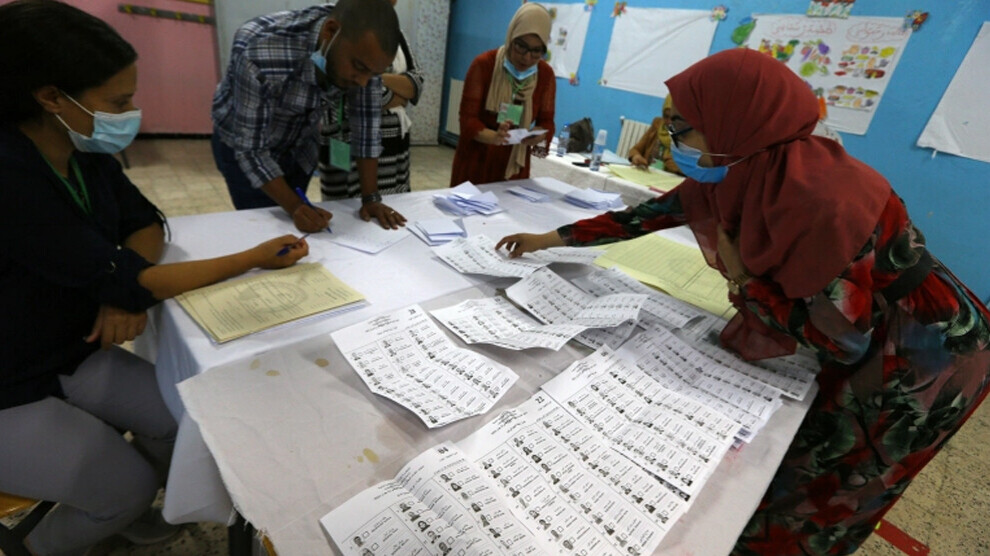
Our agency, through separate interviews with a number of female candidates, documented how they are conducting the signature‑collection process in each electoral district, as well as their motivations for running, their ambitions, and their visions for legislative work.
In the city of Constantine, Widad Lichani is undertaking her second experience in the race for a seat in the National People's Assembly (the first chamber of parliament) on Zighoud Youcef Street in the heart of Algiers, as a candidate on a political party list, driven by a firm belief in the need for change and responsibility toward society.
She affirms that she did not run to achieve a personal goal. "My decision stems from a deep awareness of the issues I advocate for, related to biodiversity, animal protection, ecosystems, and reducing harmful human activities." She points out that "such environmental issues today require strong and effective representation within Algeria's corridors to ensure a change in the situation of animals in the country, especially those suffering from torture, killing, and neglect."
To this end, Widad Lichani has launched an important political initiative to attract those interested in environmental defense within parliament, under the slogan "Political Representation Initiative for the Protection of the Environment, Animals, and the Voiceless." It aims to convey the voice of environmental and humanitarian issues, especially the protection of animals and the environment, which often do not find adequate representation within elected institutions.
Challenges and obstacles
Regarding the nature of obstacles she faced during the signature‑collection process, Widad Lichani says that "women wishing to enter the electoral arena do not find the political, cultural, and social environment favorable, not to mention the great difficulties we face in convincing voters of the value of voting – which is the decisive step in any electoral process. Special strategies must be adopted to combat feelings of frustration or the belief that a vote will not change anything in reality."
It is worth noting that the abstention rate in the parliamentary elections held on June 12, 2021, reached approximately 69.81%, with the final participation rate only 30.19%.
Widad Lichani recalls that "she encountered many young people who were not registered on the electoral lists and had to launch another initiative to convince them to register under the slogan 'Our future is in our hands.'" What made the process even more difficult was "the intense competition between parties to collect signatures, especially since the organic law on the electoral system in Algeria and the affirmations of the National Independent Authority for Elections do not allow any voter to sign more than one list."
Achieving many priorities
In the center of Algiers, Nabila Ouadahi stands out as a candidate for membership in the Algerian parliament on the list of the Workers' Party led by Louisa Hanoune, relying on her background as a lawyer and human rights activist.
She says, "My goal in running is to achieve many priorities." Among them, she mentions "developing the legislative system and improving the quality of laws by filling legal gaps: from my daily practice, I realized that there are legal texts that no longer keep pace with social and economic transformations, so I seek to contribute to drafting precise legislation that prevents erroneous interpretations and ensures smooth administrative and judicial procedures."
The second goal for which Nabila Ouadahi decided to run is "defending rights and freedoms, the rule of law, and consolidating the principle of equality." She explains this goal by saying: "My struggle as a lawyer taught me that the law is the citizen's only shield. Therefore, I will work to ensure strict application of the law to protect the weak and vulnerable before the powerful, and to preserve the dignity of Algerians everywhere."
Other priorities include: strengthening the independence of institutions, enabling national competencies, and enhancing the role of women by seeking to develop legislation that supports working, creative, and stay‑at‑home women who perform their role as mothers, ensuring their legal and social protection in line with values.
Most importantly for Nabila Ouadahi is "legislating laws that support the Algerian family and protect it from disintegration." Algeria is witnessing an alarming rise in divorce rates, with more than 87,000 divorces recorded in 2024, equivalent to approximately 33% of marriages.
Application of laws faces enormous challenges
As for Nacima Yessad, a candidate for membership in the National People's Assembly in the town of El Khroub, located about 16.5 km southeast of Constantine, she is fighting her electoral battle for the first time, relying on a clear vision for change and defending people with special needs to ensure equality, full integration, and protection from discrimination.
Nacima Yessad, a civil society activist in the field of disability who devotes all her time to defending this group and working on their social and economic integration, says she is undertaking the experience for the second consecutive time, having previously run in the municipal elections held in November 2021.
With steady steps, she advanced in the race to defend people with special needs. She says, "It is true that there is a huge number of decrees and a legal arsenal, but the application of laws faces enormous challenges, making the protection of their rights and their integration into society a complex process."
Nacima Yessad explains that "entering the electoral arena was not easy. Convincing the family of the idea of running for the second consecutive time required effort on my part, in addition to the difficulty of finding a political party under whose banner to run, away from any political or financial calculations."