
“Without the will of women, a democratic administration can’t be bulit.”
Neslihan Şidal, mayor of Van, Kurdistan, said without self-administration a society's existence is threatened: "A people that does not develop self-administration faces an existential problem, becomes vulnerable to disintegration, weakens."
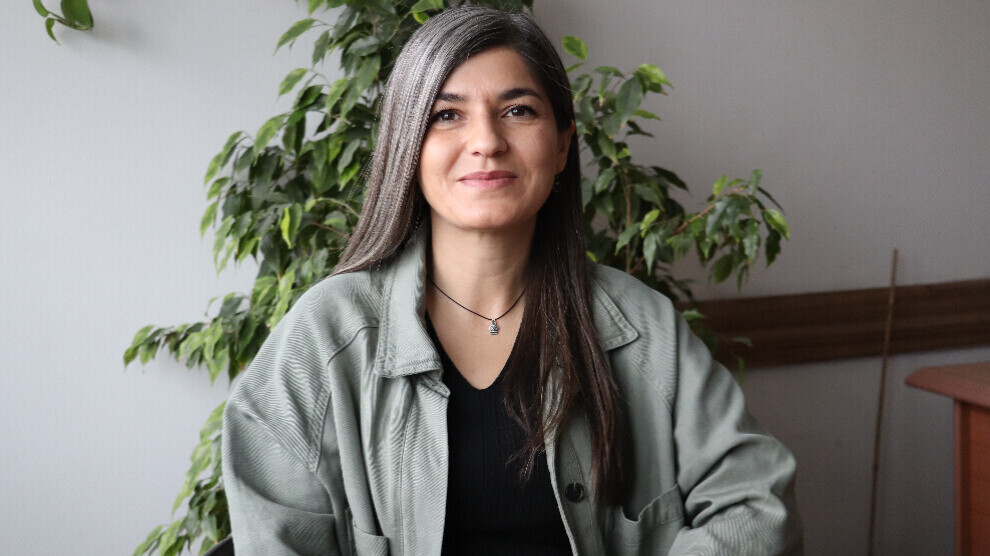
News Center — Since the beginning of humanity, every individual and every society has needed self-management in order to survive. In ancient tribal societies, women were pioneers in self-management and played a leadership role in running society. However, with the emergence of the patriarchal system, this right was taken from them, and women were excluded from management fields. In democratic societies, especially in Rojava, women participate in self-management and play a pioneering role in it.
"Self-management has existed since the beginning of humanity"
The co-chair of the Van municipality in North Kurdistan, Neslihan Şidal, said that the concept of self-management is very important for humanity. "Human values throughout history, and since the formation of human societies, are linked to the moral and political values of society, and these values are embodied in management or self-management. If a nation has reached a certain level of life and has been able to continue, this means that self-management was present within it. Therefore, when defining self-management, we must consider its importance, where it began, and what it means."
"Self-management develops solutions according to its needs"
Regarding the meaning of self-management, she explained that it means that an individual or society possesses the will and a voice in managing their life and city, and in making decisions within the society they live in. It also means discovering needs and working to develop solutions that are appropriate to them. Individuals or societies that cannot possess their will or express their opinion, and cannot develop their management accordingly, cannot be considered to truly exist. But if they are able to express themselves and manage their society by their own will, then it can be said that there is freedom and progress.
"Democracy is the most sacred value in society"
Neslihan Şidal pointed out that self-management has existed since the beginning of human history, affirming that the relationship between self-management and democracy is very strong. "The word democracy itself comes from the Greek 'demos' meaning the people, and 'kratos' meaning rule. Thus, it is defined as the rule of the people. Therefore, the relationship between self-management and democracy is extremely close. For this dynamic to be realized, individuals and different components within society, with their identities, voices, and social values, must participate in managing the society they live in. Only then do we know that democracy has been achieved."
She affirms that "democracy is the highest value of society, and when society manages itself in a free and peaceful manner, then it can be said to be a democratic society."
"Today, peoples are being distanced from democratic administration"
She also stressed the need to understand the nature of the current administration created by capitalist modernity. "This system seeks to create an awareness within societies aimed at distancing peoples from self-management and democratic administration, making it alien to them, and turning it into a deep and complex problem."
Neslihan Şidal pointed out that if any people or society does not possess self-management, its existence is greatly threatened. "We see in history that when a people does not manage itself nor develop its self-management, the problem of existence emerges, making it vulnerable to policies of dismantling, and ultimately it weakens and disappears. But if the people possess their will and their administration and develop self-management, they prove their existence and manage themselves."
"The Kurdish people have been deprived of their right to administration"
She added, "Over the centuries, we see the clearest and greatest example in the Kurdish people. The Kurds, within the measures of moral, political, and democratic society, carry these values, but they have been divided into four parts and deprived of their right to administration. Nevertheless, the Kurds strive to live according to their social values, struggle for their rights to administration like other peoples, and continuously develop their struggle."
She also affirmed that peoples' striving to live by their own will and social values and to manage themselves does not mean dividing the state they live in. On the contrary, the participation of peoples in the administration of the state by their own will and values strengthens that state.
"Society must manage itself by itself"
Our speaker stressed that self-management does not mean dividing the state, considering that this understanding is the product of the nation-state mentality. "This mentality does not accept religious, cultural, or identity pluralism. Rather, it seeks to impose one religion, one identity, and one color, which contradicts democracy because building a democratic administration means that power cannot continue as it is. Therefore, democracy is targeted and they seek to eliminate it."
In the name of peoples, women, and society, alien administrative systems are created, and a false consciousness is entrenched within society, so that it is said that the absence of the state or authority means that society cannot manage itself. But the truth, as she says, is the opposite. The essence of administration is that society manages itself by itself, lives according to its will and social values, and possesses its own decision. This is what is defined as the democratic nation.
"The democratic nation is applied in administration"
The democratic nation is practically realized through participation in administration. "We see that when all members of society participate in administration according to their values, it can be said that the democratic nation model has been achieved on the ground. There are examples of this in Rojava, parts of Kurdistan, and in other places around the world."
The democratic nation is considered "a vital element for any state. If a state does not want to be divided, does not want to be vulnerable to external attacks, and does not want to witness internal conflicts, it must build itself on the basis of the democratic nation."
"Historically, administration was founded under women's leadership"
Neslihan Şidal highlighted the experience of Kurdish women in self-management, saying: "It can be clearly said that this experience carries many difficulties within it, but at the same time, it also carries great successes. When leader Abdullah Öcalan defines governance systems as alien systems, women are the most targeted within them, as an authoritarian consciousness has been entrenched that considers administration a male affair, with no place for women in it. But we know from history that what we today call administration was originally founded under women's leadership."
She explained: "In the beginnings of moral and political society, it was women who possessed the will, expressed themselves, participated in managing society, and took their place in decision-making positions. When women were excluded from decision-making mechanisms, democracy also declined, and alien governance systems emerged, later represented by power and the state as we know them today."
"Women must be within administrative mechanisms"
Neslihan Şidal affirmed the necessity of women's participation in administrative mechanisms. "We, as the Kurdish women's movement, say that if we want to achieve democracy, and if we want a free society and real equality, then women must first be part of administrative mechanisms. Women must participate in all areas of life, especially in administration or self-management mechanisms, where they should play their role and carry out their mission strongly, in order to build a democratic and free society."
"If women are not present in administration, there is no democracy"
Neslihan Şidal highlighted the co-presidency system, saying: "As a result of women's struggle, the co-presidency system was established, and there are models of it in many countries around the world. But our party and the women's movement were among the first to apply this system in local administrations and make it a practical reality. Of course, there were great difficulties and challenges along this path, yet it became an important example of democratizing society and its institutions, and indeed at the level of all humanity."
She believes that "if women are not present in administration, especially in self-management, then democracy cannot be said to exist in that field. Today, we see in Shingal, Makhmur, Rojava, North Kurdistan, and other places how the model of equal representation and the co-presidency system has been built, and all of this is the result of women's struggle. The greater goal of women is for all of them, alongside society, to become free and democratic, and this has been the main motivation for leading this path."
"The communal system is a very broad system"
She explained that everyone's participation, especially women's, in administration has become a matter of great importance. "Often, co-administration is defined as a man and a woman together administering a city or region. But we see that this definition is incomplete. At the heart of society, it is not limited to just two people; it also includes the councils formed within this model, such as neighborhood councils (communes), village councils, street councils, all of which are linked to the co-presidency system. This system contains within it councils and communes, and therefore the communal system is a very broad and comprehensive system."
"We will continue to work for women"
She also noted working according to a women's vision in several cities, not only in Van. "We have carried out extensive work in this framework, and we have announced five cities as pilot models: Amed, Nusaybin, Cizre, Gever, and Artemet, as women's cities. Our greatest goal is for all cities to become women's cities, and to become free, equal, and democratic cities."
In these model cities, wide-ranging projects for women will be implemented, alongside public projects also managed with women's mentality and awareness. "Even service projects such as creating parks or roads should be planned and implemented with women's vision and needs in mind."
"Communes were established according to women's thought"
At the conclusion of her speech, the co-chair of the Van municipality in North Kurdistan, Neslihan Şidal, said: "We want to confront the authoritarian patriarchal mentality that seeks to impose a life based on the enslavement of women. In contrast, we affirm that every individual has the right to live in their city with their own will and voice. For this, the spirit of communal life (communes) must be revived. At its core, it is a women's approach because it was established according to women's thought. This spirit and this awareness must return to society. When society organizes itself with the spirit and mind of women, and is able to manage itself, then a free, democratic society can be built. Therefore, society must be built on the basis of communes, so that every individual participates in it with their identity, voice, and social values, making society democratic and free for all."