
"Unilateral Policies Threaten Syria's Future and Exclude Women"
The issue of Syrian women's participation in political ,administrative life has emerged as a fundamental file linked to the transitional path, particularly as debate continues over the constitution, rights, and the governance model the country will adopt.
NAGHAM JAJAN
Qamishlo— Against the backdrop of the political transformations sweeping Syria, the role of women has come to the fore as an essential element in building a new system, especially as demands intensify for the establishment of a democratic model that guarantees equal participation for all components of society without marginalization or exclusion.
Women in Rojava maintain that Syria's future can only be built through genuine and effective participation of women in decision-making positions, alongside the establishment of a democratic model that recognizes national and cultural diversity and grants society a fundamental role in managing its own affairs.
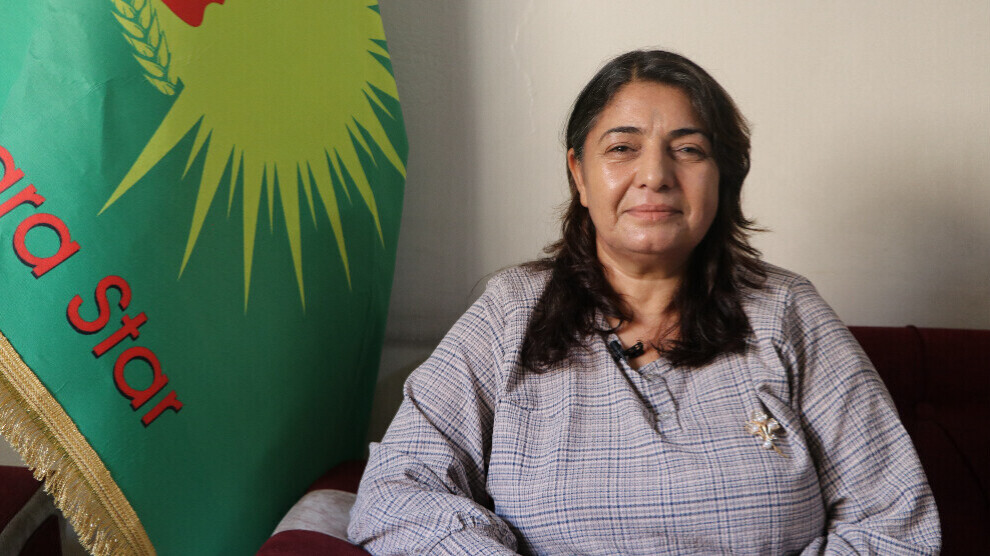
Jawahir Othman, a member of the coordination body of the Star Congress in the city of Qamishlo, states: "We are confronting a jihadi mentality that does not recognize women. If Syria's future is built solely on male leadership, or on an authoritarian and religiously extremist mindset, then it will not be a construction of democracy."
She affirmed that women must have a presence in institutions, in the military sphere, in the constitution, and in parliament, considering that "these are fundamental steps that the interim government should take, and we, as women's movements and organizations, will continue our efforts and struggle to ensure our effective participation in managing Syria's future."
"Government Policies Contradict the People's Demands"
Jawahir Othman believes that the interim government seeks to build Syria "according to a unilateral vision" based on a religious foundation, and that this approach "imposes restrictions on society" and does not reflect the country's diverse reality.
These policies contradict the people's demands, she says, pointing to the marginalization of Syrian components and not merely women: "The Ba'ath regime ruled the country for more than fifty years with a unilateral policy, and today we see attempts to reproduce the same approach by linking religion to politics and seeking to build Syria on a single religious basis."
She also criticized the Syrian constitution: "The interim government seeks to build Syria on the basis of one religion, one nationality, one culture, and one language, and to impose that on the peoples of the region. But Syria is rich in its diversity in terms of nationalities, languages, cultures, and religions, and this region cannot be built with a unilateral mentality. We, as women, need to take a clear and serious stance towards these policies, and a new constitution must be written that guarantees all components the right to live in peace while preserving their rights, cultures, and languages."
Unilateral Policies Open the Door to External Interventions
Jawahir Othman warned that the interim government's unilateral approach could lead to further divisions and instability: "Attempting to manage Syria within a unilateral framework that does not recognize diversity, and under the name of the Arab Republic, opens the way for further internal disagreements and conflicts, and also grants regional states the opportunity to intervene in Syrian affairs, which will have negative repercussions on Syria's future, in addition to exacerbating political and economic crises."
"Building a Democratic Syria Cannot Be Achieved Without Women's Participation"
She stated that "the guarantor states working on the Syrian file remain silent regarding the interim government's positions on women's presence and rights in Syria. Moreover, these very states operate under authoritarian systems, and in the process of democratic integration, women have not been recognized either militarily or administratively."
Jawahir Othman concluded her remarks by affirming that any project to build a new Syria cannot succeed without the genuine participation of women in shaping the country's future and in decision-making.