
"Stricken and Besieged": Tunisian Journalists Launch Campaign to Save and Support the Sector
Tunisian journalists launched a solidarity campaign with the press and detained colleagues,saying the sector is “stricken and besieged,”warning of dteriorating conditions and hinting at a protest strike.
Tunisia – Since the revolution of 14 January 2011, Tunisian media carved its path to be considered one of the most prominent gains of the democratic transition and a real revolution not only in North Africa but in the region, armed with Decree 115 related to the freedom of the press, printing, and publishing as a true translation of the right of access to information and freedom of expression. However, in recent years it has witnessed deep transformations and a clear regression, as the media environment gradually turned from a spacious space for public debate and accountability into a narrow, perilous circle and a prison for journalists.
The issuance of Decree No. 54 of 2022 related to combating crimes connected to information and communication systems constituted a pivotal turning point in this regression, as it turned, especially through its elastic articles, foremost among them Article 24, from a text supposedly intended to regulate the digital space into a "drawn sword" and a real tool for gagging mouths and prosecuting journalists. Instead of protecting freedom of opinion and expression, this decree became a legal cover for tracking free pens and referring them to courts, which led to the disruption of journalistic work and created a state of fear and self-censorship, so that the journalist today finds himself before a "state of emergency" threatening to undermine the pillars of the fourth estate and the gains of democracy as a whole, according to what the Tunisian Journalists' Syndicate announced.
Escalation of Incitement Campaigns
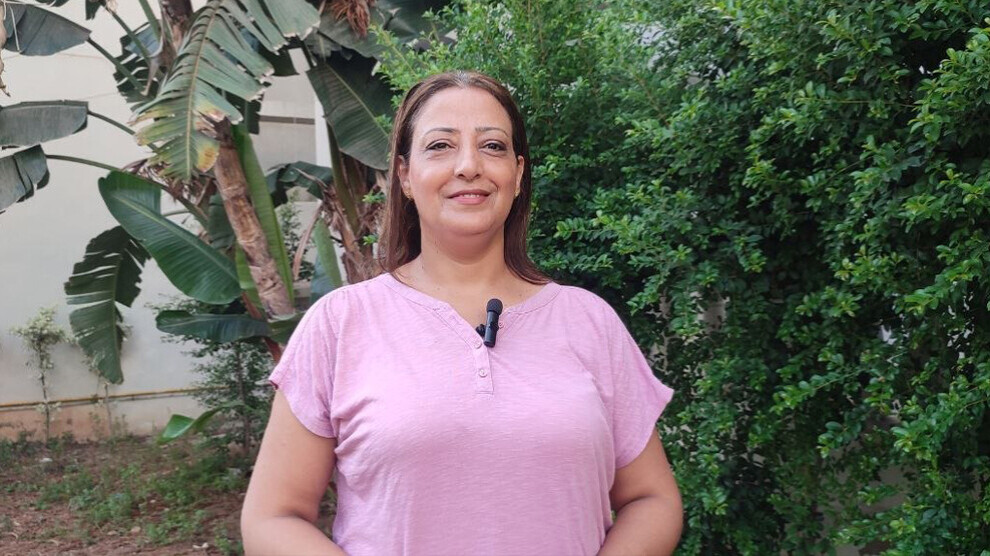
Journalist and member of the Tunisian Journalists' Syndicate, Khawla Chebbah, said that since the announcement of the journalistic state of emergency declared by the head of the Journalists' Syndicate at the press conference on the National Day of Solidarity with Journalists in Prisons, initiatives were launched by journalists. She noted that on Wednesday, 15 September, a campaign was launched by journalists to show solidarity with their imprisoned colleagues through a group of posts under a unified slogan "The Charge Is Journalist," considering it a good beginning confirming that the Syndicate will adopt it so that it has a greater extension on social media.
She pointed to the existence of many other initiatives proposed by journalists that are under discussion within working teams to be launched soon within a series of movements under the supervision of the Journalists' Syndicate, confirming that all of this comes within the framework of the deterioration of the situation in Tunisia, which she described as a very bad situation representing a "state of emergency" for journalists.
She explained that incitement campaigns against journalists have recurred, with more than 20 campaigns recorded against them since the beginning of the year. She recalled that in parallel with that, judicial prosecutions have recurred during this year alone, with nearly 11 custodial sentences issued against journalists by the Tunisian judiciary, including rulings at the appellate stage.
She stated that journalists were also surprised by the issuance of in absentia rulings against them, which they contested before the judiciary so that hearing sessions would be scheduled in the coming months. She explained that the state of pressure exercised on the media, whether through judicial prosecutions, incitement, or hate speech, has created an unsafe environment and imposed a kind of self-censorship on what is published, which is the most dangerous.
She warned that restricting freedom of expression and constraining the journalist through prosecutions and campaigns inevitably leads to great psychological pressure that effectively limits his freedom and makes him subject to constant fear, especially since these campaigns have gone beyond that to the point of targeting private life, defaming reputation, and fabricating files.
Restrictions Threaten Public Dialogue
Khawla Chebbah explained that this situation is a very dangerous reality for the sustainability of journalists' work in Tunisia. She noted that the journalist, over years since the beginning of journalism's work in Tunisia, played a large role in relation to conveying different voices and both loyalist and opposition voices, which created spaces of public dialogue.
She confirmed that this pressure will inevitably limit the effectiveness of public dialogue, and there will be one-sided discourse lacking the critical dimension in studying political discourse and public policies, and lacking the spaces in which alternatives are presented, programs are explained, and some practices are criticized.
She pointed out that this results from a series of mobilization discourses present even among some officials in Tunisia, and this created a kind of rejecting or alienating charge toward the freedom of journalistic work. She said that journalists are in fact people practicing a profession they believe in, but this belief, in the face of these restrictions and pressures, may limit the journalist's ability to work.
Pressure Limits the Possibility of Continuation
She said: "Not all journalists are capable of facing these pressures in the same way, especially with the changing situation for journalists amid professional fragility, and also amid social pressures, whether from the family environment or even the social environment."