
Strengthening Political Empowerment as a Gateway to Building Palestinian Feminist Unity
Nahla Al-Akhrasi urges cohesive Palestinian feminist unity amid war, through political, economic, and legal empowerment and protective support networks.
RAFIF ESLIM
Gaza — Building feminist unity at the Palestinian level is considered one of the fundamental issues that has acquired increasing importance amid the exceptional circumstances witnessed in both the West Bank and the Gaza Strip. However, the current political and security reality imposes significant challenges that hinder efforts to unify the feminist movement and place the core issues facing women on the agenda of dialogue and joint action.
Amid these challenges, the question arises regarding the extent to which this unity can be built at the current stage, and what feminist approaches can be proposed to strengthen it and respond to the priorities of Palestinian women.
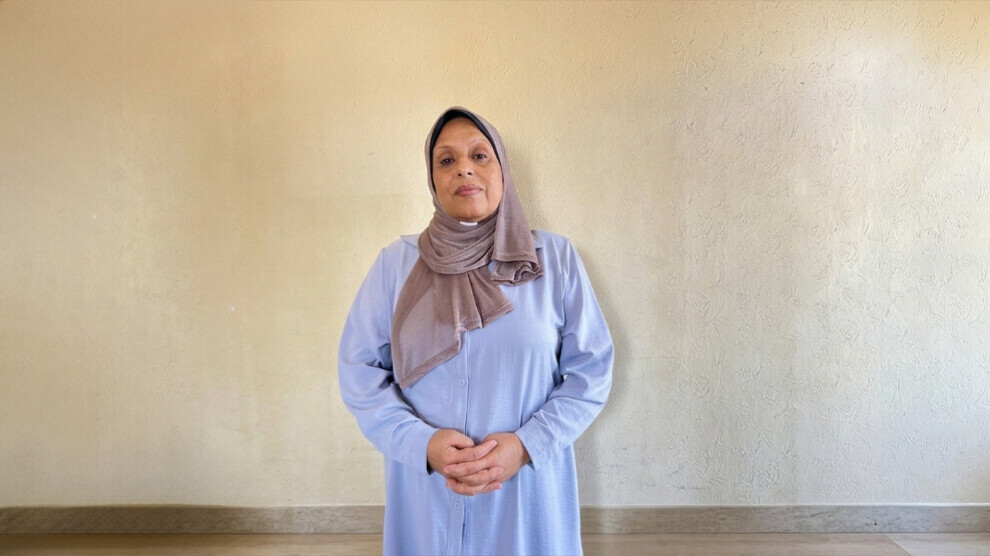
Nahla Al-Akhrasi, a member of the Executive Bureau of the Union of Women's Committees, believes that women constitute a fundamental pillar in the productive process within societies and contribute a pivotal role in achieving balance and stability. She affirms that the level of productivity of any society is largely measured by the extent of its women's capacity to participate and contribute.
She explained that speaking of an active feminist unity necessitates focusing on the existence of a common goal that brings women together, beyond intellectual, political, or geographical differences, along with strengthening dialogue among them, creating space for listening to diverse opinions and exchanging perspectives in ways that serve shared issues, as well as consolidating political empowerment through increasing their participation in public life and qualifying cadres capable of creativity and working in decision-making centers.
It also requires building feminist cooperation networks connecting the West Bank and the Gaza Strip, aimed at addressing pressing societal issues such as education, protection, and combating violence against women, constituting the essential foundation for the establishment of cohesive feminist unity.
She noted that with the continuation of Israeli attacks on Gaza and displacement in the West Bank, it has become important to have a cohesive Palestinian feminist unity working for the advancement of women in all psychological, economic, social, and political fields to strengthen, qualify, and restore their capacities. She explained that women are in a state of constant fragmentation, so unifying them, strengthening their capacities, and finding solutions to the problems they face would alleviate these burdens and enable recovery from the difficult situation that requires building an integrated women's body.
She points out that educating women and supporting them with a free, leading feminist cadre capable of reaching decision-making centers would bring about change and pressure toward many laws that do not do justice to women nor grant them their full rights, especially in light of unjust customs and traditions and the dominance of the tribal system after the war on the sector. Therefore, the existence of a pressure body of women would achieve the desired goal that this feminist unity seeks.
She notes that women's presence in decision-making centers would also improve services, as sometimes women refrain from discussing their private circumstances with a man or perhaps do not trust them. When there is a woman, they will speak, especially regarding critical problems such as divorce, early marriage, and their consequences. She cites the example of many women in Gaza in matters of divorce and custody who still appeal to obtain their rights to alimony or to see their children, whom the father has deprived them of seeing for years due to the absence of an enforcement authority.
Palestinian women face several challenges in building feminist unity, most notably the geographic and political division between the West Bank and the Gaza Strip and the resulting negatives that have the greatest impact on women, in addition to the state of poverty, blockade, and difficult economic conditions the sector faces after the war—whose direct effects are particularly linked to women, whose burdens have increased amid limited resources, scarce support for supporting projects, and a lack of feminist institutions.
She adds that the interruption of communication between institutions in the West Bank and the Gaza Strip, the ongoing pursuit by Israel, and the cutting of all funding channels for feminist units have made coordination difficult between feminists in the Gaza Strip and the West Bank. She adds that several approaches can be offered to build feminist unity, including coordination between feminist institutions present in both parts of the homeland, along with launching women-specific projects and increasing economic empowerment.
Legal empowerment cannot be overlooked, as it enables women to access empowerment centers and decision-making to change the reality they live in. Nahla Al-Akhrasi points out that it is important to use digital platforms and create many digital campaigns that would help achieve the goal. She emphasizes that in light of the above, the building of feminist unity can begin through women's self-confidence, culture, knowledge, support, and changing society's culture and mindset.