
Difficult media reality in Tunisia... repressive decrees and eroded freedom
Decree 54 restricts Tunisia's free expression, turns words into daily risk, and forces journalism to struggle between watchdog role and avoiding loose legal clauses threatening its independence.
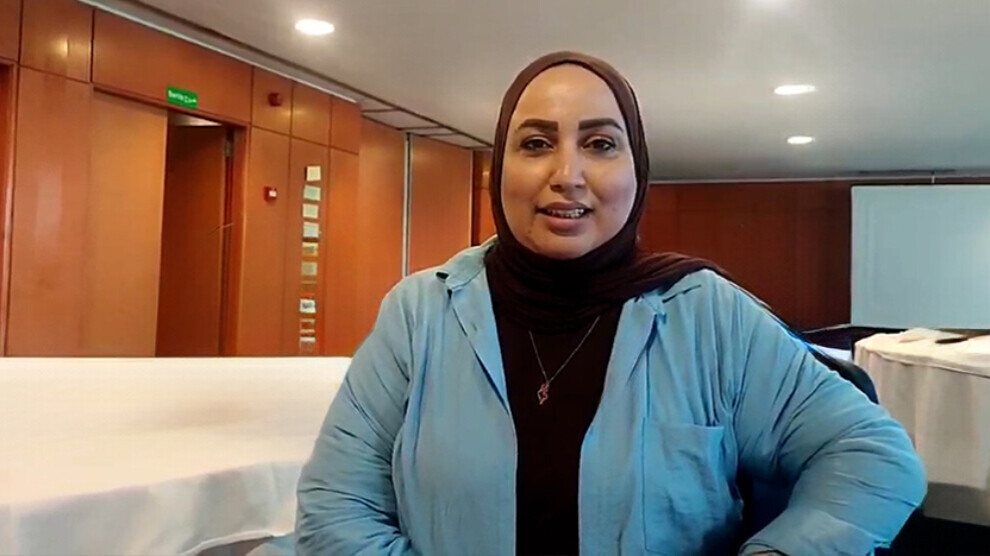
Tunis – Between a rigid arsenal of legislation and an eroding margin of freedom, Tunisian journalism today is experiencing one of its most complex transitional periods. The greatest concern for newsrooms is no longer limited to scarce financial resources or traditional field restrictions; rather, "Decree 54" has become a suspended sword that completely changes the rules of the game.
Between the aim of protecting the digital space and the reality of judicial prosecutions that have targeted journalists and bloggers, the word in Tunisia has become fraught with danger. Tunisian journalism now faces an existential test: how to maintain its role as a "fourth estate" without falling into the traps of loose legal clauses.
Jehan Louati, a member of the National Union of Tunisian Journalists, considers that the general situation of the media sector in Tunisia is deteriorating day by day, especially in light of recent judicial prosecutions targeting a number of media professionals, such as the recent case of journalist Ziad Al‑Hani, and the sentences issued against journalist Mourad Al‑Zoghidi and political commentator Borhen Bsis. This regression coincides with the continued application of Decree 54, which continues to tighten the noose on freedoms and besiege free voices, leaving journalists facing almost the same difficulties and problems without tangible change.
She highlighted that the most prominent current obstacles lie in the absence of mechanisms for accessing information and the difficulty journalists face in obtaining it. This is due to the continued application of Internal Circular No. 19 by Tunisian authorities and administrations, which requires any administrative official to refer back to the Presidency of the Government before making any statement. In response, neither the current government nor previous governments have issued clear, systematic explanations to the public regarding their policies toward this vital sector. The union considers that enabling citizens to access information is a fundamental constitutional right, and through its members it works to raise awareness of this right and defend a free, impartial, pluralistic public and private media that accommodates all voices without discrimination or exclusion.
Against this complex backdrop, Jehan Louati affirmed that the National Union of Tunisian Journalists has called for a series of protests, beginning with journalists' movements at the Tunisian Television branch to demand the amendment of their basic statute, frozen since 1990. The union stresses that journalists' dignity is closely linked to their economic and social security. These movements also included the Tunisian Radio institution, including its branch in Tataouine in southern Tunisia, with expectations of expansion to other regions.
The union renewed its call to the Presidency of the Government for urgent intervention to review these basic statutes and consider the difficult financial situation of workers in the private sector, as journalists' economic security is no less important than their physical safety and freedom of expression.
Continued pressures to regulate the sector and legislative initiatives to develop societal awareness
Jehan Louati mentioned that the Kasbah area, seat of the Presidency of the Government, recently witnessed intensive struggle movements led by the National Union of Tunisian Journalists. The issue of regulating the media sector and issuing the "professional journalist card," which the sector has been deprived of for two years, was among the most prominent demands. The committee responsible for issuing these cards only met after a series of continuous pressures exerted by the union in cooperation with its partners, which helped move this stalled file toward resolution.
In a related context, she reported that the union, in cooperation with a number of members of the Assembly of People's Representatives, has submitted a set of draft laws aimed at reforming and developing the media landscape. Among the most prominent proposals are the amendment of the controversial Decree 54, as well as the draft law on "Media Education," seen as a crucial national initiative to raise societal awareness. It aims to enable citizens and new generations to distinguish between real, quality news and misleading content that floods social media platforms daily.
At the level of structural reforms, she pointed out that the draft law concerning the High Independent Authority for Audiovisual Communication (HAICA) is an urgent necessity to end the current state of ambiguity. The freezing of the authority has led to a decline in the quality of audiovisual media content and the emergence of so‑called "casserole journalism."
It is worth noting that the official document previously established by HAICA imposed specific time frames and dedicated spaces for advertisements, which has been completely absent amid the chaos and randomness currently affecting the sector.
Journalistic unity
Jehan Louati affirmed that journalistic unity today is the only solution to face the increasing challenges afflicting the media sector in Tunisia, especially at the economic and social levels, as well as freedom issues. Considering that media is a vital sector possessing moral, ethical, and actual authority in raising public awareness, the cohesion of the journalistic body and the unification of its efforts represent the fundamental path to finding radical and practical solutions to all current crises.
Alongside this, there is an urgent need for the executive authority to adopt clear public policies toward the sector, opening employment prospects for graduates of the Institute of Press and Information Sciences. These graduates have faced severe difficulties for years in entering the labor market and joining the civil service – an inherent right that has been disrupted due to the absence of official recruitment and the blockage of employment channels in this field.
Relative decline in assaults... real restrictions on field work
Jehan Louati noted that years after the Tunisian revolution, which was an inspiring icon in the region and Africa, the media scene today is witnessing a notable setback reflected in the absence of large popular marches and the weak interaction of citizens with them. However, the role of journalism remains essential in educating society and building its general awareness through solid productions and articles documenting this reality.
In a reading of the latest report by the National Union of Tunisian Journalists, about 154 assaults on journalists were recorded – a figure that some might interpret as a relative decline compared to previous years. However, it does not necessarily reflect an improvement in the climate of freedoms; rather, it is a natural result of the decline in media activities and seminars, and the shrinking of field work in the street, which has ultimately led to the narrowing of the public space for genuine and effective journalistic practice.