
Avin Juma: Weak Laws in Syria Have Led to an increase in Femicide Crimes
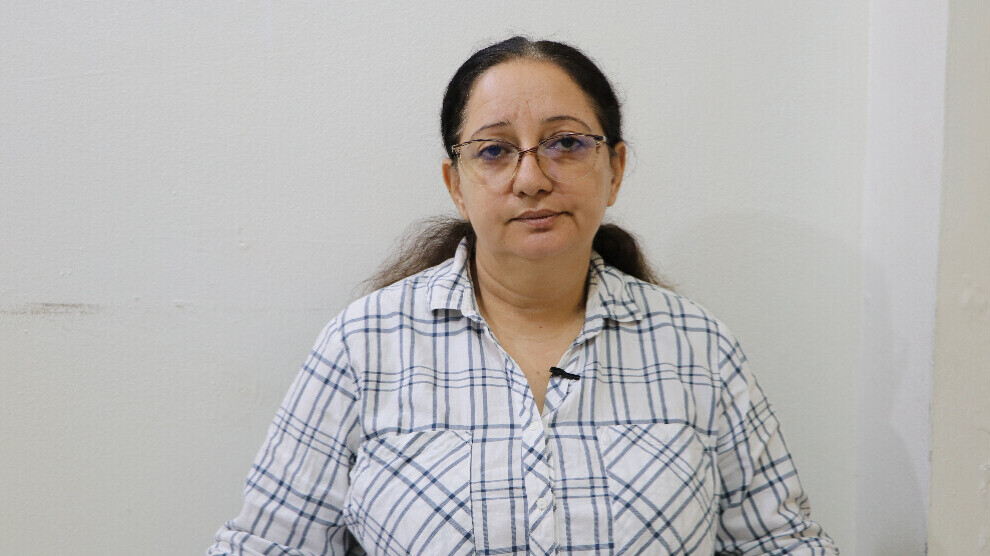
Human rights activist Avin Juma warned of rising femicide and escalating violence and sexual assaults against Syrian women in 2026, stressing documenting crimes, accountability, and stronger protection of women’s rights.
NAGHAM JAJAN
QAMISHLO_While women lose their lives under different circumstances, some crimes remain without justice being achieved, in a scene that raises serious questions about the right to life, and the extent of the ability of the legal and institutional system to provide the necessary protection for women and hold perpetrators accountable in Syria.
Since the beginning of 2026, the need has emerged more urgently to document femicide crimes, verify their numbers and circumstances, reveal the facts to public opinion, and ensure justice for the victims and their families, away from silence, justification, and impunity.
In this context, human rights activist Avin Juma warned of the increase in femicide crimes in Syria, confirming that the restrictions imposed on women, the escalation of forms of violence against them, alongside the weakness of laws and the ineffectiveness of the responsible institutions, constitute factors contributing to the continuation of these violations.
Escalating Violence and Restricting Women's Rights
Avin Juma explained that femicide crimes have witnessed an increase, according to the monitoring operations she conducts, noting that violence and sexual assaults against women have escalated compared to previous years. "In 2026, according to our monitoring, incidents of femicide in Syria have increased, and the rates of violence and sexual assaults against women have risen compared to previous years, and many women have also been injured."
She noted that women's suffering is not limited to physical violence, but extends to the restrictions imposed on their rights and freedoms in multiple fields, including education and work. She explained that some women face strict restrictions that deprive them of basic opportunities, even in some Syrian universities, where study opportunities are not available to them or some opportunities are granted to men without women.
She noted that these practices reflect the widening gap between the rights that women should enjoy and the reality they live, in light of the continuation of various forms of discrimination and violence.
Multiple Causes and a Social Environment That Justifies Violence
Regarding the causes of the escalation of femicide crimes, Avin Juma pointed to a set of factors, including material crises, the influence of narcotic substances, and crimes committed under the name of "honor," alongside discrimination against women in the fields of work and the violent practices that may result from it.
She confirmed that some women are subjected to violence because of the non-acceptance of their presence in work environments, and these practices may develop into serious assaults that end in their loss of lives. She noted the killing of women at the hands of government entities, considering that the multiplicity of parties responsible for acts of violence does not cancel the necessity of investigating every crime, revealing its circumstances, and holding those responsible accountable.
Avin Juma paused at the killings committed by husbands under the pretext of "honor," noting that some of these practices enjoy social justification, and may even sometimes be viewed as a source of pride. She criticized the weak response of civil society organizations toward these crimes, and stresses that the seriousness of the phenomenon requires a more effective movement commensurate with the scale of the violations and their effects on women and society.
She stressed that the weakness of the legal system and the disruption of the work of courts in several areas represent two fundamental factors in the continuation of femicide crimes, noting the limitations of the laws that define penalties against the perpetrators of these crimes, in addition to a number of cases remaining without clear results.
She added that the non-application of laws and the absence of accountability send dangerous messages, as they allow the continuation of violations and weaken legal deterrence, which increases the risks of the recurrence of crimes.
The Experience of Northern and Eastern Syria and the Importance of Women's Struggle
In her discussion of ways to confront violence and enhance women's rights, Avin Juma pointed to the experience of northern and eastern Syria, considering that it provided women with broader opportunities to prove their capabilities and assume roles in various fields. She attributed these gains to women's struggle and their continuous efforts to wrest their rights and enhance their participation in public life.
She called on male and female human rights activists to document violations and reveal every crime that occurs, and to work to convey the voices of the victims and their families.
Avin Juma concluded by emphasizing the necessity of freeing families from fear and social pressures that push them into silence, and working to change the view that deals with violence against women as natural or acceptable, stressing that protecting women begins with recognizing their rights, rejecting all forms of violence against them, and ensuring that the perpetrators of crimes are not allowed to escape punishment.