
After the trial of Rashan Oshi... Sudanese female journalists reject being tried under cybercrime laws
Sudanese female journalists face charges for corruption articles, sparking debate, reflecting fragile professional environment, raising questions about legal framework protecting press freedom and women journalists.
Aya Ibrahim
Sudan – In recent days, a verdict was issued sentencing journalist Rashan Oshi to one year in prison, in addition to a fine, with Sudanese authorities ordering her immediate transfer to a women's prison to serve the sentence. The verdict came as a result of a complaint filed against her under Article 25/26 of the Information Crimes Combating Law of 2018 and its 2020 amendment, for allegedly violating those articles.
The verdict against journalist Rashan Oshi based on the cybercrime law sparked widespread controversy within journalistic circles. Many female journalists announced their rejection of trying professionals in the field under this law, calling for the activation of the Press and Publications Law as the natural legislative framework to regulate journalistic work. They affirmed that resorting to the cybercrime law diminishes their professional rights.
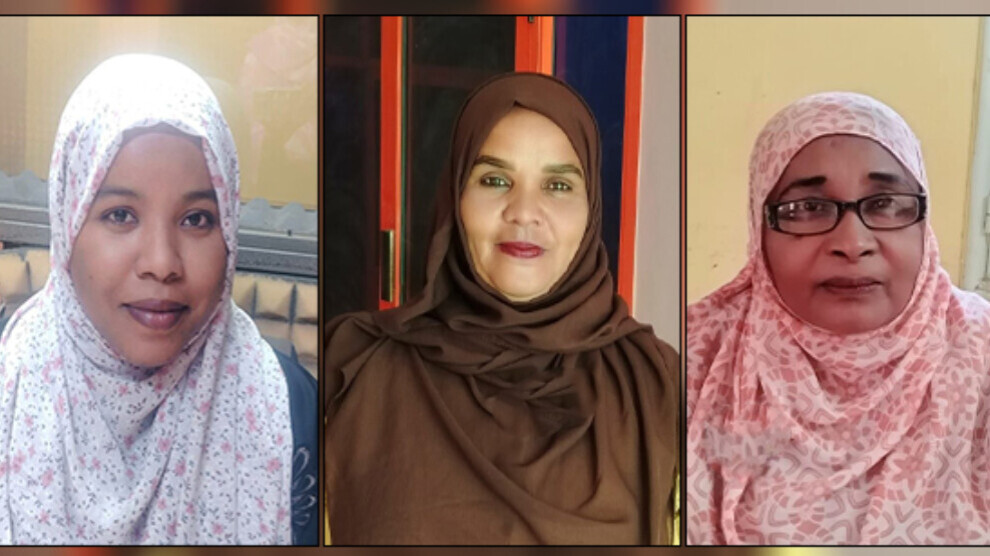
Journalist Rania Abdel Razek stresses the importance of establishing press freedom as a fundamental pillar of media work, pointing out that journalists have long demanded this amid imposed restrictions and a reality of conditional freedom. She emphasizes the need to give journalists sufficient space to perform their professional mission within reasonable limits.
She explained that violations against journalists are numerous, in the absence of adequate legal protection, affirming that female journalists in particular need a law that protects them and safeguards their rights. She also declared her solidarity with everyone who has suffered violations, saying, "We are the voice of the people," working to convey issues that touch citizens' lives and reflect their reality.
Rania Abdel Razek pointed out that fear and anxiety have come to accompany many female journalists due to repeated violations, making it urgent to activate the Press and Publications Law in the coming period to ensure a safe and fair work environment.
The application of the Press and Publications Law has been clearly affected by the complex security conditions the country has experienced since the outbreak of the conflict between the army and the Rapid Support Forces in April 2023 – a conflict that led to the disruption of government institutions and media outlets in many areas.
Despite this disruption, some legal experts believe that the Press and Publications Law of 2009 remains legally in force and has not been repealed or replaced, thus remaining the original legislative framework regulating journalistic work.
For her part, journalist Jida Ahmed said that trying female journalists under the cybercrime law has become more common after the outbreak of the conflict, while the Press and Publications Law has effectively been suspended. She considered this unjust in many cases, stressing the need to reactivate this law as the framework that guarantees female journalists' rights and protects them while performing their duties.
Press freedom in Sudan faces escalating challenges, with repeated cases of arrests and harassment over investigative reports or criticism of government institutions. Among these cases was the arrest of journalist Hajar Suliman before her release on bail, following complaints filed against her over a series of articles in which she exposed violations and corruption files within several institutions, sparking a wide discussion on transparency and accountability issues in financial bodies.
This reality, as many female journalists see it, represents a highly fragile and risky professional environment, reinforcing the need for greater protection and legal guarantees to enable journalists to perform their watchdog role without fear or restriction.
In this context, Ghada Osman, an official in the Supreme Council of Culture and Media in the Northern State, believes that trying female journalists under the cybercrime law has become a "deterrent step" against them, even though they practice their journalistic work professionally and credibly. Therefore, she stresses the need to activate the Press and Publications Law as the "most appropriate" law to regulate the profession and protect its workers.