
"Marry me your sister, I will marry you my sister"... an old equation that controls the fate of thousands of women
"Under 'Shighar' or exchange marriage, a sacred bond of affection and choice becomes a deal binding two families to single fate, with women reduced to the commodities bartered for another."
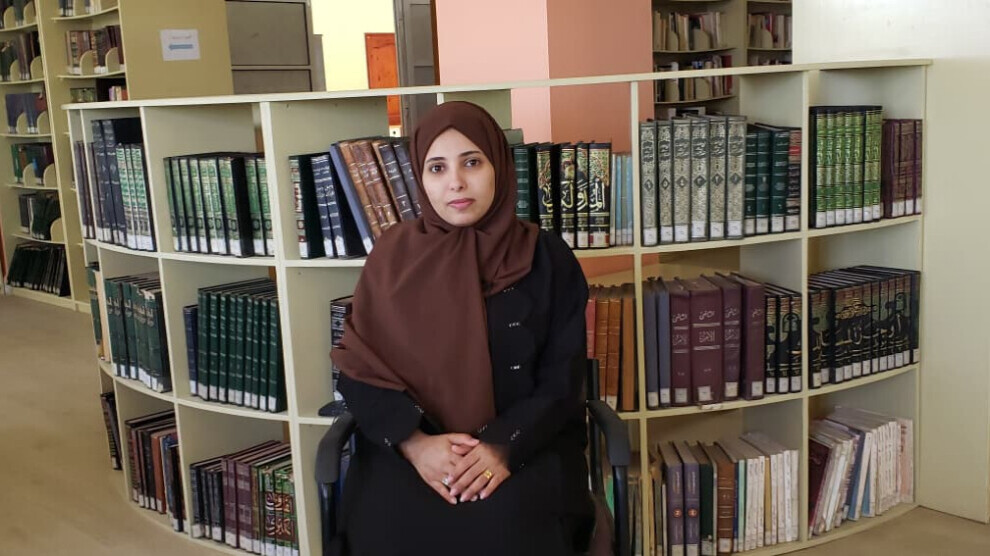
Rahma Shanzour
Yemen_”Shighra,” known locally as “exchange marriage,” is a form of marriage based on the exchange of women between two families. A man marries off his daughter, sister, or any woman under his guardianship on the condition that the other man marries off his daughter or sister to him, with no dowry between them.
This type of marriage is prevalent in most rural tribal areas were poverty. Unemployment. And the absence of legal awareness regarding women’s rights prevail. It condradicts clear legal texts, as Article 23 of the Yemeni Personal Status Law No. 20 of 1992 and its amendments stipulates the invalidity of marriage under coercion, while Article 24 affirms that the dowry is an inherent right of the woman.
Despite the tragic stories that abound in the reality of “Shighar”_ where both wives share the same fate: if one complains about her husband or his family, the other suffers the same, even if she was living in harmony with her husband – this custom remains deeply rooted.
“I was exchanged for my brother’s wife”
Azhar Khaled (27 years old) from the city of Dhamar is one of the victims of this marriage.
She says: “ I was exchanged for my brother’s wife, and I had no opportunity to express my opinion on the marriage that concerned my life and future. I was stripped of my will.”
Azhar Khaled could not adapt to her marital home or give her husband any feelings. Disputes
Between them escalating until their marriage ended in divorce. She says: “ whenever l complained to my family about my bad situation, my brother – for whom l was exchanged with his wife – would intervene, trying to convince me to be patient, then take it upon himself to return me to my husband’s house, not out of love for me, but out of fear for his own wife.”
After the divorce, she thought she had gotten rid of her worries, but she was surprised by the beginning of a new series of problems: family harshness, marginalization at home, and lack of care and support. The matter did not stop with her; it extended to her brother and his wife, as they were forced to divorce according to the "exchange" custom because of her failed marriage and the conflict between the two families. "My brother was forced to divorce, despite the love story that existed between them."
Today, Azhar Khaled tries to recover from the psychological effects left by this marriage, but the feeling of disappointment is still present. She says she lives with a constant sense of incompleteness as a result of an experience imposed on her without her will.
The psychological disorders that victims experience
Women pay a heavy price after the end of this type of relationship. Many go through a series of psychological disorders, ranging from acute anxiety and depressive symptoms, and in some cases reaching aggressive behaviors or hysterical fits. Many women describe "Shighar marriage" as "a path to the abyss" because of the deep psychological and social harm it leaves behind.
Clinical psychologist Shaima Al‑Samei explains that Shighar marriage is "a marriage based on the exchange of women between two families, so that the relationship between the two marriages is linked to each other." She points out that this practice represents a real problem in Yemeni society, as it does in several Arab societies, especially in rural and tribal areas where customs and traditions are prioritized over individual rights.
She adds: "This phenomenon is widespread in environments where tribalism prevails, where marriage is treated as an agreement between two families, not as a personal decision for the woman."
Internal conflict... a woman between her rejection and pressures
"Exchange marriage" is considered a form of gender‑based violence, due to its long‑term psychological and social consequences, especially in cases of separation, which often lead to double family breakdown and exacerbate the vulnerability of affected women.
Shaima Al‑Samei affirms that this type of marriage, when done under coercion or pressure, places the woman in a complex internal psychological conflict, as she finds herself forced to accept despite her internal rejection.
She explains: "The woman feels that she has to agree against her will, while inside she rejects it, so a conflict arises between external pressure and internal rejection." She adds: "This conflict accumulates over time and turns into psychological pressures that may go unnoticed because she lives under continuous family and social pressure."
From pressure to trauma
She notes that these pressures, especially if the marriage occurs at a young age or without psychological readiness, may push the woman into a state of psychological trauma, which in some cases develops into what is known as post‑traumatic stress disorder. She says: "Some cases enter a stage of trauma because they do not accept the marriage from the beginning, and may later reach post‑trauma and non‑acceptance of the new family."
Shaima Al‑Samei points out that many of these marriages end in a state of "emotional divorce," where the relationship continues only formally while genuine feelings and communication are absent. The woman lives with her husband out of family or social obligation, not out of conviction or desire.
She affirms that psychological studies show that marriage based on coercion or violence often lacks stability and does not provide a healthy environment for the family, as this is reflected in the relationship between spouses and in raising children amid continuous internal disturbances. She attributes this to the absence of one of the most important foundations of the marital relationship: free choice, which is directly linked to self‑esteem and a sense of human value.
She stresses that depriving a woman of her right to choose erodes her self‑esteem and may in some cases lead to psychological disorders as a result of feeling that she has no voice or decision in the course of her life.
How can the phenomenon be reduced?
Shaima Al‑Samei believes that reducing this phenomenon begins with community awareness, both at the family level and for women themselves, by highlighting the resulting psychological, social, and family harms. She also emphasizes the importance of educating guardians about the danger of this type of marriage and its negative effects on family stability and children's future.
She calls for empowering women in their right to make decisions, whether to accept or reject, as this is the basis for building a healthy and balanced relationship, noting that the existence of laws criminalizing coercion in marriage, along with their actual implementation, can significantly contribute to reducing the spread of this phenomenon.
Shaima Al‑Samei concludes by saying that any relationship built on coercion and lack of consent is an unhealthy relationship and can be classified as a form of violence against women, as it involves a violation of their basic rights.
Despite the existence of legal texts criminalizing coercion in marriage and guaranteeing women the right to choose, and despite the painful human stories revealed by reality, this practice remains deeply rooted in Yemen, where the authority of custom intertwines with poverty, amid weak legal awareness.