
Civil society in Tunisia... From "the exception" to a phase of siege
In Tunisia, debate intensifies over civil society's role, legal frameworks, funding, and oversight, as differing views clash on balancing regulation with ensuring associational continuity..
Zohour Al-Mashriqi
Tunisia — Civil society organizations in Tunisia are today experiencing a critical phase, considered among the most difficult since 2011. The general climate has shifted from the expansion of spaces of freedom and openness to a context characterized by increasing suspicion and legal and administrative pressures, alongside escalating complaints of restrictions affecting the work of associations.
Sharp debates have emerged around the issue of "foreign funding," which has become raised in official discourse as a matter related to national sovereignty, against warnings from civil actors about the impact of this on the independence of civil society and its ability to operate.
Many associations believe that these pressures could be used, in some cases, to restrict critical voices, especially amid increasing judicial prosecutions and tendencies to revise the legal framework regulating associational work towards more control and oversight, resulting in a state of "forced contraction" within the civil space.
According to rights activists and advocates, this context has been reflected in a series of measures affecting a number of active associations, including the suspension of activities of the Tunisian Association of Democratic Women for one month, coinciding with the 16-day campaign against violence against women, which was considered a measure that limited the ability of victims to obtain legal advice and psychological support. The measures also included the suspension of activities of the "Beity" Association, which shelters victims of violence, in addition to other associations such as "Aswat Nissa" (Women's Voices).
Rights activists believe that this trend could undermine the roles of civil society and create a rights vacuum, leaving vulnerable groups without adequate protection, threatening to reverse the gains of the civil state and entrench an atmosphere of apprehension that limits the freedom of organization, in the context of a broader revision of the legal system governing associations, foremost among them Decree 88 of 2011, under slogans related to protecting national sovereignty and combating suspicious funding.
Increasing policies of criminalization and restriction
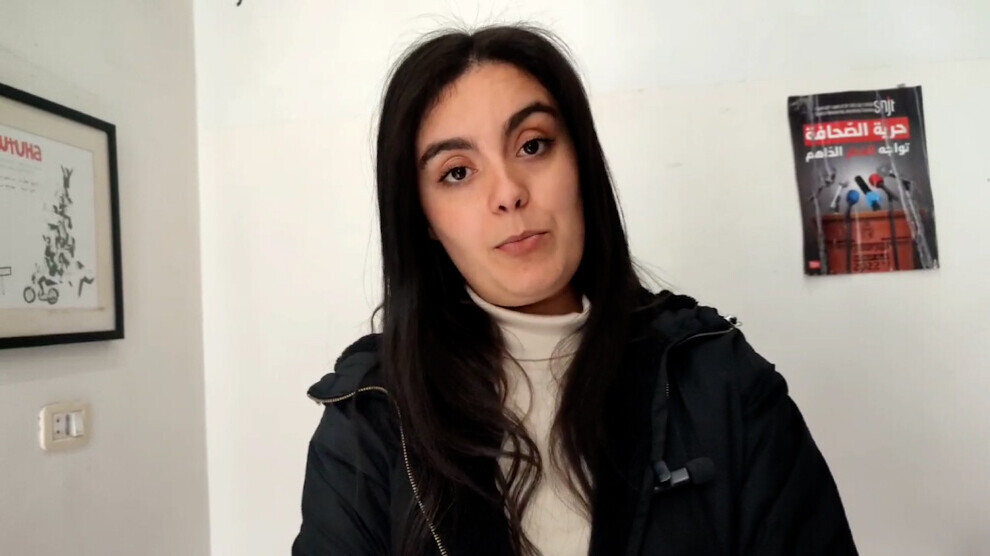
Activist Dhuha Yahyaoui, speaking on behalf of the "No to Criminalizing Civil Work" initiative, told our agency that civil society in Tunisia is facing what she described as increasing policies of criminalization and restriction, pointing to upcoming rights movements to confront manifestations of racism and the decline of freedoms.
She warned of the escalating targeting of civil and solidarity work in the country, explaining that this path began openly in February 2023, following what she described as the racist campaign against sub-Saharan African migrants, which was followed, according to her, by measures affecting a number of associations.
She added that these practices not only affect the rights of migrants and Tunisians but also represent "an infringement on the human rights system and Tunisia's international obligations," in addition to being a violation of the constitution and local laws.
She spoke of widespread hate and smear campaigns on social media platforms targeting civil society and activists by accusing them of treason, affirming that the issue goes beyond individuals to include systematic targeting of associations and national organizations working in the civil and solidarity fields.
She stressed that rights movements will not stop at seminars but will extend to the public street to express absolute rejection of racism, in addition to being present in front of the "Palace of Justice" to demand the immediate release of all detainees due to their solidarity and civil activities, such as Saadia Mesbah, in addition to detainees in the "Flotilla of Resilience" case and other activists facing judicial prosecutions due to their opposition to current policies.
Activist Dhuha Yahyaoui concluded her speech by affirming that free and opposing voices to policies affecting freedoms, union, journalistic, and civil work are today facing a "dangerous context" that threatens the foundations of civil and political work in Tunisia, calling for broad solidarity among various national and rights forces to defend rights and freedoms and ensure the continuity of the civil space.