
High Prices and Declining Purchasing Power... Used Clothing Is a Choice Driven by Necessity
Exorbitant price rises and declining purchasing power have pushed women and limited-income families in Kermanshah toward the used clothing market — a market where even the cheapest clothes have become a difficult and distant commodity for some families.
SARAH POURKHZARI
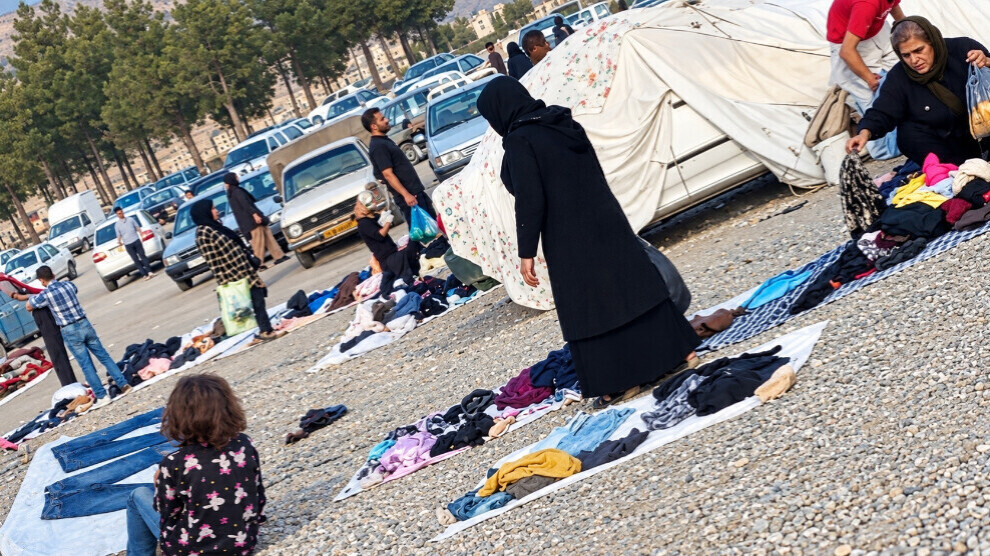
Kermanshah – Old and worn shirts, trousers, and skirts pile on top of one another, and many women gather around this heap, holding their children's hands, turning these clothes over amid the dust and dirt, as if performing a silent ritual.
One woman pulls a red dress from among the pile of clothes; its dust-covered color brings a glimmer of joy to her eyes. When she hears that its price is only thirty thousand tomans, a short but deep smile forms on her lips, and she immediately puts it on her young daughter.
This small snapshot of women and young girls with disheveled hair and torn shoes is one corner of what they call poverty. In recent years, with inflation and runaway price rises, one of the simplest basic needs of a large segment of society has receded to the margins: the matter of clothing.
Many families long ago removed buying clothes from their list of priorities; it is a need that is either suppressed or delegated to the old and used clothing market, because they know they cannot afford to secure it from the official market.
In this market, the first thing that draws attention is the health condition of the clothes: clothes clearly used many times by other people, reaching the new consumer again without any kind of sterilization or regard for health standards. The consumers, the majority of whom are women, are forced to resort to this market to secure clothes for themselves and their children. This refuge may itself pave the way for exposure to various types of skin diseases, infections, and allergies, further complicating the cycle of poverty.
Samira M., who supports a family whose monthly income is less than four million tomans, explains that she is forced to buy cheap used clothes for her daughter and herself due to the high prices of new clothes in the market. Despite suffering from severe inflammation last month because of wearing trousers bought from this market, she returns to shopping there again due to her urgent need to secure clothing.
In many countries around the world, families turn to the used clothing market for economic savings and environmental considerations, and it is subject to specific oversight and standards. In Iran, however, the demand for this market is mainly the result of poverty and declining purchasing power.
Many of these clothes are domestically produced and reach the cheap markets in Kermanshah after being bought and sold several times, sold at prices ranging from two thousand to one hundred thousand tomans depending on their quality. Nevertheless, these low prices are considered exorbitant and heavy for many families. Indeed, some buyers cannot even afford to pay 30 thousand tomans or less.
As a result, securing one of the simplest human needs — clothing — has become difficult and sometimes impossible for a broad segment of society.
Nusrat Sh., a woman who sells used women's and children's clothing in the Friday market in Kermanshah, says: "I sell used women's and children's clothes, and the average price per piece is between 20 and 40 thousand tomans. Because of the high cost of goods and the lack of financial capability, women have resorted to buying these goods from the Friday market."
She explains that she buys these goods from other people and then resells them, but notes that despite this low price, many women who come to buy cannot even afford to pay 20 thousand tomans. When poverty makes even buying cheap clothes difficult.
This seller's account shows the depth of poverty spreading among limited-income groups in Kermanshah, to the extent that many cannot even afford to buy used clothes. For some women, paying 20 thousand tomans is difficult, and sometimes their purchasing power is limited to between five and 10 thousand tomans per piece of clothing.
Shokoufeh S., a journalist in Kermanshah, says on this subject that seeing such faces of poverty in Kermanshah province — the province that tops the misery index table in Iran — is not far from expected. "Imagine a woman searching for a dress for ten thousand tomans amid a pile of the most contaminated clothes to cover her body with; it is clear that such a person has not seen proper food for a long time and suffers from chronic hunger."
She adds: "When many individuals, under conditions of runaway inflation and the collapse of the national currency's value, are unable even to secure amounts ranging between 10 and 100 thousand tomans to provide clothes for their children, this situation shows the extent of the horror with which poverty looms over people's lives in an unimaginable way. But this poverty is not limited to dozens or hundreds of people; thousands of Kermanshah residents are struggling with such conditions, and this spread clearly reveals the depth of the living crisis."
Spending a few hours among these people whose lives have been affected by poverty gives a bitter picture of the deprivation of women and children. Amid piles of worn clothes, young girls with eyes full of hope search for a beautiful dress; children whose even simple dreams have been diminished under the weight of poverty and high prices.