
Rabia Balkhi… The first female voice in the world of Persian literatüre
In the memory of Khorasan, Rabia Balkhi shone brightly_she who emerged from a household steeped in power and prestige to become one of the first women to carve a place for herself in Persian literature.
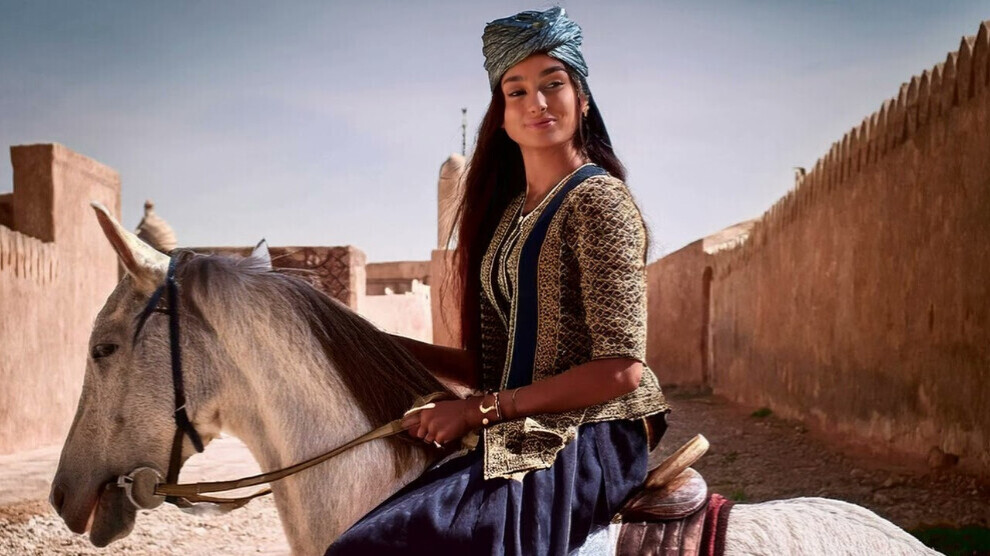
News Center _ Rabia bint Ka’b al-Quzdari, known as Rabia Balkhi, is one of the most prominent female figures in the history of Khorasan. She flourished in the 10th century CE as an exceptional woman. She grew up in a family with extensive political and social influence. Her father, Ka’b, was among the Arabs who migrated to Khorasan during the time of Abu Muslim al-Khurasani.
Her family settled in eastern Persia and her father emerged as one of the senior figures of the Samanid court. He governed Sistan, Kandahar, Bust, and Balkh_the city known to Arabs in the 8th and 9th centuries as “Mother of Cities.” This afforded her the opportunity to learn and engage in a thriving cultural environment, and from this affluent atmosphere her talent was shaped.
Although her birth and death dates are not precisely known, historical accounts recompiled by Nur al-Din al-Jami suggest that she lived during the same period as Rudaki, the poet of the Samanid court under Emir Nasr II (914–943 CE).
Rabia Balkhi is considered the first known female poet in the history of Persian literature. She wrote in both Arabic and Persian, and her biography was first recorded by the historian Zahir al-Din al-'Awfi. Her presence was not limited to literary creativity; she was part of the cultural and political life within the court, where women played influential roles in managing palace affairs, organizing resources, and strengthening social alliances.
Sources indicate that Rabia Balkhi's presence in these circles made her a witness to a thriving cultural economy, where words and poetry were tools of power no less important than political influence. Her belonging to a ruling family placed her at the heart of a system that controlled resources and commercial relations, granting her an active position in public life at the time. She held a literary status, being among the first to speak Persian, and her biography was recorded in 'Awfi's "Lubab al-Albab." She is also considered a symbol of culture and literature, and conferences have been held to discuss her role in the development of women's rhetoric.
Rabia Balkhi's life, with all its light, ended in one of the most tragic tales in Persian heritage. After her father's death, her brother Harith inherited his position. He had a Turkish slave named Baktash, with whom Rabia secretly fell in love. Her secret was revealed at a royal banquet. Harith imprisoned Baktash in a well and killed Rabia by severing her artery and locking her in a closed bathhouse. There, she wrote her final verses with her own blood on the wall before passing away. As for Baktash, he escaped from the well, and upon learning of her death, he killed the governor of the region and then took his own life.
Thus, Rabia Balkhi remains a voice in which poetry mingles with legend, and wound with beauty, enduring as a symbol of a woman who defied the limits of her era, and whose heart led her to a fate that became part of immortal literary memory.
In the 20th century, Afghan cinema revived her story through the film "Rabia Balkhi," presented by Zvandun magazine.
Verses from a poem by Rabia
Among these men, one can overcome dozens
He spoke, rose, and sat like a man
There they arrested him and took Baktash
They took him away so that no one would recognize him!