
A Narrative of Resistancr from Shahrnush Parsipur
Shahrnush Parsipur’s banned masterpiece, Women Without Men, remains relevant as a narrative of women’s resistance and solidarity woven against the patriarchal system and male oppression.
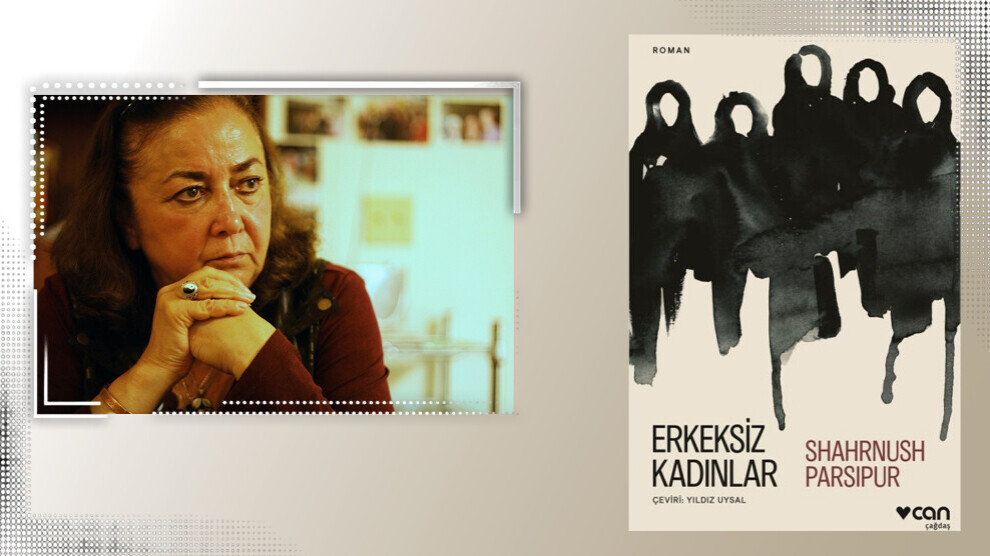
NEWS CENTER_Iranian literature’s pioneering female voice Shahrnush Parispur’s masterpiece, Women Without Men (Zanan-e Bidun-e Mardan), which centers on women’s solidarity, resistance and the quest for liberation in a geopraphy mired by bans, censorship and male oppression, creates a space of women’s struggle and memory that transcends the boundaries of the patriarchal system.
The work focuses on the struggle for liberation and solidarity of five women_sprouting in a utopian garden_against domestic violence, censorship, and state oppression.
Exposing Oppression and Escape
Written in 1989 and subjected to long-term bans in Iran due to the ideological pressures of the regime, the work centers on the intersecting lives of five women from different social strata: Mandokht, Zarrinkolah, Munis, Farrokhlaqa and Faezeh. They meet in a utopian garden on the outskirts of Tehran that opens up, as it were, to the outside of the partriarchal world.
Collective Memory
The work lays bare the struggle for survival waged by women in Iranian society against domestic violence, economic poverty, forced prostitution, and state-legitimized oppression. The presence of women, stepping outside traditional roles and male domination to exist in a garden intertwined with nature, places spatial rebellion and body politics at its core.
Although each of the characters represents a different social wound and trauma, their shared denominator—the female experience—turns them into each other's companions and healers. Thus, the work emphasizes that the strongest response to patriarchal politics is organizational and spiritual solidarity.
The Power of the Pen Against Censorship
Due to this masterpiece, author Shahrnush Parsipur was sentenced to prison in Iran and forced to live in exile for many years. However, Women Without Men, which exposes the reality of women and the systemic violence they face in a lyrical yet uncompromisingly realistic language, transcended the regime's walls of banishment to become a legacy of the universal women’s struggle.
Shahrnush Parsipur’s timeless work preserves its relevance, continuing to serve as a bedside guide for those who struggle.