
From “Gaia” to “Ana” …. “Mother Nature” in Global and Kurdish Mythology.
Across cultures, “Mother Nature” symbolizes creation, generosity, and renewal, seen as life’s origin and cosmic balance; in Kurdish culture, she represents identity, resilience, livelihood, and traditional practices expressing deep respect for the land.
Lava Kurdê
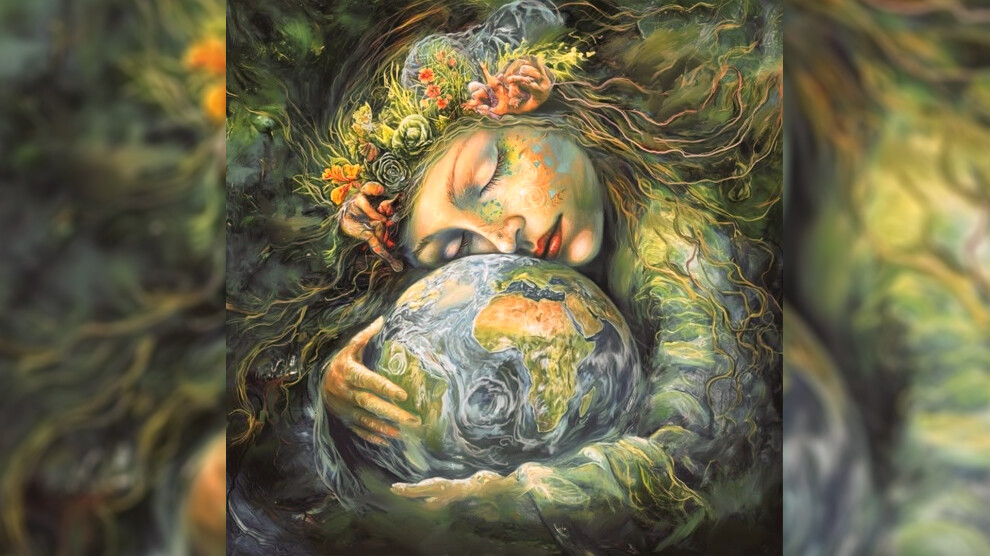
News Center — “Mother Nature” is portrayed as a feminine symbol that grants life, or as a mother goddess who provides sustenance and growth. She embodies her creative power and ability to give, and at times even her violence. She grants everything—from air and food to diverse ecosystems—and at the same time represents the comprehensive bond that connects us to our planet.
“Mother Nature” is the giver of life and a source of generosity. She supplies us with air, water, food, and all the elements necessary for the continuation of life, just as a mother cares for her children. She is also a nurturer and protector who supports the growth of living beings, provides safe refuge through ecosystems and forests, and nourishes life through its diversity and constant renewal. In addition, she is a creative force, as nature represents the primary source of all forms of life and embodies its continuous cycle of birth, death, and renewal. Finally, nature is the organizer, controlling environmental phenomena such as climate and weather, maintaining balance, and clearly revealing the effects of responsible and irresponsible use of resources.
This raises the question: where did the term “Mother Nature” originate? This symbol dates back thousands of years and appeared in many cultures around the world as an embodiment of nature as a fertile, powerful, and creative cosmic force, akin in essence to the seasons and to life itself.
In ancient Greek civilization, this concept was associated with the goddess Gaia, the primordial earth goddess in Greek mythology, who was considered the origin of existence. She gave birth to the sky, mountains, and seas, thus embodying the image of the Great Mother from whom everything emerged. In Roman mythology, the Romans adopted the concept of Terra Mater, or “Mother Earth,” a goddess linked to agricultural rituals and celebrations that glorified the fertility of the land and its ancient roots, making her a symbol of giving and growth.
In the beliefs of Indigenous peoples, particularly in the Americas, the earth is granted a sacred status as a life-giving force that nourishes plants, animals, and humans alike. It is treated as a generous mother deserving of respect and reverence. Meanwhile, during the Middle Ages and the Renaissance, with the intertwining of science and spirituality in Europe, the concept of “Mother Nature” emerged in literature as a poetic and symbolic image used to describe the self-regulating system by which the earth operates and organizes its affairs, giving the expression a deeper aesthetic and philosophical dimension.
Why does the term “Mother Nature” remain important today? Because invoking the image of a mother brings to mind the beauty, strength, and tenderness of nature—qualities we also recognize in the women who raise us and stand by us. Whether it is a flowering tree, a fruitful branch, or the soil beneath our feet, “Mother Nature” and real mothers share the same essence: granting life, spreading love, and nurturing growth.
Among the Kurds, “Mother Nature” is regarded as a source of identity and a pillar of continuity. In Kurdish culture, the image of “Mother Nature” or Mother Earth holds a firmly rooted place, connected to a rich heritage of ancient beliefs. She is considered a source of life and livelihood and an essential part of the roots of Kurdish existence and the meaning of belonging to it.
From the perspective of core or prevailing belief, the mother goddess Ana is considered one of the oldest and most important figures in Kurdish mythology. She is the creator and nurturer of all forms of life, symbolizing fertility, love, generosity, wisdom, and healing. It is said that her waters spring from the mountains. The qualities of Ana are often echoed in the image of the Kurdish woman and mother in modern culture, as the backbone of the family and the spirit of its cohesion.
As a source of life and sustenance, “Mother Nature” in Kurdish heritage has long been linked to agriculture and plants, and to a close relationship with the land—a relationship that combines settlement with a semi-nomadic way of life. This deep connection to nature has helped establish an intimate bond with its elements, and the land is often described as a “Garden of Eternity” due to its fertility and its ability to bestow abundant and diverse resources.
In terms of spirituality, “Mother Nature” is viewed as a bridge connecting earthly existence with the divine realm. Sacred trees, for example, are treated as wise beings and as dwelling places for spirits or deities, and respect for them is expressed through rituals and prayers. Kurds believe that nature possesses a special language, understood only by those whose hearts and souls are prepared to listen, as if it whispers to those capable of hearing.
Regarding cultural identity, the bond with nature forms a central محور of Kurdish national and cultural identity. Mountains, in particular, are a deeply rooted symbol of resilience and survival, a meaning encapsulated in the famous saying: “The Kurds have no friends but the mountains.”
In terms of environmental stewardship, this deep relationship with the land generates a deeply ingrained sense of responsibility toward its care and sustainability. Protecting the environment is seen as protecting humanity itself and the essence of identity. In contemporary Kurdish thought, environmental preservation has become part of social and political philosophy, as a natural extension of this historical bond with the land.
As for traditional practices aimed at preserving “Mother Nature,” the most prominent is Newroz, whose celebration, coinciding with the spring equinox, represents a major cultural event symbolizing the renewal of the earth and the return of life. It is an occasion to express gratitude for nature’s blessings and to reaffirm the importance of caring for and respecting the planet. In the tradition of the “Rain Bride” during times of drought, children perform a folk ritual in which they carry an image of the mother goddess Ana, known as the Rain Bride, and chant songs asking for rain, as a symbolic expression of hope and connection with natural forces. Symbols of nature—such as the pomegranate, which represents fertility and abundance and is associated with the goddess Ana—are also used as recurring decorative elements in Kurdish carpets and handicrafts, reflecting the presence of these symbols in cultural memory and heritage.