
Invasive Weed Devours Farmland in Rural Taiz, Deepening Farmers' Suffering
In Wadi al-Dhabab, Taiz's breadbasket, drought is no longer the only threat—an invasive weed has swept the land, destroying crops and pastures, pushing dozens of families into losing their livelihoods amid no effective intervention.
RANIA ABDULLAH
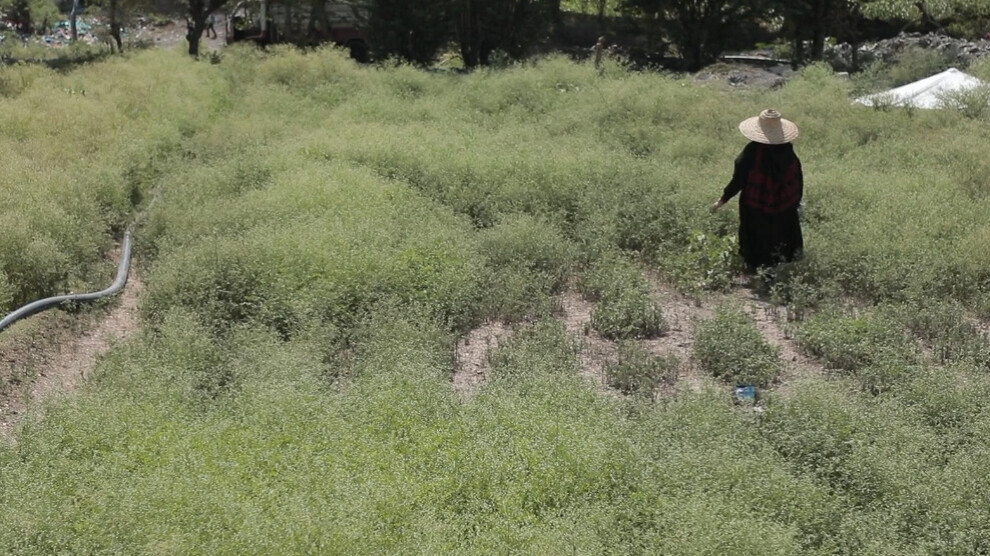
Yemen — A single plant produces thousands of seeds, yet it has wiped out the livelihoods of hundreds of farmers. In Wadi al-Dhabab, Taiz, fertile land has turned into terrain overrun by an invasive plant, while residents stand helpless in the face of a danger that widens by the day.
Safiya Ahmed and her family once relied entirely on farming to meet their daily needs, harvesting a variety of vegetables and fruits from their land and selling them to secure a stable income. But this reality changed over the past two years after an invasive weed spread across the agricultural land, turning vast stretches of fertile soil into near-barren terrain, and causing crop yields to plummet.
Safiya Ahmed, a farmer in the village of Al-Sayyahi in Wadi al-Dhabab, west of Taiz city, says: "We used to grow peppers, okra, coriander, and other vegetables, and the land was enough to sustain us and provide our livelihood, but today we can no longer grow anything."
Farmers in the area affirm that they don't know the name of this weed, but they see its destructive effects growing day by day. She adds: "This shrub appeared in the valley two years ago, and we don't know where it came from. All we know is that it has ruined the farming and affected our livestock, and we no longer have any source of income to rely on."
For decades, Wadi al-Dhabab was known as one of the most important agricultural valleys in Taiz governorate, earning the nickname "Taiz's garden" for the high-quality vegetables and fruits it supplied to the city and other governorates. But farmers affirm that the valley has lost much of this standing in recent years due to drought and the spread of this invasive weed.
Drought Compounds the Crisis
The weed's impact hasn't been limited to crops — it has extended to livestock as well. Farmer Rahma Ali was forced to sell the cows and sheep she once owned after grazing plants disappeared, saying: "We used to live off the bounty of the valley, and we had cows and sheep, but the drought took a lot from us, and then this shrub came to finish off what remained."
She adds that animals refuse to go near this weed: "Cows, sheep, and even camels won't eat it, so it keeps spreading until it kills off the rest of the plants, and we've had no choice but to sell our livestock."
A Fast-Spreading Invasive Plant
This plant is scientifically known as parthenium (Parthenium hysterophorus), and is considered one of the most dangerous invasive plants in the world. According to the Asia-Pacific Forest Invasive Species Network, this weed has a remarkable ability to adapt to different environments, as a single plant produces between 10,000 and 25,000 small seeds that spread easily through floodwater, vehicles, and livestock, and can remain able to germinate in the soil for years.
Despite repeated attempts to get rid of it, farmers affirm their efforts have achieved little, with Rahma Ali saying: "Every time we pull out a small seedling, we find dozens of new seedlings around it, until the entire valley became covered with it, and no crop is able to grow anymore." Its harm isn't limited to farming either — she notes that simply touching it causes severe itching and skin swelling.
Meanwhile, farmers complain about the absence of any official intervention to address the problem, noting: "No one from the agriculture office has visited us, and we haven't been given any guidance or solutions. We tried burning it and getting rid of it through various means, but we haven't succeeded."
Rahma Ali concludes: "We've come to watch our land deteriorate before our eyes without being able to do anything. We've tried every method available to us, and today all we can do is wait for the relevant authorities and agricultural organizations to step in and save what remains of our land and our livelihood."
Residents Facing the Crisis Alone
Activist Dalia Mohammed, a resident of the area, explains that the drought the region has suffered from for two years has caused a sharp decline in agricultural activity, while the spread of this weed has compounded residents' suffering.
She says: "Drought and the water crisis have devastated farming to a large extent, and then this shrub came to make things even worse. It has spread everywhere, and residents still don't know its name or nature."
She adds that any attempt to grow crops, or even local fodder plants, ends in failure due to how quickly this weed spreads, affirming that many families have lost their sole source of income.
Dalia criticizes what she describes as the absence of relevant authorities, affirming that the agriculture office and local authority have implemented no programs to combat the weed, support farmers, or improve water resource management, leaving residents to face the crisis on their own.
According to the Irrigation Unit at the Ministry of Agriculture, Irrigation, and Fisheries, parthenium weed entered Yemen through imported grain and fodder shipments, before spreading across coastal governorates such as Aden, Abyan, Lahj, and Hodeidah, then extending into agricultural valleys and along irrigation canal banks, with climate change helping accelerate its spread.
Controlling it requires a comprehensive plan involving early detection, manual removal before the flowering stage using protective equipment, then burning or safely burying the plants, alongside cleaning agricultural equipment, monitoring organic fertilizer, and using specialized pesticides under technical supervision when necessary.