
Women's Resilience Revives Lebanese Villages After the Raids
Amid rubble and war-torn fields, Lebanese villagers return with resilience. Women like Zainab and Mahmouda carry their homeland, restoring life to shattered homes.
RANA JOUNI
Lebanon — Many villages in Lebanon's border and rural areas have witnessed violent waves of Israeli raids in recent months, leaving widespread destruction in homes and infrastructure and forcing thousands of families to temporarily flee in search of safety. As military operations have subsided, residents have begun gradually returning to their villages, facing a new reality ranging from rubble and lack of basic services to an urgent need to rebuild their lives from scratch.
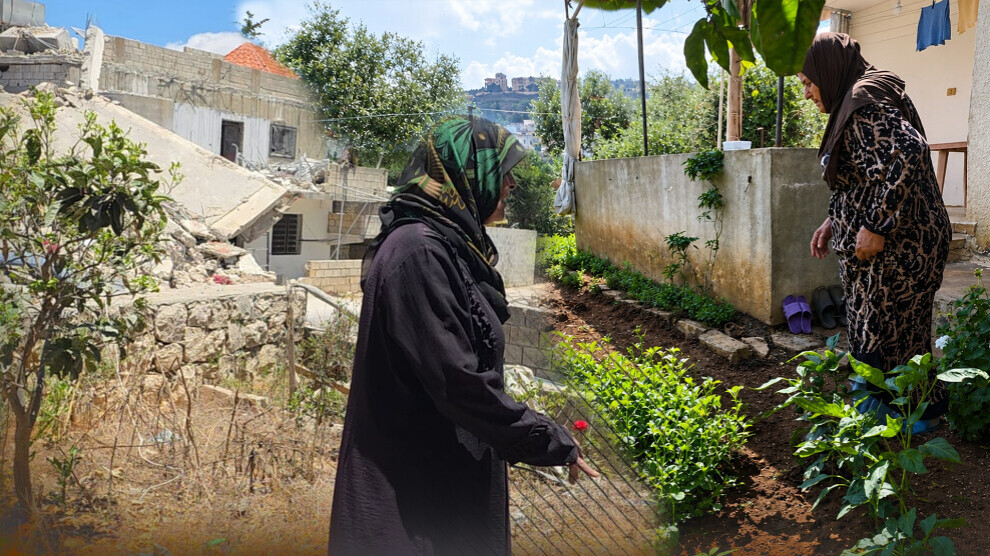
Amid this scene, individual stories emerge of women who have returned to their homes despite the destruction, carrying the will to restore life to what remains of stones and soil. Among these are Zainab Qashqoush, who began her return journey from under the rubble, and Mahmouda Naim Mahdi, who remained in her old home despite the war—together embodying a broader image of villages striving to rise anew.
Zainab Qashqoush: From Under the Rubble, the Return Journey Begins
Among scattered glass piles and rubble left by the raids, Zainab Qashqoush spends her day cleaning her home and removing traces of destruction—a scene encapsulating part of the reality of residents returning to their villages after the war. She says she began at dawn collecting glass and stones and cleaning the house, explaining that the raids forced her to leave home before she returned to find it damaged. "My survival was because I left the place shortly before it was targeted."
Despite her return, basic services remain absent. She points out that electricity and water have not yet been restored, and she relies on what remains of stored water in the tank, while the provisions she stocked before the war helped her endure the difficult conditions.
Zainab Qashqoush affirms that returning to her home and land has alleviated the harshness of what she experienced during the war, considering that staying in one's home and homeland, regardless of circumstances, is better than being away. She describes her land as her livelihood and life, noting that she has begun cleaning it in preparation for replanting it as before.
Despite the continued difficulty of conditions, she insists on staying in her town, affirming that she does not consider leaving it. She sums up her wish as staying in her home and land, calling on those who have not yet returned to their villages to come back when conditions allow, to revive the land and restore life anew.
A Story of Resilience in a House That Refuses to Leave Memory
In one of Harouf's old houses, where walls store stories of past generations, Mahmouda Naim Mahdi continues her life between her field and her roses, holding onto daily details that war could not snatch from her.
The 82-year-old chose to stay in her home despite the harshness of war and the destruction that struck many of the old town's houses. For her, the house is not just a place, and the land is not just a field—they are memory, age, and belonging. She says: "Since I became aware of the world, wars have chased us. I do not like to leave my house, because when a person leaves their home, they become tired and exhausted."
Amid her roses and plants, she spent the heavy days of war, seeking moments of calm between the sounds of raids and the drones that never left the town's sky. She recounts: "We would go to the field and come back, but we could not sit in front of the house as we used to. We stayed alert, watching our surroundings for fear that something would hit us."
Although she has lived through many wars, she believes this one was the harshest, as it imposed fear on the details of daily life and turned the simplest moments into constant vigilance. Nevertheless, the land remained her only refuge. She plants whatever vegetables and summer crops she can, maintaining a relationship with the soil that has never been broken.
She belongs to a generation that knew the meaning of toil in the land, when farmers depended on their crops to secure their needs from the bounty of their fields. She recalls: "We used to plant wheat, corn, chickpeas, and tobacco... We toiled in the land and struggled, but we were happy with our lives."
In her old house, she encapsulates a relationship that goes beyond shelter to roots and memory. Here she lived, here she raised her family, and here her story remains. She says: "This house means so much to me... here I lived, and here I built my family. A house is not just stones; a house is life."
Women's return is not merely a return to a home or land but a silent confrontation with the effects of destruction and a determination that what the raids on Lebanon left behind cannot overcome their roots embedded in the soil. In scenes that encapsulate the resilience of villages after war, stories of survival are embodied—stories of women who chose to be the first to rearrange life anew.