
The Engineering of Famine in Palestine Continues and Civilians Pay the Price
The ceasefire didn't end Gaza's hunger crisis; destroyed farmland, livestock, fisheries, rising food prices, and declining aid left thousands of families with limited food options and unmet basic needs.
RAFIF ESLIM
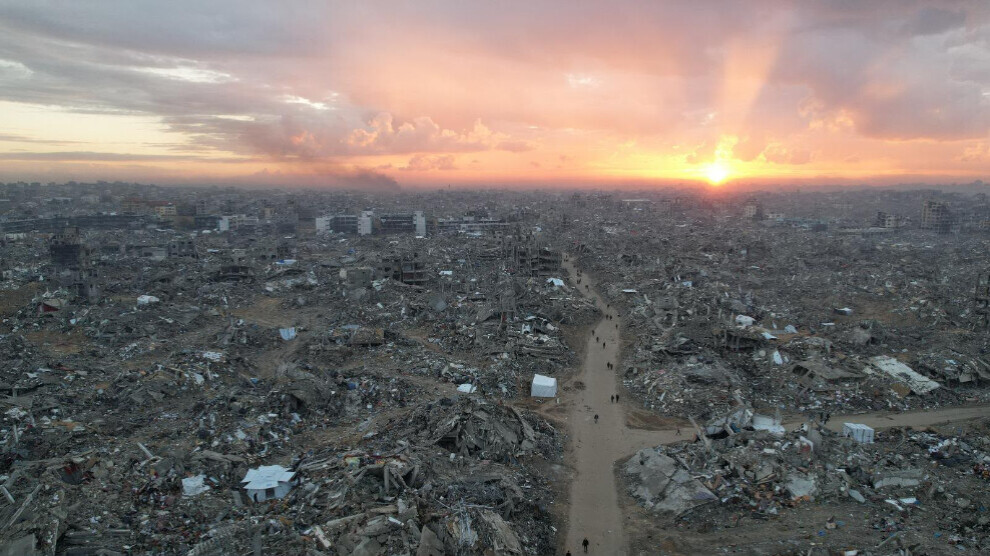
PALESTINE- Famine in Palestine did not end after Israel announced a ceasefire in October 2025, as it continued in various forms, starting from the destruction of the agricultural, animal, and fisheries sectors, to focusing humanitarian aid on starches and legumes only without protein, and ending with the insane rise in commodity prices, which pushed many families to limit themselves to what fills their empty stomachs. This is exactly what explains the concept of engineering famine.
Economics researcher Wiam Wahba explained to our agency that the situation in the Gaza Strip has not fundamentally changed.

Although the entry of aid into the stricken city contributed to limiting the severity of the crisis, the World Food Programme's announcement of reducing its aid due to a funding shortage will deprive about half a million Gaza residents of access to their basic food needs, such as flour, rice, and canned legumes, which the majority of families depend on to prepare lunch in particular.
She noted that the majority of families depend on meals that do not meet their nutritional needs but only postpone the feeling of hunger, as they cannot obtain meat, vegetables, or fruits. She explained that about one and a half million people have been recorded as suffering from food insecurity, especially children, women, and the elderly, and this does not mean excluding youth and men from this situation.
The imbalance is also due, as she explained, to the nature of importing some goods and their entry into the Strip, where sweets and soft drinks dominate part of the supply, while meat and eggs need additional expenses to arrive without spoiling, as they are only transported through refrigerated trucks. These trucks are often subjected to delays at the crossings, which increases the costs of bringing them in and storing them for the merchant, who in turn raises the price for the consumer. Consequently, the citizen cannot buy, not because he does not want to, but because he does not have the financial ability.
The Destruction of the Seed Bank and Agricultural Land Threatens Food Security
Wiam Wahba points out that Gaza before the war possessed an integrated seed bank for all types of crops, located east of the Qarara area in Khan Younis city in the southern Gaza Strip, but it was subjected to direct targeting by Israeli forces. Those in charge of this project carried out an individual initiative through which they were able to collect 32 types of seeds, then followed that step by planting seedlings and extracting seeds from them to store them in a tent set up in Deir al-Balah city in the central Gaza Strip, to be used in agriculture again in the future.
She explains that the majority of arable land in the Gaza Strip is located behind the Yellow Line, and therefore if residents want to reclaim and cultivate the land, they must wait for permission to access it. Meanwhile, the rest of the land available to residents is in western areas with yellow sandy soil affected by the coastal environment, a soil that does not help many crops succeed, especially with its exposure to seawater, in addition to the absence of large areas and the prevention of the entry of pesticides and fertilizers.
Undermining Food Sources
The chain of these measures was completed, according to Wiam Wahba, by striking poultry farms or leaving them without care, as their owners could not move them during successive displacements and did not find the grains needed to feed them. Famine affected humans, animals, and birds in the stricken city, which shows, according to her assessment, that Israel worked to undermine food sources by destroying seeds and agricultural land, disrupting water sources, targeting poultry incubators, and then closing the crossings and restricting the entry of supplies.
She added that Israel has known since its invasion of the Gaza Strip that its residents depend on three main sectors: first, agriculture; second, animal husbandry; and third, fisheries. She noted that closing the sea and preventing naval vessels from allowing fishermen to enter deprived the population of one of the basic food sources, and even when fish are available, their price is very high.
Economics researcher Wiam Wahba confirmed that famine resembles a destructive bomb, but it operates in a different way, as it kills the population in the long term. Therefore, the Gazan woman cannot do more than what she has done over the past years to protect her family from the misery of hunger, while addressing this crisis remains the responsibility of international, human rights, and humanitarian institutions.