
Social Stigma Haunts Yemeni Women Working in Humanitarian Organizations
Yemeni women working in humanitarian organizations face immense pressure, from questioning their intentions to outright bans and threats—making their continuity in this work a daily challenge.
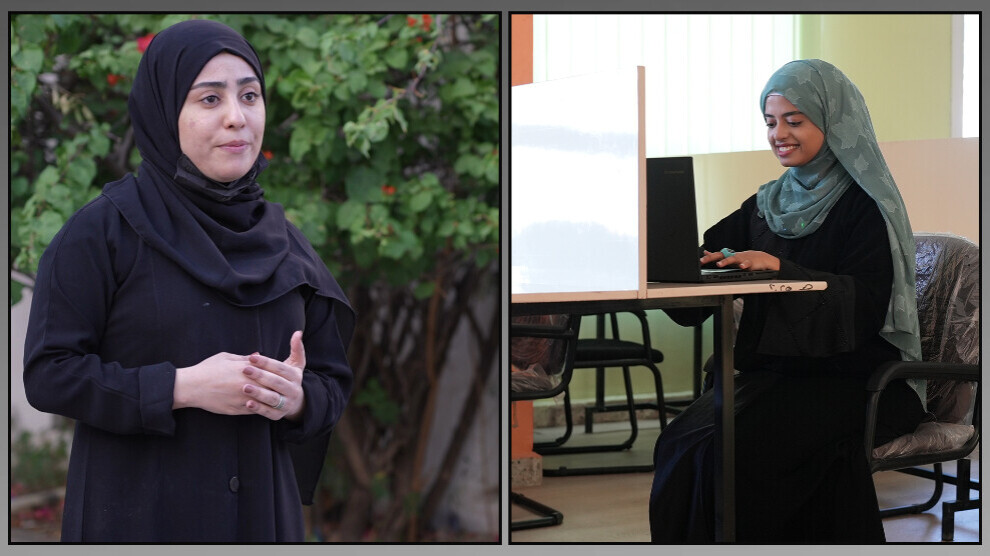
Rahma Shanzour
Yemen — The work of Yemeni women in local and international organizations and associations faces strict social and familial barriers. A large portion of society views women’s engagement in this field as “shameful” and as a violation of prevailing customs and traditions.
Despite the humanitarian and developmental nature of most tasks performed by women in local and international organizations, their participation is often linked in many areas to immoral behavior or social looseness, reflecting a stereotype rooted in ignorance about the true nature of this work and its positive impact.
Testimonies from women and girls working in this sector reveal the extent of the pressure they face—from doubting their intentions, to bans and threats, and even restrictions within their own families—making their persistence in this work a daily struggle.
“Yemeni society pursues the working woman with a harsh gaze”
Plastic artist Pascal Al-Hamdani affirms that Yemeni society often looks harshly upon working women, particularly those engaged with humanitarian organizations. She notes that “many families prevent their daughters from working, especially in humanitarian organizations, due to stereotypical ideas linking women’s participation to deviation or immoral behavior.”
Pascal Al-Hamdani calls on families to support their daughters by allowing them to work, stressing that “the first step is providing an independent space that protects their privacy and enhances their self-respect and respect for their families. The second step is allowing them to work so they can discover their own lives and future, and prove that women are capable of giving and contributing effectively to society without stigma or restriction.”
“A woman’s character and morals are what determine her behavior”
For her part, community activist Naamatullah Mohammed Jarallah, one of the workers in the community and humanitarian field, states that Yemeni society shows great reservation toward women’s participation in humanitarian work. Many fathers prevent their daughters from joining organizations, believing it may lead to “moral corruption.” However, she clarifies that a woman’s character and morals determine her behavior—not the nature or location of her work—and that linking organizational work to social over-liberation is misguided.
Naamatullah Mohammed Jarallah added that women participants were a major source of support, especially during the war, as they helped deliver assistance to vulnerable communities, and their participation was overwhelmingly positive.
She believes that “today’s woman is stronger because she manages both household affairs and external work simultaneously, despite family pressures that prevented some women from continuing their education or work. However, a woman’s persistence in her education and career enhances her confidence and her ability to contribute to society.”
She emphasized that most women who have recently held positions have made a tangible positive impact—unlike some men who failed to achieve real change. “Women’s participation in society has not been limited to humanitarian work alone but also includes peacebuilding efforts, proving that women are capable of facing challenges and achieving positive impact despite difficult circumstances.”
The community activist concluded by stressing the importance of family support for women and enabling them to work and pursue education. “Trusting the girl and giving her the freedom to decide where she studies and works is essential for empowering her and building a more inclusive and just society.”
Reports indicate that women constituted about 80% of first responders in many humanitarian response activities in Yemen, reflecting their vital role in providing urgent support to affected communities, especially during times of crisis and conflict.
Their participation in specialized training programs has also increased to 56% following the implementation of empowerment and decentralized training programs, helping enhance their skills and equip them with the capacities needed to manage humanitarian projects and fieldwork effectively.
These figures demonstrate the growing role of Yemeni women in the community and humanitarian sectors. Women are no longer merely recipients of aid—they have become key actors in delivering direct support to those in need, organizing relief efforts, and contributing to planning local development projects.
Their active participation also extends to peacebuilding efforts and working to strengthen social cohesion, despite the societal and familial challenges that continue to restrict their mobility in some areas.