
Shida Marouf: Social Obstacles Prevent Archiving Women's History
As gender dominance and the marginalization of women translators and writers continue in the Kurdistan Region, women continue to establish their mark in the cultural field through self-development and individual efforts.
DIREN RAHIM
Sulaymaniyah — The recording and archiving of women's history in Kurdistan and the world has long been subjected to a shadow of structural deprivation. In the Middle Ages, writing history was a male monopoly, and women's output was published either anonymously or under male pseudonyms. Although this process witnessed a notable change with the emergence of feminist movements, the marginalization of women's capabilities continues.
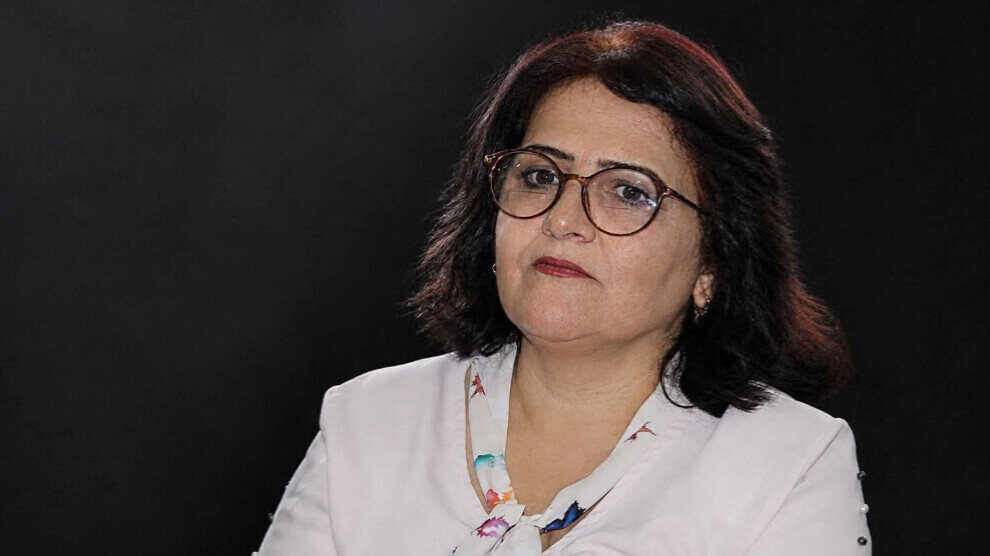
In this context, writer and translator Shida Marouf said that women constantly face many obstacles and barriers, and these obstacles take multiple forms—some social, some familial, some individual and educational, in addition to the religious aspect in general.
She believes that all these factors turn into obstacles that reduce women's opportunities for visibility and prevent them from recording their own history due to the difficulties standing in their way: "Sometimes a woman wants to write her memoirs, but the question is: Who allows her to do so? At other times, the economic aspect constitutes an obstacle to archiving her life journey, and often there are other reasons behind that, or she is forced to rely on private support to reach her goal, given that public support provided to women is very little compared to what men receive."
This problem is linked primarily, according to the writer, to social conditions and circumstances: "Men, thanks to the broader social freedom they enjoy, have a greater ability to be present and participate in meetings and various activities. Because this matter has not been taken seriously and has not been given sufficient importance, the women who have managed to record their history can be counted on the fingers of one hand."
She stressed that archiving women's history is "extremely important, and we hope from today onward that these obstacles will disappear so that we can archive women's journeys and experiences."
The Loss of an Important Part of Their History
Shida Marouf noted that "a woman who records her history becomes a method and a school for future women. Those who come after her read her output, and it reflects in their minds as a role model to be emulated. They think about the past and how that woman managed to reach that status, which drives our girls and youth to follow that method."
She pointed out that "every year, emerging girls graduate in the fields of arts, media, and other specializations, but due to society's talk, rumors, customs, and traditions, they end up leaving their work and turning to professions unrelated to their passion and spirit, because society never ceases to weave the chains of 'shame' in its imagination, which doubles the negative impact of these rumors and sayings on this sensitive issue."
She believes that female researchers and writers must play an active role and contribute to pushing this issue forward, to provide correct guidance and be pioneers for other women, with the aim of creating suitable opportunities for them to showcase their capabilities and potential in society.
"Media Must Work with Greater Awareness"
Writer Shida Marouf explained that "media must work with greater awareness and in a better way to record women's history, and must make this a fundamental program and a primary goal to document women's journeys and transmit them to future generations. Media should also work with more professionalism, ethics, and literary standards in this field it adopts."
She believes that currently "we have some media platforms on social media that work to destroy women by spreading false and inaccurate news, which can be addressed and limited through the Ministry of Culture, given its utmost importance."
In the past, as she says, media was paper-based and had special value and importance, with permanent readers. Now, the number of readers and listeners alike has decreased. Nevertheless, she affirms that "we can write this history and re-document it by archiving it through capable and qualified individuals and institutions, and then equating and comparing it with the history of women in other countries, to serve as a bridge for mutual understanding."
Women and the Mountains... Yesterday's Experiences as a Foundation for Archiving the Future
She added: "Unfortunately, we do not have an official institution dedicated to archiving women's history. There is only one institution working in this field as much as its capabilities allow—the (Leader Library, Archive, and Club for Documenting Kurdish Women's History)—but how much importance has been given to this issue?"
She stressed that "we must take this matter into consideration. We follow their work closely, but where has it reached and what has it achieved? This is a matter that returns to that institution and its center. Nevertheless, we completely lack any governmental or partisan institution specifically concerned with archiving women's memoirs and history in a specialized manner."
She also said: "In the past, we had the women of the mountains, the fighters, and their experience became a foundation and inspiration for the women of the present." The life experiences of artists, writers, and women who worked hard in any field, as she affirms, "constitute the basic building block and the fundamental concept for writing history and archiving. Therefore, continuous follow-up and investigation must be conducted to search for women who possess real experiences, so that we can place a huge archive before the eyes of future generations."
In conclusion, writer Shida Marouf directed a call to women to take the initiative to preserve their history: "I demand that women who possess experiences and expertise in any field take the initiative themselves to invite those concerned with documenting history and experiences, and take steps forward to develop their skills. There is no woman devoid of talent or ability; rather, the matter sometimes depends on not allocating enough time or the appropriate opportunity for her. At the same time, a woman's ability and excellence are not necessarily limited to the fields of study, intellectual education, and university. She is capable of achieving success and leadership in any work or task she undertakes in the struggle of life."