
Renewed Shelling and Suspended Services... Ceasefire Violations Raise Fears Among Sweida Residents
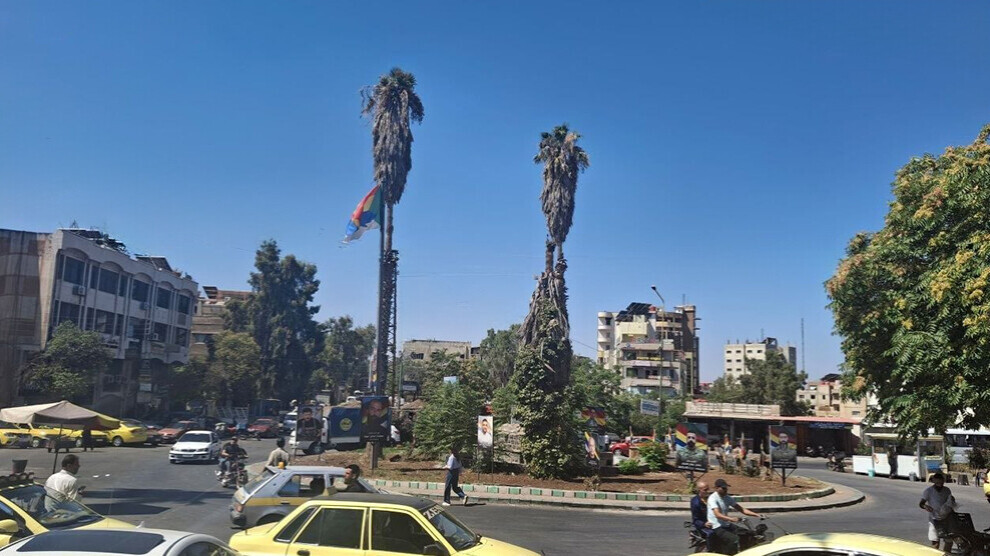
The city of Sweida is witnessing renewed escalation despite ceasefire agreements, exacerbating civilian suffering and threatening education and basic services amid growing fears of widening violence and its humanitarian and psychological repercussions.
ROSHELLE JUNIOR
Sweida_ Ceasefire viiolations continue in the Syrian city of Sweida amid escalating tensions that raise residents’ fears, particularly with repeated shelling targeting civilian and residential areas, accompanied by human and material losses and psychological repercussions on children and families.
Since the events of July 2025, the city of Sweida has not experienced a state of stability, despite agreements. Residents face repercussions related to basic services and education, at a time when security developments coincide with the examination period.
In recent days, the city has witnessed new violations, including a shell that landed on agricultural land, killing a farmer and a female farmer and injuring a number of citizens, in addition to material damage.
Fear Haunts Residents
Slav Mlak, a resident of Sweida, indicates that recent days have seen an increasing escalation in ceasefire violations, causing panic and fear among residents. She explained that this escalation coincided with students taking their exams, which increased anxiety among families, amid a growing feeling among city residents that shelling no longer excludes any residential area.
She says that residents now live in a state of anticipation and fear, as every neighborhood and every home fears being a target of shelling. She stressed that the repercussions of the escalation are not limited to material damage but extend to deep psychological effects, particularly on children who are repeatedly exposed to scenes of violence and shelling.
She points out that what they know well is that there are fundamental children's rights, foremost among them the right to education in a safe and stable environment, along with human rights that should be protected. She questions the role of organizations concerned with protecting these rights, and what the children's fault is in what is happening around them, and what they have done to bear the consequences of violence and escalation.
Slav Mlak recounts that she has two daughters studying in the scientific baccalaureate, one year apart. She explains that the family, despite its keenness to encourage her daughters to continue their education, feels that the path is unsafe, in the absence of sufficient guarantees to protect students. She questions why exams are not held inside the city, and how long this situation—which places students and their families under continuous psychological pressure—will continue.
She notes that the repeated targeting, in her description, places children in a renewed cycle of fear. Every time residents try to help their children overcome what they have experienced and recover from its psychological effects, shelling or tension returns to bring back the same feelings. She stresses that the issue, from her perspective, is not limited to education alone but extends to various aspects of life and to the nature of the relationship between residents and those responsible for their security.
Calls to Stop Escalation in Sweida
For her part, political activist Sirin Kanj says that the people of Sweida consider themselves "a non‑affiliated people and a decision‑making people," adding: "Public Security forces and groups from Bedouin tribes are carrying out attacks targeting residential and civilian areas in Sweida." She points to civilian and National Guard casualties, in addition to damage to some residential buildings.
She questions how long they can continue waiting for a solution to the ceasefire. Regarding the recent shelling incident that resulted, according to her, in the death of a man and a woman while working on agricultural land, Sirin Kanj says the rocket was fired from the Public Security side, pointing to an audio recording she considers evidence of this.
She adds that another narrative later spread, attributing the incident to a landmine explosion, but she rejects this narrative, affirming that the two victims, according to what she knows, were civilians working on their land and had no connection to politics or border areas.
She calls for a solution, warning that the continuation of the current situation without resolution opens the door, in her view, to further exploitation of time and the current circumstances. "We, the residents of Sweida, are steadfast and will not abandon our villages," she stressed, rejecting any attempt to impose a new reality by force.
Sirin Kanj concludes her remarks by affirming that what she describes as attempts at media misinformation or ceasefire violations will not, from her perspective, change the course of events, expressing her conviction that "the truth" will ultimately prevail.
Impact on Basic Services and Agriculture
Raja Al‑Shoufi speaks of another aspect of the repercussions of ceasefire violations: the damage to basic services and infrastructure, particularly electricity, internet, and water. She explains that shelling and the resulting damage lead to power outages, which in turn affects internet service and isolates some areas from the world.
She points out that repairs are not carried out immediately, as maintenance teams need time to reach affected areas and begin repair work, prolonging service disruptions. She says that continued power outages lead to the spoilage of food supplies in homes and shops, while water outages affect residents and irrigation of crops.
She notes that violations during the summer carry additional risks to the agricultural sector, as shells and strikes have caused fires in dry lands and crops, in addition to threatening fruit trees, including olive trees. The continued security threat may also delay access to fire sites and extinguishing them, increasing the scale of damage to crops and trees.
She believes that these losses cannot be separated from human and psychological losses, as residents find themselves facing a recurring cycle of shelling, service disruptions, and the paralysis of daily life.