
Behind Closed Doors… Domestic Violence Threatens Women and Children in Egypt
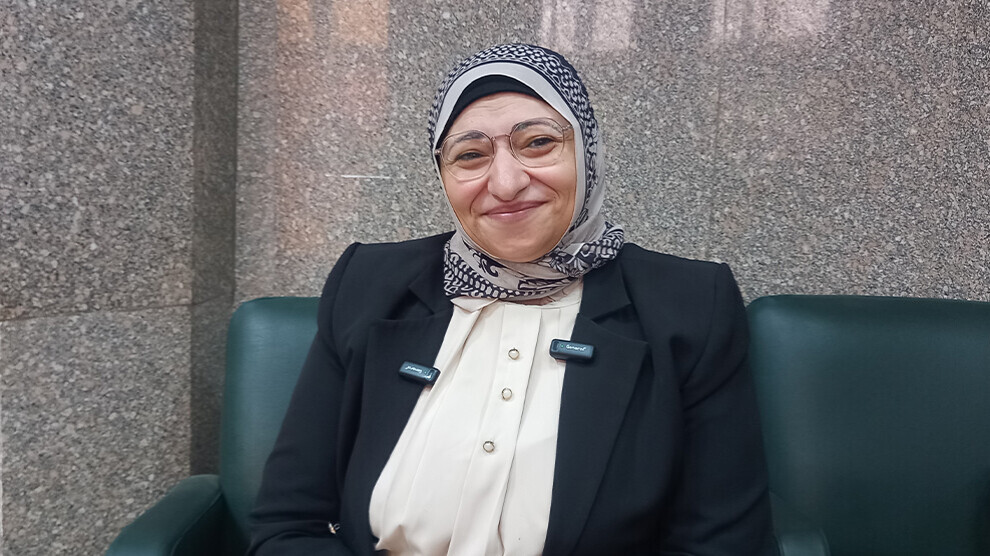
Dr. Yara Ibrahim: Violence Leaves Deep Psychological Scars and Becomes an Inerited Behavior Within the Family_Confronting the Phenomenon Requires Educational, Psychoological, and Social Intervention Beyond Legal Solutions.
EMAN SAMIR ALI
Egypt_ Behind closed doors, in what should be the safest sanctuary, incidents of domestic violence recur across Egypt, revealing a crisis whose effects extend far beyond the moment of assault, reaching into the entire family and leaving psychological and behavioral scars that may accompany victims for years.
Domestic violence does not always begin with a blow, nor does it necessarily end there. It manifests in multiple forms: from insults, threats, control, and psychological abuse, to physical assault and battering, and in some cases escalating to attempted murder or homicide.
Incidents Revealing the Harshest Face of Domestic Violence
According to available data, several Egyptian governorates witnessed bloody incidents of domestic violence during August 2024, ranging from homicides, physical assaults, attempted murders, and violence against children. Some cases were linked to marital, financial, or family disputes, reflecting the complexity of the phenomenon and its multiple motivations.
Among the most prominent incidents: a woman was killed by her husband inside their home in the Mustard area of Qalyubiyya Governorate, following an argument and family disputes. Security authorities found her body before apprehending the husband, while investigations revealed she had sustained two fatal stab wounds, and that the crime occurred in the presence of their children.
In Mokattam, Cairo, a husband assaulted his wife and daughter following a verbal altercation, resulting in the wife sustaining bruises and internal cerebral hemorrhage, while the daughter suffered bruises. In the 15th of May City, Cairo, a reconciliation session related to family disputes escalated into a homicide when an individual opened fire on those present, killing four people—including his daughter—and injuring his son. On August 19, he was referred for criminal trial.
Violence extended to children as well; security authorities in Badrashin, Giza Governorate, monitored a video documenting a father assaulting his nine-year-old son by beating, after the child had left home and gone to his mother, according to media reports.
In Maasara, a wife was killed by her husband after he assaulted her with a wooden club, with investigations linking the incident to marital disputes. The Public Prosecution also initiated an investigation into the killing of a woman by her elderly husband in Ausim, Giza, following family disagreements.
In Sayyida Zaynab, Cairo, a woman appealed for help via a video after being beaten and insulted by her two sons over a financial dispute, according to the Ministry of Interior, which announced the arrest of the two sons and their confession to the act.
Violence Does Not End with the Assault
Beyond statistics and criminal records, the most dangerous face of domestic violence may be that which does not appear in police reports or get captured by surveillance cameras, but rather settles within the psyche of the child or woman who experienced it.
In an analysis of the social and psychological dimensions of the phenomenon, Dr. Yara Ibrahim Muhammad Ibrahim, Professor of Child Curricula and former Dean of the Faculty of Early Childhood Education at Assiut University, affirmed that domestic violence has become an urgent social and psychological issue due to the profound effects it leaves on children and their psychological and behavioral development.
She explained that the phenomenon cannot be reduced to a single cause; rather, it is driven by an interwoven set of social, economic, psychological, and cultural factors. She noted that the pressures some families face may—in the absence of healthy coping mechanisms—transform into verbal, psychological, or physical violence.
She emphasized that the effects of violence do not stop at the direct victim but extend to other family members, especially children, who may find themselves in an intense psychological conflict when they see their father and mother—sources of security and care for them—in the roles of aggressor and victim. This contradiction, according to Yara Ibrahim, can leave a deep imprint on the child's personality, particularly when violence is witnessed repeatedly and becomes a familiar part of daily life.
When the Child Learns That Violence Is a Language of Dialogue
More dangerously, the child does not merely witness violence—they may learn from it. When they see that conflicts are resolved through shouting, threats, beating, and humiliation, the perception that violence is an acceptable means of handling disputes may gradually become entrenched. Over time, they may reproduce the same behavior in their future relationships, transmitting the cycle of violence from one generation to the next.
Yara Ibrahim stresses that violence against children is not limited to physical beating but includes insults, verbal abuse, stigmatization, bullying, and psychological mistreatment—practices that may leave long-term effects on a child's self-confidence and psychological equilibrium.
The Media Between Exposing the Problem and Normalizing It
She further argues that media treatment of violent incidents also requires a significant degree of responsibility, warning against excessive focus on negative models—especially given the widespread dissemination of content on social media platforms. Repeatedly presenting violent behaviors without an awareness-raising context may, in some cases, normalize them rather than reinforce their rejection, particularly among children and adolescents.
For this reason, negative models should be presented as warnings against wrongful behavior and its consequences, rather than as repeated scenes for consumption or imitation, alongside the promotion of positive models and good role models within the family, school, and society, as Yara Ibrahim explains.
Prevention Before Crisis Strikes
Yara Ibrahim called for expanding counseling and rehabilitation programs for those intending to marry, emphasizing that marriage should not be reduced to an occasion or celebration; rather, it must be viewed as a responsibility and the founding of a family with rights, duties, and obligations.
Such programs would help prospective spouses understand roles, boundaries, rights, and duties, in addition to acquiring skills in conflict management and handling family pressures and emotions in a more balanced manner. Building a psychologically stable family does not begin after a problem arises, but rather with both spouses' awareness of the nature of the responsibility they bear, and of the importance of ensuring the family is a safe environment for children, not an arena for conflict.
The School... An Early Line of Defense
Yara Ibrahim emphasized the need to strengthen the role of educational institutions in preventing violence, so that awareness begins from kindergarten and extends across different educational stages, in accordance with the child's age and psychological and social needs.
She also stressed the importance of maximizing the role of the psychological specialist within schools, as an accessible point of recourse for children facing family or psychological issues or experiencing violence. She noted that some children and adolescents have begun turning to artificial intelligence tools to discuss their problems and obtain initial guidance.
Psychological Support as a Safe Space Before It Is Too Late
Confronting violence requires expanding the establishment of psychological and social support centers for women, children, and all victims, providing them with a safe space to seek help and receive counseling, considering psychological support an essential component of the protection system alongside legal intervention.
Yara Ibrahim affirmed that combating domestic violence cannot depend on the law alone; prevention begins with changing patterns of thinking and upbringing, revisiting concepts that justify control, humiliation, or beating, and strengthening conflict-management skills within the family.
She also commended the role of drama and media in raising awareness, particularly regarding digital risks that children may face at home without their parents' knowledge, emphasizing the importance of enhancing family awareness of these risks.