
A Daily Journey of Hardship... Village Women Face Lack of Services and Harsh Transportation
Women in villages face daily challenges that go beyond the difficulty of securing a livelihood. They endure the hardship of traveling long distances, the absence of basic services, weak infrastructure, and harsh economic conditions.
SURKIL SHEIKHO
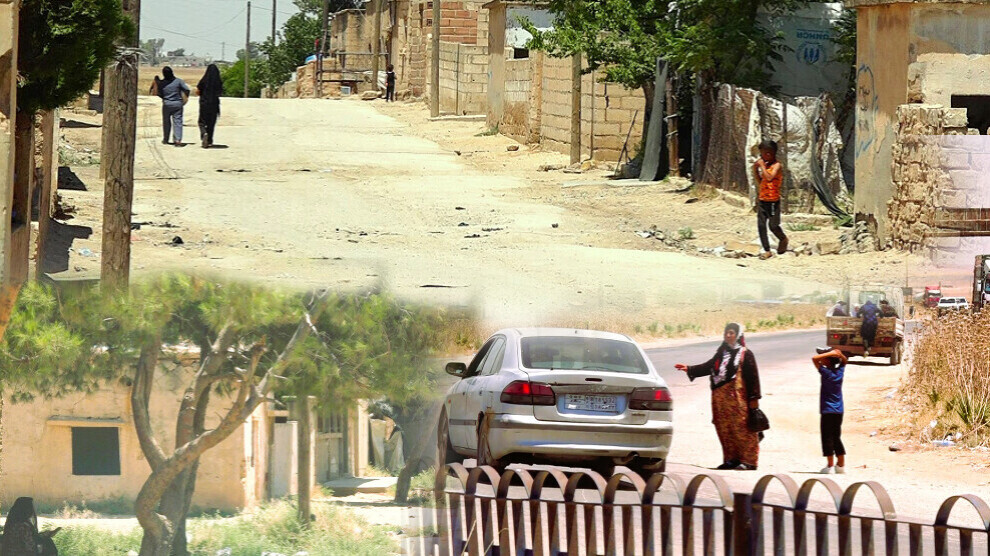
Tel Tamr — Women in the village of Tel Nasri, located south of Tel Tamr in Rojava, face extremely difficult living, economic, and social conditions, exacerbated by weak infrastructure, the absence of basic services, and the lack of opportunities for economic independence. The women demand the provision of safe and regular transportation, and the establishment of health and service centers to meet the needs of village residents.
Poverty and Lack of Basic Services
Poverty contributes to the high proportion of families headed by women, while weak infrastructure intensifies daily crises. Villages suffer from a severe shortage of basic services, foremost among them healthcare, as hundreds of villages lack hospitals and qualified clinics, forcing patients to travel long distances for treatment and increasing the risks of maternal death during pregnancy and childbirth due to delays in reaching medical centers.
Women Deprived of Inheritance
The deprivation of women from inheritance is not limited to cities but extends to villages as well, where many are denied their legal right to own land or property. Some customs justify this by saying that "the daughter will move to her husband's house," leading to the confiscation of their financial rights. If a woman is treated as a guest in her father's house and then considered a stranger in her husband's house, where is her right?
Despite these challenges, women continue their daily struggle in silence to confront discrimination and the harsh conditions imposed by rural life.
Daily Transportation... Suffering and Risks
Daily transportation is one of the biggest problems facing women, as the journey to markets or health centers becomes a burden that threatens their physical, psychological, and economic safety. The roads leading to the villages are unpaved, forcing women to walk long distances on foot, especially in the early morning or evening hours, exposing them to the risk of theft, verbal harassment, and physical assault in the absence of security and surveillance.
Women and girls are forced to walk several kilometers to reach markets to secure their families' needs, then return carrying their purchases on their shoulders. The absence of regular public transportation between villages and cities forces them to wait for hours on the roadside for any passing vehicle, often under high temperatures.
The effects of these journeys are not limited to exhaustion but also lead to chronic back and joint pain as a result of walking long distances and carrying heavy loads on rough terrain.
"We Have No Choice But to Walk"
Amina Ahmed, who despite her advanced age continues to walk to the city to secure her family's needs, says: "Whether the distance is short or long, I am forced to walk to reach the city and secure my household needs. No one helps me or my daughter, so we have no other choice. We hope for taxis or small buses to connect the villages to Tel Tamr."
"I Walk 2 km Daily Despite Illness"
Mota Ibrahim wishes she could reach the city without the hardship of walking in the heat. "We walk about a kilometer to reach the main road, then we wait until a car stops to take us to the market or the health center. I suffer from illnesses that prevent me from walking, but I am forced to walk about a kilometer each way daily under the blazing sun."
She added that Tel Nasri village lacks any health center or clinic, explaining that patients are carried on foot until they reach a road where a car can take them to the hospital. She called for improving infrastructure and providing health services within the village.
"Illness and Poverty Multiply Suffering"
Amira Ramadan, originally from the Al-Shaddadi area and now residing in Tel Nasri, continues to walk despite her heart condition to reach the main road and visit a sick relative.
She says: "I suffer from headaches and foot pain, and even while speaking, I feel pain in my heart. Transportation for us depends on luck; some people stop to help us, while others continue on their way. I also do not ride in cars with people I don't know due to the deteriorating security situation."
She explained that her economic situation does not allow her to receive treatment or help her sick family members. "Often I do not have the fare for transportation, and sometimes I cannot even buy drinking water. I cannot provide treatment for myself or my relatives who suffer from heart disease and cancer."
Women's Demands
The women of Tel Nasri demand the provision of basic services within their village, foremost among them the establishment of a health center equipped with doctors, the improvement of the road network, the provision of regular public transportation, in addition to opening schools and service institutions, to ensure a safer and more dignified life for village residents and to alleviate the daily burdens borne by women.