
Violence Against Women… Female Perspective of Forging a Safe Path Toward a Solution.
With the escalation of violence against women in Yemen, testimonies from activists and citizens converge to reveal roots and ways to confront it: from empowerment and education to changing social beliefs and tackling digital violence.
Rahma Shanzour
Yemen – In Yemeni society, which is living under exceptional circumstances, the discussion on violence against women is expanding. Many women continue to face different forms of such violence: some overt, like beating and physical abuse, and others hidden, like hurtful words, psychological pressure, or even blackmail in the digital sphere.
A survey of the views of a number of women in Yemen sheds light on multifaceted suffering and offers a deep female perspective on how to confront violence, stemming from a firm conviction that solutions are possible if societal will and sufficient awareness exist. The women recount their shared experiences and insights drawn from their lived reality on how to confront this phenomenon that threatens the cohesion of the family and society as a whole. They affirm that confronting violence begins, first, with individual and collective awareness, then with economic and cognitive empowerment, ultimately leading to a radical change in the stereotypical societal view of women and their role.
Empowerment… A Woman's Primary Weapon
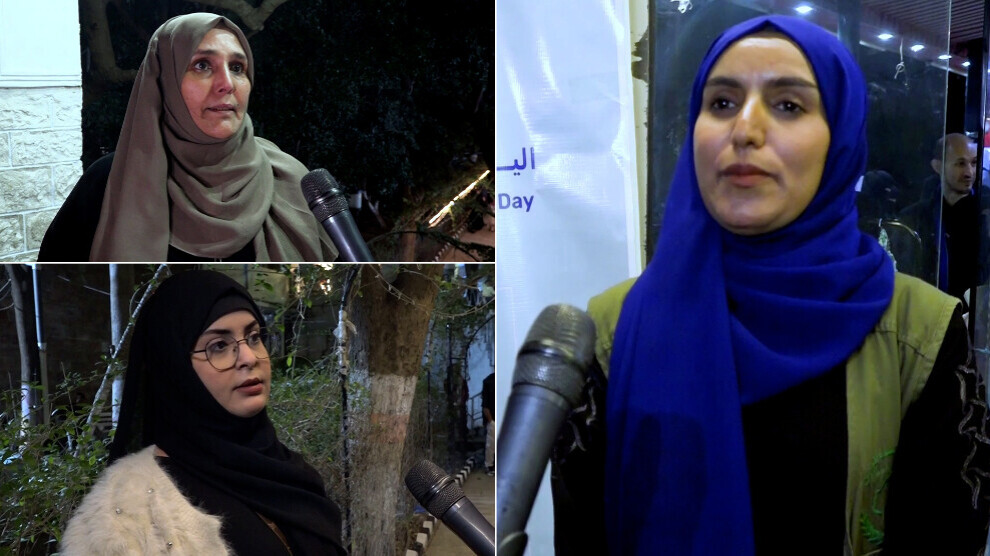
Atalal Rajih, a Yemeni activist in the field of women's rights, stresses that combating violence against women is a "vital necessity" in our current era. She notes that the means of confrontation are multiple, but the most important remains "economic and educational empowerment."
She says, "A woman who is able to rely on herself and is educated in the ways of the modern world becomes less vulnerable to the fragility that makes her prey to violence." She adds, "Women constitute a large part of society, and there are successful, inspiring female role models, but violence against them limits their effectiveness and weakens their participation in development, which negatively affects society as a whole."
From another angle, Fathiya Hassan, a Yemeni citizen, offers a social analysis of the roots of the problem, pointing out that women are often subjected to violence because of "societal beliefs." She cites as an example the entrenched idea in some families that treat women as "merely a tool to serve men." When a woman tries to set boundaries or express her exhaustion, she is met with intransigence from the man, which may escalate into "beating or verbal abuse."
She believes that upbringing within the family plays a decisive role in shaping the awareness of children, explaining that mutual respect begins at home. "When upbringing is sound, a man realizes that a woman is not inferior to him, and that the relationship between them is based on respect."
She notes that some families still view women merely as instruments to serve men, which opens the door to violent practices, whether physical or verbal. "Violence is not necessarily beating; hurtful words are sometimes harsher than beating."
Nevertheless, Fathiya Hassan affirms that the relationship between a man and a woman should be based on partnership and complementarity. "A man is a woman's partner, and no society can be sound if the relationship between them is based on violence or exclusion."
When Violence Moves to Cyberspace
For her part, Shifaa Mohammed, a media student, points out that confronting violence begins with a woman's awareness of herself and her ability to develop herself. She emphasizes the importance of education and awareness in building a strong personality capable of facing challenges. "Today, violence is no longer limited to reality; it has extended to cyberspace, such as blackmail through social media platforms."
She believes that empowering women with knowledge and skills is the most important path to their protection. "It is important to educate women on how to face life's difficulties and to be psychologically strong so that they do not allow anything to destroy them."
In the end, the issue of violence against women in Yemen remains a daily battle waged by women who have chosen to be part of the solution, not merely victims waiting to be saved.
What Atalal, Fathiya, and Shifaa have said constitutes a clear‑cut roadmap: it starts with economic empowerment and education, passes through raising children on the values of respect and partnership, and does not neglect keeping pace with the challenges of the digital age and protecting women from electronic blackmail.
However, the responsibility does not fall on women alone; Yemeni society as a whole is called upon to re‑examine its stance and to realize that combating violence against women is an investment in the future of the country as a whole. Women, who make up half of society—and more under the conditions of war and displacement—are essential partners in construction and development. Any violence committed against them is, in the final analysis, violence against the nation's stability and progress.