
Zoya Kosmodemyanskaya… A Historic Presence Embodying Resistance Against the Nazis
“Zoya Kasmodemyanskaya, a Soviet resistance fighter, was tortured and executed at 18 but never betrayed her comrades, becoming a WWII icon.”
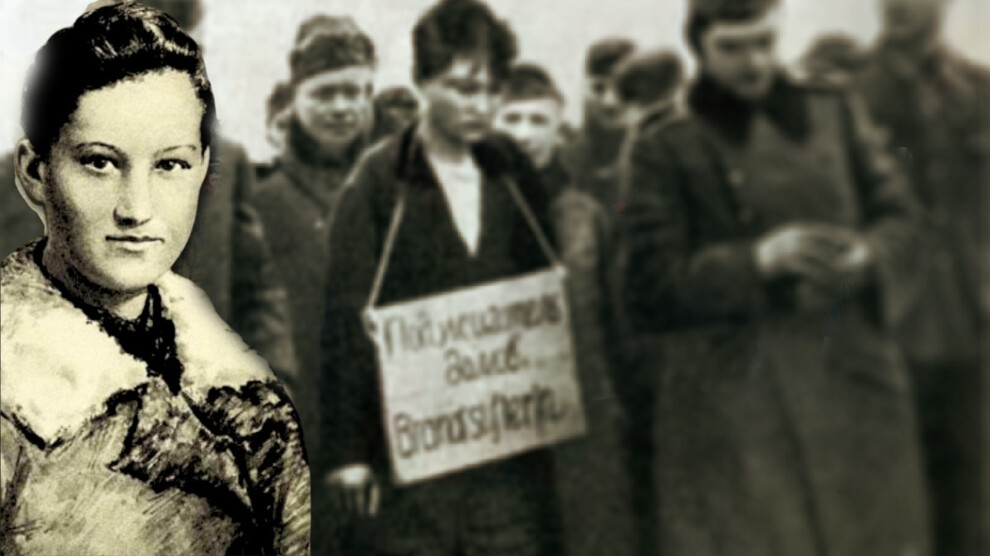
News Center — Zoya Kosmodemyanskaya faced the harshest methods of torture during interrogation by Nazi forces, after refusing to reveal her comrades or provide any information, making the testimonies of what happened to her a prominent testament to the resilience of Soviet fighters before her execution in 1941.
Zoya Kosmodemyanskaya was born in September 1923 in Gavrilovsky, southern Russia. She was a Soviet fighter who became the first woman to be awarded the title of Hero of the Soviet Union during World War II. Her father was a librarian and her mother a teacher. She moved with her family to Siberia at the age of six, then returned to Moscow in 1930. She lost her father at the age of ten.
From a young age, Zoya Kosmodemyanskaya was interested in literature and music. She read the works of Tolstoy, Dickens, Shakespeare, Goethe, and Pushkin, and listened to the music of Tchaikovsky and Beethoven. Her worldview was shaped at an early age. In 1938, she joined the Komsomol, the youth organization of the Soviet Communist Party.
A Fighter Under the Name "Tanya"
In October 1941, while still a high school student, Zoya Kosmodemyanskaya, who adopted the nom de guerre "Tanya," volunteered to join a special unit of Soviet resistance forces. After brief training, she was sent to the Volokolamsk area near Moscow, where she participated in several resistance operations.
Zoya Kosmodemyanskaya opposed the division of tasks between men and women within the ranks of fighters, insisting on sharing hardships equally, and demanded to perform the same duties as men. On November 27, 1941, she was transferred to the village of Petrishchevo, which was under Nazi occupation, where she participated in targeting German soldiers' positions. After a while, she became separated from her group and returned alone to continue her activity, before Nazi soldiers arrested her following a tip-off from a collaborator, and she was taken to a building used as a military headquarters.
Zoya Kosmodemyanskaya did not reveal her real name during interrogation, identifying herself as "Tanya," and did not answer the German soldiers' questions about who sent her, who she worked with, or what she had done. According to witness testimonies, Zoya Kosmodemyanskaya was subjected to severe torture throughout the night. She was beaten and injured, and forced to walk barefoot on snow in extremely cold weather. Despite this, she did not provide any information about her comrades. Soviet journalist Pyotr Lidov compiled the testimonies regarding Zoya Kosmodemyanskaya's interrogation and published them in the Pravda newspaper on January 27, 1942.
"I Am Happy to Die for My People"
After failing to obtain any information from Zoya Kosmodemyanskaya, the Nazi soldiers sentenced the young fighter to death. As she was being led to execution, she addressed the villagers, saying: "I am not afraid of death; I am happy to die for my people!"
She then turned to the Nazi soldiers and said: "You are hanging me now, but I am not alone. We are two hundred million people. You cannot hang all of us. Surrender before it is too late. Victory will be ours." Kosmodemyanskaya was executed at the age of eighteen in Petrishchevo on the morning of November 29, 1941, becoming a symbol of resistance.
Zoya Kosmodemyanskaya's body remained hanging for about two months. Later, her remains were buried in the village, and after Soviet fighters regained the area, they were transferred to Novodevichy Cemetery in Moscow. The collaborator who betrayed Zoya Kosmodemyanskaya was tried and punished in a Soviet court after the war. Zoya Kosmodemyanskaya was posthumously awarded the title of Hero of the Soviet Union.
Zoya Kosmodemyanskaya, whose name later became a symbol of resistance against the Nazi occupation, was the subject of many songs and poems, including a poem by Nazım Hikmet titled "Tanya." She is still remembered as one of the symbols of resistance who refused to surrender in the face of occupation.