
Women Journalists in Rojava... Pens and Cameras Preserving the Memory of Resistance
Journalistic work, which is a vital part of conveying the truth, has increased with the Rojava Revolution. Women journalists have become the voice of truth, rewriting history, struggle, and resistance with their pens and cameras.
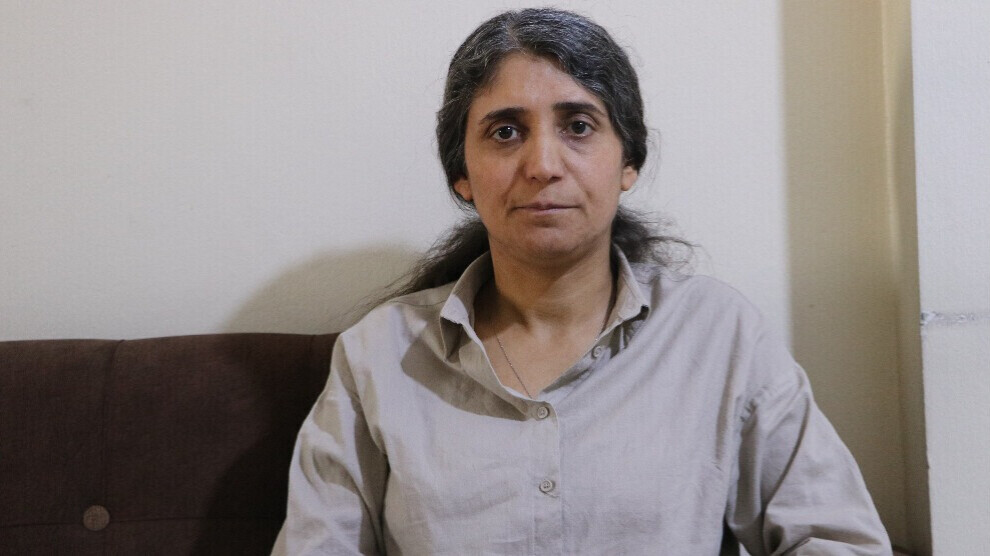
NAGHAM JAJAN
Qamishlo — In an era where wars are no longer fought only with weapons, media has become an arena of conflict where truth confronts misinformation, and information is used as a tool to influence social consciousness and shape public opinion. With the development of the Rojava Revolution, women journalists emerged at the heart of this conflict, conveying events from the field, defending the public's right to access accurate information, and continuing to do so to this day.
In her statement to our agency, journalist Hevidar Khalid affirmed that media in Rojava was not merely a means of conveying news but played a pivotal role in introducing the women's revolution and the Autonomous Administration experience on a global level. She also reviewed the difficult stages that Kurdish media went through during the years of Ba'athist rule and the restrictions and persecution journalists faced due to their positions.
She said: "With the launch of the Arab Spring in Syria, journalistic work in the region was carried out under exceptional circumstances and extremely limited resources. The Ba'ath regime pursued repressive policies targeting all opposition voices, and this was not limited to Kurdish journalism or women journalists but included all journalists who were deprived of freely practicing their profession. Despite the scale of pressures, risks, and harsh conditions, journalists continued to fulfill their mission with determination, maintaining the continuity of journalistic work and conveying the truth to the public."
"In Syria, It Was Very Difficult to Write an Article or Report"
Hevidar Khalid noted that many Kurdish magazines were printed secretly outside Syria during the 1990s. "Voice of Life magazine, Voice of Kurdistan magazine, and many others were printed outside Syria in the 1990s."
She added: "Before the revolution, it was very difficult in Syria to write an article or prepare a report, so all of that was done secretly. After the July 19 Revolution in Rojava, some conditions changed with the beginning of the revolution that launched in many social fields. Important revolutions and developments took place in women's leadership, culture, art, and especially in the media field."
"The History of This Revolution Must Be Written with Women's Thought and Pen"
Hevidar Khalid affirmed that women left their mark on the revolution, and women journalists played a particularly important role, documenting the history of the Rojava Revolution. "The steps taken in the media field came with great difficulties and great efforts. Journalists, especially women journalists, went through very difficult conditions. Because women's participation in such work was a new experience in this region. It was new—women carried cameras, wrote, and expressed themselves. The revolution that began in Rojava had to have its history written with women's thought, pen, and mind."
For this reason, she explained that "within media institutions as well as independent institutions, women's organizations and bodies were established as achievements of the revolution, and they played a pioneering role in them. At the same time, they wanted to be the voice and color of this revolution, through the concept of democratic nation, free life, and the idea of brotherhood among peoples, where all components live together with their own thought, color, and culture."
"Great Struggle Was Waged So That Truth Would Not Remain in Darkness"
Hevidar Khalid explained that women journalists often gave their lives to document the truth. "Despite limited resources and difficulties, a great pioneering role was undertaken. For this work, many women journalists waged a great struggle, with some reaching martyrdom, so that the truth would not remain in darkness."
"Women Journalists Followed the Kobani Resistance in Every Detail"
She said that women journalists documented many stories of resistance in Kobani. "In the Kobani resistance, and in the struggle against ISIS, which was attacking Kobani in a very brutal way, women journalists were on the front lines. They conveyed the resistance to the world with their cameras and pens, and they continue their journalistic work to this day."
She explained that women journalists followed the resistance in every detail, wrote many stories of resistance, stories of fighters and mothers, and stories of journalists who sacrificed for the truth, making them part of history. "Influential work was accomplished in such difficult conditions, and this is what made the voices of women's resistance reach outside the country and to the entire world. This was achieved thanks to the cameras and pens of women journalists."
"Through Programs, Files, and News, Women Defined the Principles of Women's Freedom"
She noted the existence of television channels and independent women's media agencies today, saying this is a result of struggle. "Today, many institutions work in Rojava and across Syria in the media field. The alternative media established by women in Rojava wanted to confront masculine media and break all the molds imposed on women. In the official media, women journalists were given very limited space to work. In Rojava's media, a model based on democratic nation, ethics, and politics is applied, and on the basis of recognizing women's will, leadership, and true essence."
In conclusion, Hevidar Khalid affirmed that the existence of women's media channels and agencies across the Middle East has, through programs, files, and reports, contributed to women defining themselves and establishing the standards of free women. "All of this is the result of women's struggle and the gains of their revolution. Women from all components have participated in media work and played an important role."