
Women in the Iranian Execution System... Political and Security Cases That Go Beyond Criminal Charges
Death sentences and executions against women in Iran escalated beyond criminal and drug cases into political and security files linked to protests, with 2026 reports documenting female detainees facing such sentences.
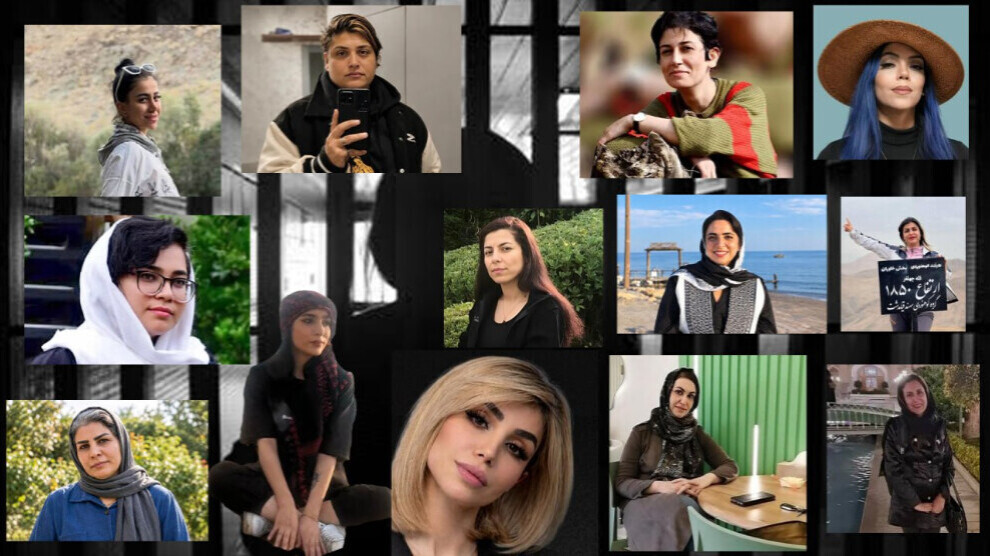
News Center – The death penalty in Iran has witnessed a remarkable rise in recent years, and women have also been among the victims, with their share of executions increasing. This trend is no longer limited to murder cases and drug crimes, but death sentences against women have also increased in political, security, and protest-related cases.
A review of the files of women sentenced to death shows that part of these sentences were issued against the backdrop of protests, political activity, and security accusations. According to the report of the Human Rights Organization in Iran, at least 532 people were executed in Iran during the first eight months of 2026, including 18 women. In August alone, six women were executed, the highest number of executions of women in a single month in 2026.
The organization also announced that in 2025, at least 1,639 people were executed, including 48 women — an increase of 55% compared to 2024.
However, these data are limited to monitoring executions actually carried out and do not reflect the total number of women facing this punishment. In return, human rights organizations' reports confirm the existence of many files of women who have been sentenced to death or are threatened with its issuance. The following list reviews a group of women currently facing death sentences on the backdrop of political, security, and protest-related cases, based on the latest published human rights reports.
Women Sentenced to Death in Political, Security, and Protest-Related Cases
Bakhshan Azizi: A Kurdish social activist and political prisoner, detained since August 2023. Branch 26 of the Revolutionary Court in Tehran sentenced her to death and four years in prison on the charge of "baghy" (armed rebellion). The Iranian Supreme Court upheld the death sentence issued against her, and requests for reconsideration of her case have so far been rejected. She is being held in Evin Prison.
Zahra Shahbaz Tabari: She is 68 years old and is being held in Lakan Prison in Rasht. She was arrested in April 2025. The Supreme Court had overturned the first death sentence issued against her, but the case was referred to the Revolutionary Court in Rasht for reconsideration, and the equivalent branch issued a death sentence against her again.
Maryam Hedavand: She is 45 years old and a mother of two children. She was arrested against the backdrop of last January's protests in Pakdasht, and was sentenced to death in a joint case with a number of other defendants, on charges including participating in the killing of two Basij forces, deliberately setting fire to a religious place, vandalizing public property, and assembly and conspiracy against Iran's security. According to the latest report of the "HRANA" organization, her sentence is still at the preliminary stage.
Leila Abolhassani: She is about 43 years old and a mother of two teenage daughters. She was arrested during last January's protests in Shahin Shahr in Isfahan province. The Fifth Branch of the Revolutionary Court in Isfahan sentenced her to death on the charge of "muharaba" (waging war against God). Her file was referred to the Iranian Supreme Court after her lawyer objected to the ruling. According to a source close to the family cited by HRANA, the main charge against her relates to her presence and filming of the site of a store burning, while the judicial authorities accused her of involvement in burning it.
Taranah Rahimi: She is also among those arrested against the backdrop of the protests in Isfahan. She was sentenced in the case known as "Isfahan Martyrs' Square" to death and 11 years in prison, alongside nine other defendants. The charges against her include "muharaba by carrying a bladed weapon," vandalizing public property, assembly and conspiracy, and propaganda activity against the regime. Her sentence is still at the preliminary stage.
Souda (Marzieh) Ibrahim Shams Abadi: She is 32 years old and is being held in Bandar Abbas Prison. She was arrested by elements of the Ministry of Intelligence in April 2026. The Revolutionary Court in Bandar Abbas sentenced her to death on the charge of "corruption on earth," alongside other charges including insulting the Supreme Leader, media and propaganda activity, conducting intelligence and security activity for the benefit of hostile states, and photographing a military site. Her sentence is still at its preliminary stage.
Najmeh Amini: She is a 23-year-old accounting student and was among those arrested during last January's protests. She is being held in Vakil Abad Prison in Mashhad and faces harsh sentences in two separate cases before the Revolutionary Court and the Criminal Court in Mashhad. She was sentenced in the case heard by the First Criminal Court in Mashhad to death on the charge of "insulting the Prophet," while she was sentenced in another case to 12 years, six months, and one day in prison.
Majdeh Hashemi Bazargani: She is 27 years old and works for the Red Crescent. She is being held in the Central Prison in Qazvin. Human rights reports indicate that the Iranian Supreme Court upheld the death sentence issued against her. According to those reports, she had spoken in an audio recording earlier about being subjected to beating and pressure to extract a forced confession from her during the period of detention and interrogation, and being deprived during the trial procedures of access to a lawyer of her own choosing.
Mahboubeh Shaabani: She is 33 years old and is also among those arrested against the backdrop of the protests. She is being held in Vakil Abad Prison in Mashhad. The First Branch of the Revolutionary Court in Mashhad sentenced her to death on the charge of "carrying out operational work to strengthen Israel, the United States, and elements affiliated with opposition groups." According to human rights reports, the main incident on which the charge is based relates to her transporting injured protesters on her personal motorcycle to treatment centers during the protests.
Sentences Overturned But Cases Not Yet Finished
Alongside these women, several other cases show that overturning a death sentence does not necessarily mean the end of judicial danger.
Arghavan Fallahi: A 24-year-old political prisoner held in Evin Prison. She had previously been sentenced to death by Branch 15 of the Revolutionary Court in Tehran on the charge of "baghy," and the Iranian Supreme Court upheld the sentence in August 2026. But in September, her request for reconsideration was accepted, and the death sentence was overturned by the Iranian Supreme Court. The case has now been referred to an equivalent branch for reconsideration. Thus, she does not currently face an effective and executable death sentence, but her case is still open, and the outcome of the retrial has not yet become clear.
Mahnaz Gardoli: She had been sentenced to death against the backdrop of the protests. In September, the death sentence issued against her, along with Mehdi Nazer, was overturned by the Iranian Supreme Court. The case is scheduled to be referred to the court for reconsideration and a new ruling. Therefore, she also does not currently face an effective death sentence, but her judicial case has not yet been closed.
Varisha Moradi and Peyta Hemmati: Both are Kurdish political prisoners who had previously been sentenced to death, but the Iranian Supreme Court overturned the two sentences and referred the two cases to equivalent branches for reconsideration. In the case of Varisha Moradi, the reconsideration session that was scheduled to be held last July was not held due to her absence, and the final result remains unknown. As for Peyta Hemmati's case, it is still at the reconsideration stage.
Accordingly, overturning the death sentence in these cases does not mean closing the file or guaranteeing that a new death sentence will not be issued; unless the reconsideration procedures end and a final ruling is issued, the judicial outcome of these cases remains undecided.
Why Has the Use of the Death Penalty Increased?
Statistics of executions recorded in Iran indicate the widening scope of the use of the death penalty in a wide range of cases. In 2025, 795 people were executed on charges related to drug crimes, while 747 people were executed in murder and retribution (qisas) cases. At least 57 people were also executed against the backdrop of security accusations, including "baghy," "corruption on earth," and "muharaba." The Human Rights Organization in Iran says that 852 executions in 2025, equivalent to 52% of the total recorded cases, were carried out based on rulings issued by revolutionary courts.
During the first eight months of 2026, among 532 recorded executions, 270 cases were related to retribution (qisas), 180 cases to drug crimes, and 71 cases to security and political accusations.
These statistics, by themselves, do not prove an increase in the number of death sentences issued against women, as there are no official and comprehensive statistics in Iran on the number of women facing death sentences in any given period. Human rights organizations document only part of these cases, based on cases that can be verified through independent sources, the families of detainees, lawyers, and local reports.
Therefore, the list of women sentenced to death contained in this report is not a comprehensive list of all women sentenced to death in Iran, but includes a group of political, security, and protest-related cases whose conditions can be followed in human rights and media sources.