
Turkish Draft Law Opens the Door to Life Imprisonment for Children
Turkey's draft law would allow life imprisonment for children aged 15–18, sparking debate over juvenile justice reforms and warnings of rights violations.
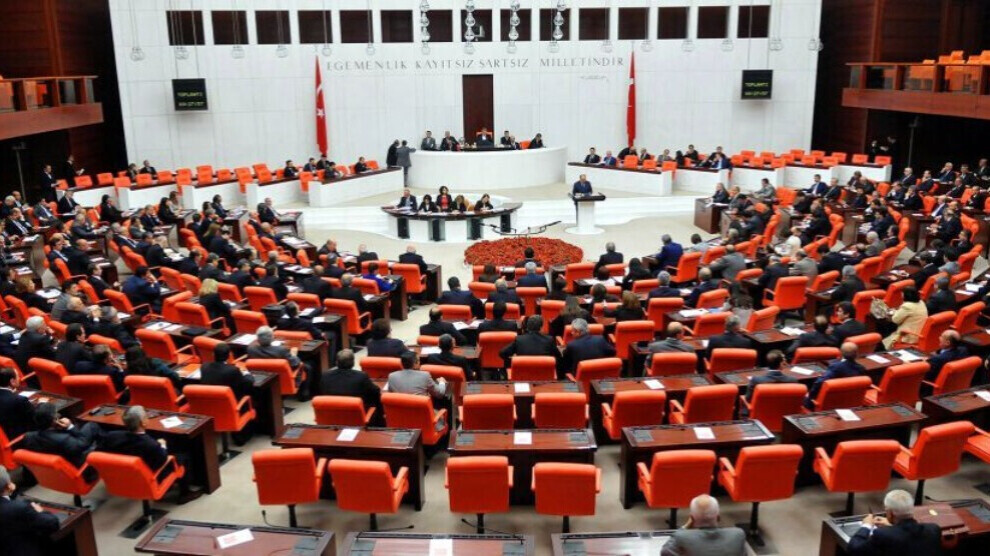
News Center — In a move that has sparked extensive legal and human rights debate, the Turkish government, through the AK Party parliamentary group, has submitted a new draft law titled "Child Protection Law," which includes substantial amendments to the juvenile justice system. Most notably, it would allow courts to sentence children aged 15 to 18 to life imprisonment or aggravated life imprisonment for certain serious crimes.
Deputy Chair of the parliamentary group, Leyla Şahin Usta, announced that the draft has been referred to the Turkish parliament, justifying the move by citing rising crime rates involving minors, the decreasing age of offenders, and what she described as the exploitation of children by gangs and criminal organizations for their activities.
However, an initial reading of the draft's content indicates a significant shift in the philosophy of dealing with children in conflict with the law, moving from a focus on rehabilitation and reform to stricter punishments and expanded judicial powers to impose the harshest sentences on minors.
The draft proposes amending Article 31 of the Turkish Penal Code, allowing judges, in cases of premeditated murder or assaults resulting in severe injuries, not to apply the traditional sentence reductions granted to minors if they deem the circumstances of the crime warrant it. The judge would consider the nature and motives of the crime, the method of commission, and the defendant's prior criminal record—opening the door to life or aggravated life sentences for children who have not reached the age of majority.
The tightening of penalties is not limited to the 15–18 age group but also extends to children between 12 and 15 years old, as the draft grants judges discretion to reduce the amount of sentence reductions prescribed for their crimes in certain cases, depending on the court's assessment and the circumstances of each case.
The draft also includes lowering the age for applying "recidivism" provisions from 18 to 15, a step the government says is aimed at preventing gangs from exploiting children in committing crimes. However, critics argue it expands the scope of children's criminal responsibility to an unprecedented degree.
Among the controversial provisions is the tightening of parental criminal responsibility. The draft allows doubling the penalties imposed on parents—up to twice the usual amount—if it is proven that negligence in care or supervision contributed to a child committing premeditated murder or serious assaults.
The draft also proposes changing the mechanism for implementing sentences, so that convicted children begin their detention in closed centers and are only transferred to open centers after a careful assessment of their behavior by a specialized committee. It also abolishes the privilege that allowed each day a child spent in detention before reaching 15 to be counted as two days when calculating parole periods in certain serious crimes—effectively extending detention periods.
In another aspect, the draft imposes prison sentences of one to three years on anyone whose negligence allows a child to access a firearm, and prohibits children from selling, buying, or carrying certain sharp tools, with administrative penalties for violators.
While the draft raises the slogan of "child protection," it also includes a set of preventive measures, including expanding social services programs, protection from digital risks, promoting reading, environmental awareness, and combating addiction, alongside the creation of a rapid coordination mechanism between health and judicial institutions in cases where children suffer from psychological disorders or addiction and pose a danger to themselves or others.
The draft also stipulates notifying the Ministries of Family and Education immediately upon the filing of a public prosecution against a child, and obliges the public prosecutor's office to obtain a social study report before submitting an indictment against any child under 15; otherwise, the indictment is to be returned by the court to complete the deficiencies.
Although the government presents the draft as a response to rising violent crime and as protection for children from criminal exploitation, the proposal raises broad questions about its compatibility with the fundamental principles of the UN Convention on the Rights of the Child, which emphasizes that deprivation of liberty should be a last resort, and that the child's best interests, rehabilitation, and reintegration into society should be at the heart of the juvenile justice system.
The draft is expected to spark wide debate within the Turkish parliament and among human rights and legal circles, between those who consider it a necessity to combat serious crimes and those who view it as a shift toward a more punitive approach toward children, potentially with far-reaching consequences for Turkey's juvenile justice system.