
“The Station” Film…Human Isolation at the Heart of the Yemeni Conflict
Through her film “The Station,”director Sara Ishaq presents a human story set in a confined space governed by isolation and fear, where a women-only gas station becomes a symbol of protection and separation from a world consumed by violence.
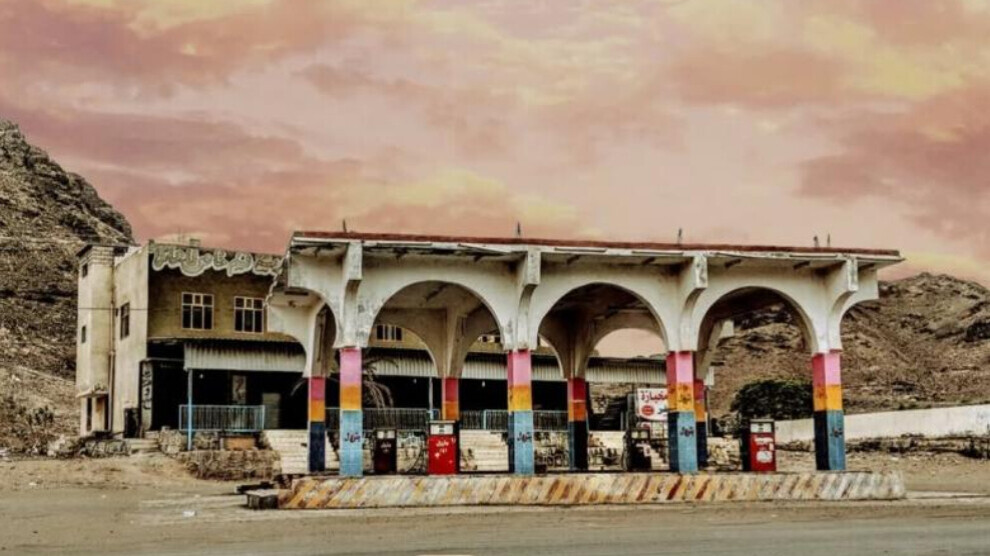
News Center_ “The Station” by Yemeni director Sara Ishaq is a dramatic co-production between Yemen, Jordan, and France, presented within a humanitarian cinematic vision that steers away from direct political discourse, focusing instead on the details of daily life in times of conflict.
The film, completed in 2026, had its premiere in the Critics’Week program at the Cannes Film Festival, affirming its presence on one of the most important global platforms for emerging cinema. The work addresses the social reality in Yemen through a personal story that reflects the effects of war and the harsh transformations experienced by society.
The film presents a cinematic experience rooted in the reality of the Yemeni conflict but avoids falling into the trap of direct political discourse. Instead of turning the story into an explicit political indictment, the director chooses to focus on the human dimension of her characters, relying on the daily details of survival rather than slogans or political analysis.
The film revolves around a woman named Layal, who runs a women-only gas station in a semi-isolated area. She lives in a large house surrounded by a high iron fence—a clear visual reference to her desire for isolation and protection from the surrounding chaos. This enclosed space does not appear merely as a backdrop for events but becomes a symbol of forced separation from a world consumed by violence and social collapse.
Outside, the war imposes itself powerfully: armed groups enforce their authority, and Layal's younger brother Laith faces humiliation and threats for his inability to confront. Through this context, the film begins to build its dramatic tension between two parallel worlds: an inner world where women try to create a safe space, and an outer world collapsing under the weight of weapons and chaos.
The story takes an important turn with the appearance of Ahmad, a boy fleeing forced conscription who enters the life of Layal's sister Shams after forcing his way into her car. This fleeting encounter gradually transforms into a human intersection that reveals everyone's vulnerability, opening the door to questions about threatened childhood, survival, and the relationships that emerge in the heart of danger.
Although the film's opening appears hesitant in building its narrative path during the first minutes, as if searching for its own rhythm, it soon settles into a more cohesive rhythm, intertwining two overlapping stories: the story of women within this enclosed space, and the story of an exhausted society outside its walls, where the harsh desert mirrors the harshness of human and political reality.
Visually, the film relies on naturalistic cinematography close to realism, using natural light and open spaces to highlight the characters' isolation. It also succeeds in creating a balance between performance and environment, so that the characters appear as part of their reality, not separate from it.
Sara Ishaq demonstrates a clear ability to direct her actors, particularly Manal Al-Meliki and Abeer Mohammed, who deliver a cohesive performance based on silence and inner tension rather than direct dialogue. The film relies on this repressed energy to reflect the weight of daily life under the burden of conflict.
In the end, "The Station" offers a work that blends social drama with humanitarian cinema, avoiding direct discourse in favor of building an experiential feeling that makes the setting itself an additional character governing everyone's fate. It is a film about isolation, fear, and the attempt to create a small space for life in a world that is slowly collapsing.’