
The "Salé" Festival Continues Its Celebration of Women's Cinema in Its Nineteenth Edition
Salé hosted the 19th International Women’s Film Festival opening, with stars and critics attending, celebrating Quebec cinema as guest of honor and honoring prominent female cinematic figures.
RAJAA KHAYRAT
Morocco – The International Women's Film Festival in its 19th edition sheds light on women's issues and the intellectual legacy of thinker Fatima Mernissi, with the participation of diverse international films and the honoring of prominent creative women, amid a notable presence of filmmakers.
The activities of the 19th edition of the International Women's Film Festival launched in the Moroccan city of Salé on the evening of yesterday, Monday, 28 September, with the attendance of stars of the seventh art from inside and outside the country, cinema enthusiasts, critics, and media professionals, announcing once again its celebration of women's cinema. According to the organizers, this edition will feature screenings of films coming from diverse geographies, charged with women's cinema struggling for its right to exist and make its voice heard through the image. It also touches on humanitarian issues marked by creative women present in front of or behind the camera.
This edition is distinguished by shedding light on the experience of sociologist, thinker, and researcher in the affairs of Moroccan and Arab women, Fatima Mernissi, as one of the most important voices defending women's freedom through rigorous academic research, by presenting her most important works.
Women's Honors and Celebration of Quebec Cinema
The International Women's Film Festival in its current edition celebrates "Quebec" cinema as guest of honor, hosting an elite of its female directors to shed light on women's issues and explore its unique cinematic conscience, enhancing the festival's universal vision toward women's issues in the seventh art.
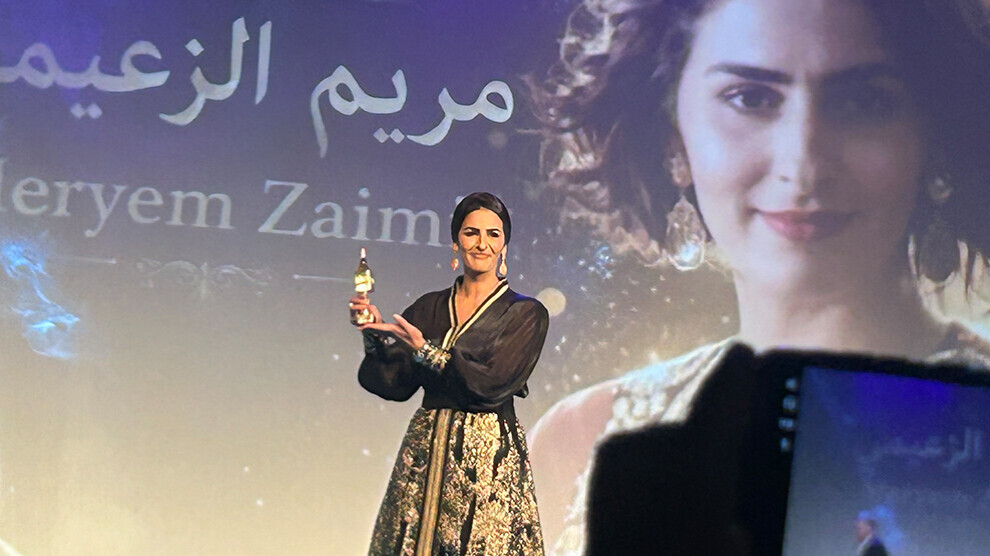
The opening ceremony was distinguished by honoring the two Moroccan stars Amal Ayouch and Mariam Zaïmi, in celebration of their creative careers. The two actresses confirmed that cinema allows the artist to undergo multiple experiences by embodying rich and diverse roles.
Amal Ayouch is considered one of the most prominent cinematic and theatrical figures in Morocco, famous for bold roles addressing women's liberation issues and confronting traditional ideas and stereotypes. In turn, Mariam Zaïmi entrenched her presence in the artistic and television scenes thanks to the sincerity of her performance and her ability to embody diverse and influential characters.
In the context of honors as well, the festival celebrates Catalan-Quebec novelist and director Naïma Barbou, who is considered one of the most prominent creative voices in the Francophone space. Her works are distinguished by combining cinema, literature, and humanitarian commitment. Her famous novel "The Woman Who Flees" achieved remarkable success and was translated into more than twenty languages. Her contributions also extend to civil and environmental work, as she participated in founding the "Mothers in the Front Rows" movement to defend the environment and children's health.
Diverse Film Competitions
Alongside the honors, the edition features competitions and film screening segments, including the feature film competition, the documentary film competition, the emerging audience segment, and screenings of films from the guest country "Quebec." Nine films are competing in the feature film competition: "Zanka Malaga" by Moroccan director Maryam Touzani, which was selected to participate in the previous edition of the Academy Awards (Best International Feature Film category); "Hijra" by Saudi director Shahad Ameen; "Vanilla" by Mexican director Mayra Hermosillo; "The Peak of Everything" by Canadian director Anne Émond; "The Runner" by Spanish director Laura García Alonso; "The Drunken Forest" by Belgian director Manon Coubia; "Stand Up" by Dutch director Marie Sanders; "World of Love" by Korean director Yoon Ga-eun; and "Shana" by French director Leila Pinel.
Luxembourgish director Bady Minck chairs the feature film competition jury, which includes Moroccan director Zakia Tahiri, Lebanese producer Tania Khoury, French director Julia Kowalski, and Togolese actress and director Priscilla Adade.
The documentary film competition features five films: "Out of School" by Moroccan director Hind Bensari, "Between Two Shores" by Spanish director of Algerian origin Soumaya Hidalgo Jahdo, "Wolobogo" by French director Camille Farren, "What Is Born from Sitting in Silence?" by Swiss-Indian director Sophie Chrago, and "River Dreams" by Kazakh director Kristina Mikhailova.
French producer and programmer Catherine Bizerne chairs the documentary film competition jury, alongside Moroccan dancer and choreographer Mariam El Jazouli and Ukrainian producer Regina Davidzon Marianovska.
In the "Window on the Moroccan Short Film" within the emerging audience segment, the festival programs five films: "Here Where the Blessing Is" by director Zineb Zaidan, "The Funeral Garment" by Insaf Junaid, "Between the Mountains" by Wissal El Jabri, "Survival" by Amal Boulaala, and "Biza's Tattoo" by Fatima Zahra Oubaha.
The festival activities continue until the third of next October, where the festival presents the Parity Award, an award given to the work that most achieves parity — the Moroccan feature-length film that addresses and defends the special situation of women in multiple contexts.