
The Nursing Profession Between Work Pressure and the Transformation of Hospitals into Arenas of Tension
Nurses have faced relentless pressure from COVID-19 and protests, making psychological exhaustion, job insecurity, and neglected professional demands part of daily life.
BERYA ASTWAR
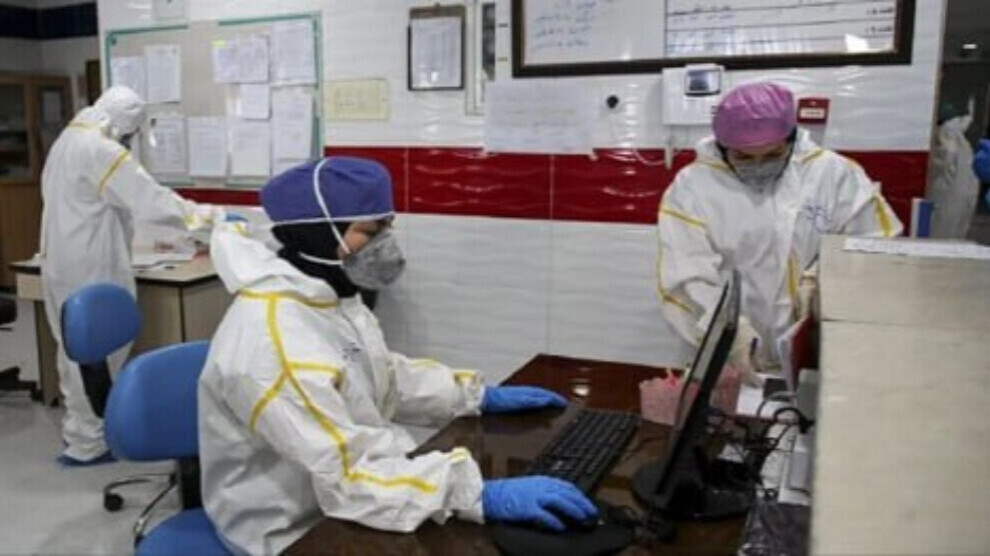
News Center — A crowded hospital in Tehran, on an afternoon when fatigue seeps through the corridors. From the outside, the hospital is still seen as a place symbolizing hope, anxiety, or urgency. But from the inside, for many nurses, this place has become, for years, an arena of continuous depletion.
The COVID-19 pandemic was not merely a health crisis but revealed what was hidden beneath the surface of daily life in the health system: staff shortages, endless overtime, delayed salaries, ongoing psychological pressure, and a lack of care often concealed behind polite official statements.
After the pandemic ended, these conditions did not disappear but only changed form. Protests came, unrest followed, the environment took on a security character, and the gap between responsibility and social status deepened.
A nurse from Tehran, named Shiva H., shares her testimony without any desire to create heroism or exaggerate the negative image. She speaks from the heart of a place where the patient's body meets their family's anxiety, and administrative pressure meets security threats—a scene where all these burdens intersect simultaneously. The tone of her speech fluctuates between exhaustion, sharpness, and hesitation, because nursing life is not a straight line but rather like standing for a long time under the light of an operating room that never turns off.
Nurses have faced major crises in recent years. On this, she says: "The health system demands more work from nurses, without providing them with enough dignity, security, and livelihood. Perhaps the most prominent harm affecting nurses at the general level is the psychological impact, and this pressure peaked during the COVID-19 pandemic and during the January protests."
The Hospital Transformed into a Tense Environment
She added: "The psychological harm in nursing is not something visible from the outside. A person may go to work for years and appear to others to be performing well, while internally they have begun to empty out gradually. Some colleagues have become more silent, some have become irritable, and others seemed as if they were standing apart from themselves."
In later periods, especially when the country's conditions became more tense, the pressure was no longer only work-related; the hospital itself became a tense environment. The nurse had to care for the patient, for themselves, for their words, for how they appeared, for where they were seen and how they were seen. This situation mentally exhausts one severely. It is no longer just dealing with illness, but also dealing with fear, as our interlocutor affirms.
Regarding the support provided by the union to nurses, she indicated that it was insufficient. "In some places, there were informal sessions. Some talked to each other, some sought psychological counseling, and some just endured. But organized and institutional support, in the required form, was very weak." She affirmed that the problem lies in the structure itself—temporary psychological programs are like bandaging a wound that remains open. "To reduce these effects, talking about compassion is not enough; the shift system, staff shortages, job security, and professional respect must be reformed."
Nurses Are Part of the Protests
She spoke about the period of the January protests and the Jin Jiyan Azadî uprising, and how nurses practically became part of the event itself. She said: "In those days, the hospital was no longer just a hospital. It became a place where news, fear, blood, anxious families, and security looks all existed at the same time. In many cities, nurses found themselves at the heart of a crisis without having chosen that. Sometimes we were the first to see the wounded, sometimes the first to answer families' questions, and sometimes the first to be asked to remain silent. This 'necessity' itself was an additional pressure."
Regarding the security aspect, she explained: "We were living in a dual situation: on one hand, we had to help because it is our profession; on the other hand, the surrounding environment was highly sensitive and tense. This made even the act of helping itself associated with fear. Some colleagues became more silent, some did not realize what had happened to them until they returned home, and some still live with those images today. A nurse is not required to be without feelings, but when continuously exposed to this magnitude of tragedy, they become psychologically unprotected."
Nurses' Demands
She pointed out that the living conditions of nurses throughout all these years have been the subject of many protests and union demands in this sector. "For a nurse, livelihood is not a marginal issue; it is part of the essence of the work itself. When the salary does not match the workload, when overtime becomes a kind of obligation, and when payments are delayed, a person gradually begins to feel that they are being eroded from within. We often stay in work not only for the money, but because the void we leave behind is greater than our ability to bear it. But staying should not be a justification for normalizing injustice."
She affirmed: "What is most painful is that official discourse is full of talk about respect for nurses, but in reality, this respect often remains within the limits of words. Real respect means a stable employment contract, regular payment, humane shifts, and that the nurse is not forced every month to choose between living and surviving."
Shiva H. concluded by saying that the most important demands of nurses are: "Job security, a fair salary, sufficient staff, genuine respect, and that the health system does not use nurses only in difficult moments. Nursing cannot be sustained with slogans; it requires creating conditions where a person does not feel that they are consuming part of their life every day without real compensation."