
Taliban prevent women from displaying their products and threaten the protesters
Two days before Kabul exhibition's opening, women entrepreneurs and craftswomen were banned from setting up pavilions amid heavy security and threats—another occasion revealing restrictions imposed on Afghan women.
BAHARAN LABEEB
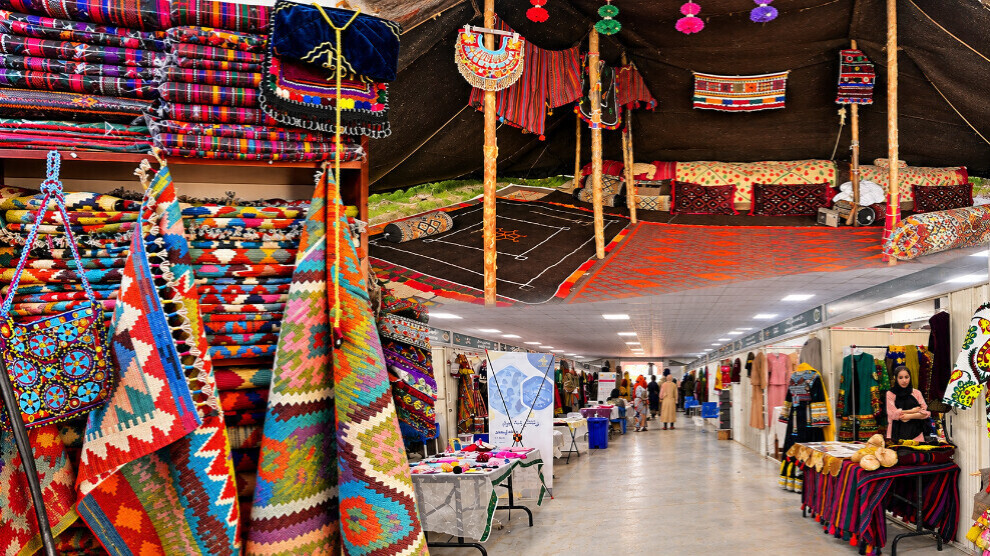
KABUL_ Over the past years, Afghan women have found limited outlets for work in trade, handicrafts, painting, and food production. Through exhibitions organized three or four times a year, they sought to market their products and keep their small projects alive, under the difficult conditions they face.
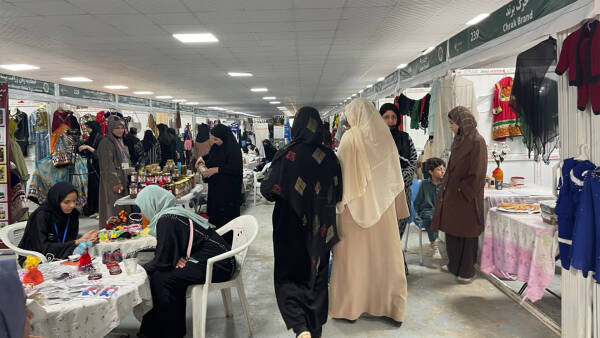
An exhibition was recently held in the Badam Bagh area of the capital, Kabul, from November 2 to 9. However, despite women having previously received assurances that they could display their products, they were surprised to beprevented from preparing their pavilions. Members of the Ministry for the Promotion of Virtue and Prevention of Vice told them: “The order of the Commander of the Faithful, Hibatullah, is that women are not allowed to display their products.”
We headed to the exhibition to meet women from different provinces and learn about their products and conditions, but we were stopped, along with a number of women visitors, at the entrance to Badam Bagh. The roads leading to the place were teeming with military displays, in a scene that seemed closer to preparation for a wide security confrontation than to securing a commercial exhibition.
When we inquired about the reasons for this deployment, one of the area's residents said that the authorities fear women coming out in protests, and therefore made their preparations in advance. Local residents added that this military buildup seemed as if the Taliban were preparing to wage a war, not to confront women carrying nothing but protest signs.
"They dispersed us by force and under threat of arms"
To understand the repercussions of the decision on working women, we met Sofia Safi, a former university teacher who, after the Taliban came to power and she lost her job, worked in the clothing industry, making women's clothing and traditional Afghan fashion.
Sofia Safi runs a small shop in one of Kabul's crowded markets, where she works with three people. She says: "I was a professor at one of Kabul's universities teaching science, but I lost my job after the Taliban returned. I started the project with my eldest daughter with very limited capital, and today we provide work for 20 other women who work from their homes."
Regarding their being prevented from participating in the exhibition, she explained: "Last week we went to receive the pavilions allocated to us, but we were surprised at the entrance to Badam Bagh by a gathering of about 60 to 70 women who were prevented from entering. Then we realized that we would not be able to display or sell our products. They dispersed us by force and under threat of arms."
The matter did not stop at depriving women of participation; according to Sofia Safi, her shop and the shops of other women in Kabul have been subjected to surveillance and pursuit since they were prevented from entering the exhibition. Members of the Ministry for the Promotion of Virtue and Prevention of Vice frequented their shops and stayed there for hours, trying to find out whether the women were planning to protest.
She says that fear of women's movements pushes the Taliban to resort to violence and surveillance. "We intended to protest, but we came under pursuit, and the threat was no longer limited to us; it extended to our families as well. We could not make our voice heard this time, but I am certain that the hands of women themselves will one day come to choke the throats of this despotic movement."