
Shingle Hosts a Consultative Meeting and Calls to Intensify Efforts for the Kidnapped
Shingle's Yazidi women demand the liberation of the kidnapped, justice for survivors, and accountability for perpetrators, stressing the need for ongoing efforts.
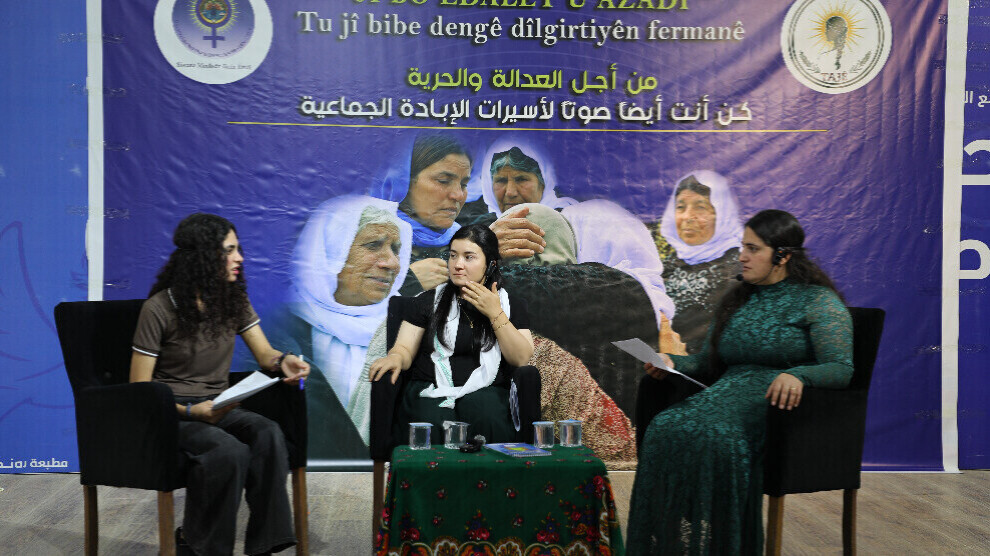
Shingle — More than a decade after the genocide committed against the Yazidis in Shingle, the issue of kidnapped women and children remains one of the most pressing files, as the search for the fate of the missing continues and survivors struggle to reclaim their rights and build new lives.
Within the framework of the campaign launched by the Yazidi Women's Freedom Movement "TAJÊ" under the slogan "For justice and freedom... be the voice of the kidnapped of the Farman," a consultative meeting was held in Shingle on September 5, aiming to discuss the issue of kidnapped Yazidi women, drawing widespread attention from Yazidi women.
The meeting saw the participation of a number of women who had been rescued from captivity, along with members and leaders of the movement and representatives of women's institutions in Shingle. Messages of solidarity and support also reached the meeting from outside Shingle.
During the consultative meeting, the situation of kidnapped and survivor women was discussed, along with the challenges facing the Yazidi community, ways to enhance efforts to uncover the fate of the kidnapped and liberate those still in captivity, as well as ensuring the rights of survivors and addressing their psychological and material needs.
Yazidi Women in the Face of Attempts to Dismantle Society
On the sidelines of the consultative meeting, Jiyanda Shenkali, a leading member of the Women's Protection Units in Shingle (YJŞ), recalled the victims of the 74th Farman, stressing the importance of women gathering and consulting after what the Yazidis experienced in 2014.
She said that targeting Yazidi women was an essential part of ISIS's attack on the Yazidi community, considering that the goal was to eliminate women as a fundamental element in maintaining and sustaining society.
She affirmed that the Yazidi woman's ability to regain her will and stand on her feet after what she endured represents, in itself, a strong response to attempts to eliminate the Yazidi community, noting that women's cohesion and solidarity can contribute to reaching the kidnapped and working to free them.
In the same context, Jiyanda Shenkali warned of the continuation of what she described as a "special war" against Yazidi women, particularly survivors of ISIS captivity, pointing to attempts and plots to return some women to the organization.
She believes that these attempts pose a danger to the Yazidi community, calling on women and Yazidis in general to raise their voices and defend Yazidi women's will and rights.
She noted that Yazidi women were at the forefront of those who resisted ISIS during the 2014 events, and also suffered the most. She believes that their role today is not limited to confronting the effects of the past but also includes working to heal the wounds left by years of captivity, displacement, and violence.
The Kidnapped Need Their Rights
For her part, Khalida Ibrahim, deputy of the Yazidi Youth Party, focused on the Iraqi government's responsibility toward kidnapped and survivor women, considering that their file has not received the required attention, pointing out that the goal of this consultative meeting is to amplify the voices of kidnapped Yazidi women to the world.
She noted that rescuing a number of women over the past years does not mean the end of their suffering, as many of them remain deprived of their rights and face difficulties in starting new lives. She criticized what she described as the Iraqi government's failure to assume its responsibilities toward survivors, pointing out that these women need conditions that enable them to rebuild their lives within their homeland, rather than being pushed to leave their land.
She stressed that Yazidis in Shingle are Iraqi citizens and have the right to their rights and protection, calling for their issue to be treated as a matter of rights, citizenship, and legal and humanitarian responsibility.
"With Every Farman, the Yazidi Woman's Strength Grows"
Speaking about the history of the Yazidis, Khalida Ibrahim affirmed that the Yazidi woman has been a primary target in various campaigns of genocide against the community, due to her pivotal role in preserving identity, belief, and the continuity of society.
She said that attempts to eliminate the Yazidi woman are essentially aimed at striking and dismantling the Yazidi community, but she stressed that these attempts have not achieved their goals, affirming that women's strength and will grow with every Farman.
She stressed that Yazidi women have the right to demand their rights and live in their homeland with free identity and dignity, pointing out that a number of women remain in captivity and await continued efforts to rescue them.
Demanding That Recognition of Genocide Be Translated into Practical Measures
For her part, Naam Badal, a member of the Martyrs' Families Foundation, said that the consultative meeting represents part of the efforts to keep the issue of the kidnapped present at both the local and international levels, and to turn it into an issue requiring practical measures, not just statements and positions.
She explained that the meeting was held within the framework of the "TAJÊ" campaign, which was launched on July 17 and will continue until November 25, which marks the International Day for the Elimination of Violence against Women. She stressed the need to continue working to liberate those still in captivity, and to ensure that survivors receive their rights and have their psychological and material needs met.
She pointed out that a number of women who have been rescued have not yet been able to return to their families, and each of them continues to face different circumstances, which requires, in her view, a more serious response from the relevant institutions.
She criticized what she described as the Iraqi government's neglect of the kidnapped file, noting that the recognition by a number of countries of the genocide committed against the Yazidis remains, in her view, below the level of required practical measures. She called for international recognition of the genocide committed against the Yazidis, including supporting efforts to uncover the fate of victims, opening mass graves, and handing over the remains of victims to their families.
In conclusion, Naam Badal affirmed that Yazidi women will continue their efforts to liberate all the kidnapped, stressing that the struggle will continue as long as any Yazidi—woman, child, or man—remains in ISIS captivity. She considered the consultative meeting an important step to unite the voices of women and survivors, and to strengthen joint work for the liberation of the kidnapped and the protection of survivors' rights.