
Service Shortages in the Kurdistan Region Cast a Shadow Over Women
One crisis after another continues to plague the residents of the Kurdistan Region, entrenching an environment lacking basic services — leading to near-total paralysis in daily life, with women bearing the brunt of its effects.
DERIN RAHIM
Sulaimaniyah — Alongside crises that have persisted for many years in the Kurdistan Region — such as delayed salary payments, severe shortages of electricity, water, and gas, and poor roads and bridges — the wars raging in the region have deepened these crises even further.
Since it began in February of this year, the war involving Iran, the United States, and Israel has cast its shadow over every sector of life in the Kurdistan Region, negatively affecting residents' daily living conditions.
This situation has driven up fuel prices and reduced electricity supply hours, placing a heavy burden on residents — particularly women.
Residents of some neighborhoods in Sulaimani suffer from shortages in water, sanitation, and road services. In winter, they endure floods and mud; in summer, they are besieged by flies and foul odors due to water scarcity, power cuts, and the absence of services.
At present, the repercussions of the war between the two countries, and the attacks carried out by the Iranian regime — particularly on Erbil and Sulaimani — have significantly worsened these crises. Electricity supply hours have dropped to less than half the day, and obtaining cooking gas cylinders has become difficult.
"We Pay Twice a Month"
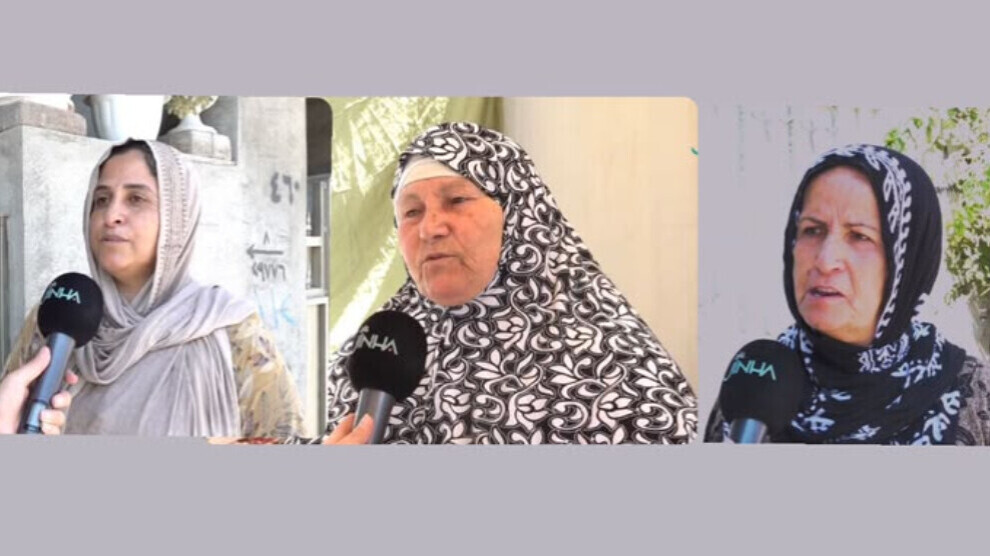
Sabria Ali, a resident of the "Hawani" neighborhood in Sulaimani, spoke about the rising cost of daily necessities: "The ongoing war between Iran and the U.S. has left a major negative impact on the Kurdistan Region. The national electricity supply is extremely poor, and its hours have dropped further. Private generators serve as a substitute, but this is a heavy burden, since we have to pay twice a month — once to the government and once to the generator owners."
She recalled a proverb saying, "If a stone were to fall from the sky, it would land on the head of a Kurd," noting that this war has directly affected their lives: "It has disrupted our schools and factories, and driven up gas prices — on top of the fact that we already lack electricity and water. Water is extremely scarce; sometimes we get only two hours over six days, and even then it's weak. Right now we have no water at all and are forced to buy it. We call on officials in this city to respond to our demands and solve our problem, especially in this hot weather."
"Fuel Has Become Expensive and Gas Is Very Scarce"
Shahnaz Ali, also a resident of the "Hawani" neighborhood in Sulaimani, said: "We have no water, no electricity, and no gas, and the condition of our neighborhoods is indescribable. Our streets still haven't been paved with asphalt — in summer, the dust chokes us, and in winter, the mud strips away any joy from life."
She added: "Fuel has also become expensive. The gas seller used to come to our neighborhood daily, but now I wait four hours a day for gas that doesn't come. Our lives have been completely worn down, and our situation is extremely difficult. This war has left a huge impact on Sulaimani — we've been without water for several days because of this problem, and when water does flow, it's so scarce it doesn't even reach the rooftop tanks, even with a pump. We also suffer from a lack of national electricity supply, as the hours it's available are very limited."
"We've All Fallen Ill"
Barzhink Ali, a resident of the "Tanjaro" area, affirmed that the war between the U.S. and Iran "has destroyed our lives and affected them completely; we're forced to buy gas at high prices, and we lack electricity and water."
She asked: "Since when has this been a life fit for people to live? We have no sewage networks, our streets are unpaved, and the constant dust and dirt are stripping the life out of us. National electricity is almost nonexistent — from six in the morning until six in the evening, we rely on private generators, and we buy water daily because there's no main water network. We buy water twice a week at a price of 15,000 dinars. We've all fallen ill because of this situation."