
Rising Bread Prices in Saqqez: A Crisis Beyond Prices to the Very Means of Survival
Doubling bread prices in Saqqez, eastern Kurdistan, signals a deepening livelihood crisis and eroding food security for low-income families, beyond a mere price hike.
BARYA ASTOAR
News Center_The 100% increase in bread prices in Saqqez, eastern Kurdistan, was not merely a price adjustment but a sign of a quiet yet harsh transition across the threshold between "living" and "being unable to continue."
In a city that has been weighed down for years by unemployment, inflation, job instability, the spread of cross-border smuggling work (kolbari), unstable wages, and continuously rising living costs, bread in Saqqez remained the last pillar of food security. If this pillar is shaken, the entire table collapses.
In such a reality, doubling the price of bread does not merely mean an increase in the price of a commodity but means depriving many families—already living in fragile conditions—of part of the minimum necessary for survival.
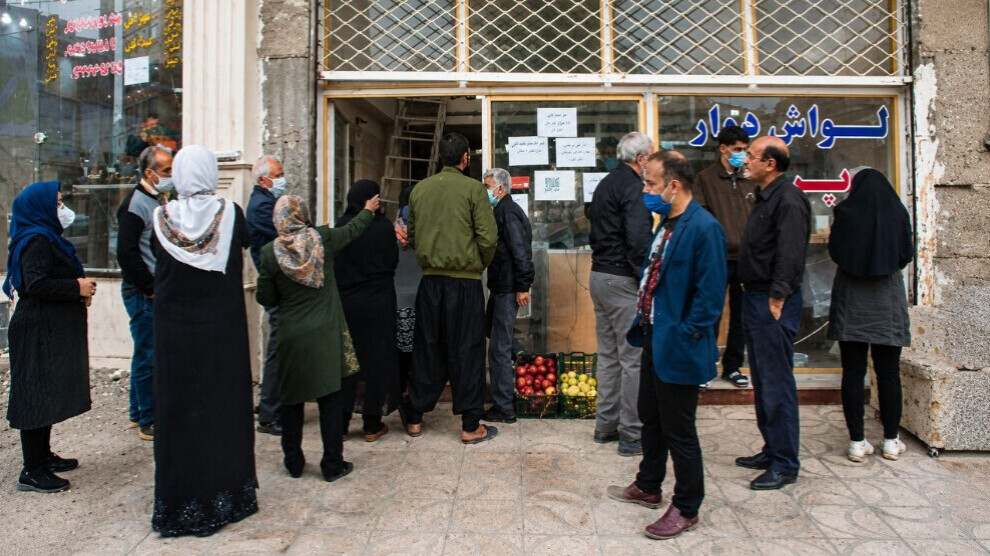
On the morning of one of the first days of July, the familiar scene in front of a bakery in the Neshmeilan neighborhood of Saqqez revealed more than a simple protest. The sun had not yet fully risen when women's voices began to be heard from a distance. At first, it seemed to be a dispute over turns or a crowded queue, but as one approached, it became clear that the real reason was the gathering in front of the bakery to protest the sudden increase in bread prices.
That day, the bakery door was not just a place to buy food but transformed into a space where accumulated economic pressures were embodied in facial expressions, body movements, and the tone of voices. The faces were tired, the eyes anxious, and the conversations were no longer just about the price increase but about a painful calculation: how many loaves could be bought with the available money? And which other types of food would have to be forgone so that bread could remain on the table?
Amid the crowd, attention was drawn to an elderly woman named "Mother Nazdar," her face weathered by the sun and her trembling hands bearing the marks of years of toil. She counted her crumpled banknotes over and over—not out of habit but out of a fleeting hope that the numbers might somehow change, and that the small amount she had might suffice to buy the same number of loaves as before. But the numbers did not change. She said in a quiet, broken voice: "I used to buy ten loaves every day. Today, my money is only enough for five." This sentence, despite its simplicity, clearly revealed the essence of the crisis. Inflation, as lived in daily life, is not merely an economic indicator; it simply means that the ability to satisfy hunger has been cut in half.
Nazdar placed the five loaves in her bag, cast a fleeting glance at the remaining loaves, and then quietly withdrew from the queue. She did not shout, did not protest, and did not break anything. But this silent withdrawal was more eloquent than any scream. In the logic of poverty, cruelty does not always come with a loud voice; it may appear in the form of a quiet withdrawal from a table that shrinks day by day. The issue was not just about bread but about the widening gap between need and ability—a gap that continues to expand until it becomes a familiar part of daily life.
The increase in bread prices in Saqqez should be understood within the framework of the political economy of inflation and poverty, not as an isolated incident or a passing local decision. What appears on the surface to be an administrative decision or a measure to regulate the market is, in reality, part of a mechanism that transfers the burdens of economic crisis from the level of policies and economic structures to the level of citizens' daily lives. In an economy where inflation has become a permanent condition, price increases are no longer exceptions but have become the norm.
In such a situation, poor groups bear the greatest burden of instability, because the largest part of their income is spent on basic goods, and bread holds a special place among these goods: it is the cheapest and the most necessary at the same time. Therefore, any increase in its price directly affects families' food security.
In the less fortunate neighborhoods of Saqqez from Neshmeilan and Tazeh Abad to Baharistan, Sharif Abad, Haji Abad, Shahnaz, and other low-income areas bread is not merely food but constitutes the fundamental pillar of survival. In this of bread with a simple meal; and dinner is often an extension of this minimum standard of living. When bread prices rise, it cannot be easily dispensed with, so the cutbacks extend to other goods—meat, poultry, dairy products, fruits—and then to the quality of daily food itself. It is a mechanism of attrition: families find themselves, instead of improving their standard of living, constantly forced to lower their consumption levels and expectations.
The women who stood in the bakery queue were speaking about this same reality. One of them said: "What is left for them to take from us? Every month, something is taken from our lives." Another replied: "First meat disappeared, then fruit, then dairy, and now bread... what next?" This question is not only about high prices but goes beyond to ask about the maximum limit of a society's capacity to endure: how far can a society continue to live under gradual deprivation before it turns into a clear social or political crisis? In the political economy of marginalized regions, poverty is not entrenched with a single blow but through the accumulation of successive layers of deficiency and deprivation.
One of the workers who came that day to buy bread said a sentence worth pausing at: "I worked today, but if bread prices keep rising like this, work alone will no longer be enough." In this simple phrase, the disconnect between work and the ability to secure a livelihood is clearly manifested. Work, by itself, is no longer a guarantee of a dignified life.
People now face a reality where wages lag behind living costs, and each new wave of price increases widens this gap. The result is that daily hard work and continuous effort no longer provide a sense of security. This reflects an actual collapse of the unspoken social contract based on the idea that work, at the very least, guarantees the minimum requirements of life.
In this context, the rise in bread prices cannot be separated from the other dimensions of the development crisis. Saqqez, like many cities in eastern Kurdistan, lives within a system where balanced development, stable employment opportunities, supportive infrastructure, and effective income redistribution policies are either absent or extremely weak.
In this reality, low-income families are the most vulnerable, because they have no savings to rely on, no stable support services, and no ability to cope with continuously rising prices. For this reason, the high cost of bread in Saqqez should be seen as part of a broader system in which major economic, financial, and political burdens are ultimately borne on the tables of small, most vulnerable families.
The issue here is not merely a "price" but the "social status of the price." For many families, bread represents the last line of defense. When its price rises, it means that this defensive line is no longer safe either. Under such circumstances, the state and economic decision-makers resorting to raising prices or causing sudden price shocks—instead of adopting social protection policies, targeted support, regulating the distribution system, and preserving the purchasing power of real incomes—only transfers the crisis from its higher levels to citizens' daily lives. This may appear in economic indicators as reform, but for poor families, it means a direct deletion of basic items from their food basket.
What happened at the Neshmeilan bakery in Saqqez was not the story of a single family but a condensed images of an entire city_a city whose residents no longer think about achieving more well-being but about how to reduce the size of their Daily losses. This shift in horizon carries a profound significance: a society that gradually becomes accustomed to managing scarcity rather than stricing for a better life is experiencing an internal ersion that is not limited to the economy but extends to culture and the general psyche, where feeling of deprivation, uncertainty, suppressed anger, and constant anxiety become part of Daily life.