
Report: Gaza’s Orphans and Widows Face a Harsh Reality After Three Years of War
The Palestinian Media Center reported that three years of continuous war on Gaza in Palestine not only destroyed infrastructure and homes but also caused deep social fractures, complex humanitarian crises that struck at the heart of the Palestinian family
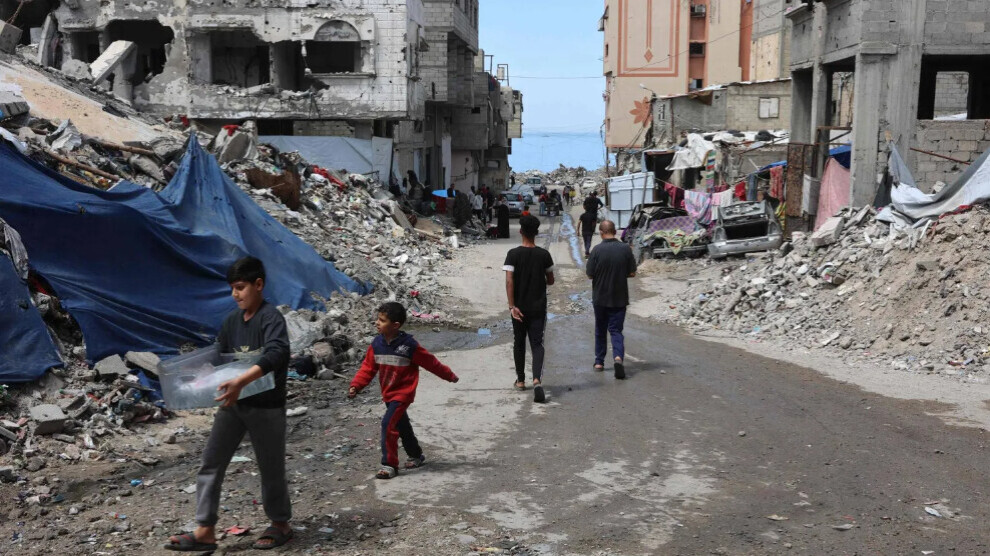
NEWS CENTER_The war on the Gaza Strip enters its fourth year amid a catastrophic humanitarian situation, as bombardment and continuous displacement have left behind tens of thousands of orphans and widows, creating complex challenges that go beyond the limits of temporary relief to the reconstruction of society.
The Palestinian Media Center said in a recent report published today, Wednesday, the seventh of October, that three years of war did not leave behind only the rubble of homes and facilities, but left a deep social wound that extended to the heart of the Palestinian family, after tens of thousands lost their fathers, mothers, children, and breadwinners, turning loss from a passing event into a daily reality that burdens an entire society.
The report pointed to figures issued by the Ministry of Social Development in Gaza showing the scale of this transformation, as the number of orphaned children reached about 71,846 children, while the number of widows reached 64,413 women, at a time when the number of families headed by women rose to about 86,000 families.
"Their Suffering Does Not Stop at the Tragic Loss"
The report stressed that fears are escalating that these harsh conditions will force some children to drop out of school or engage in early labor, in addition to facing the risks of exploitation and neglect as a result of families' inability to provide them with the necessary protection.
The report explained that the most vulnerable groups in Gaza have not been isolated from these complex repercussions; data from the Ministry of Social Development indicate that the number of affected elderly people reached about 118,876 elderly persons, while the number of persons with disabilities reached 16,963 persons, which doubles the depth of the tragedy. It noted that the elderly face difficulties in obtaining care and shelter, especially with the destruction or damage of large parts of the health and service infrastructure.
According to the Center, the war produced a wide displacement crisis, as the number of families displaced inside shelter centers reached 258,927 families, distributed across 2,090 shelter centers.
The report added that data from the Ministry of Social Development indicate that more than 1.2 million people face acute food insecurity, with 530,000 families registered in the national relief system. It noted that the danger of the current crisis goes beyond the limits of securing food and temporary shelter, to constitute a direct threat to the future of an entire generation growing up amid war, displacement, and deprivation of education.