
Over 15 Women Killed in a Month Amid Escalating Violence and Lack of Protection in Iran
Femicide cases in Iran and eastern Kurdistan reveal a pattern of domestic violence, forced marriages, and execution, with activists criticizing the framing of these crimes as mere “family disputes.”
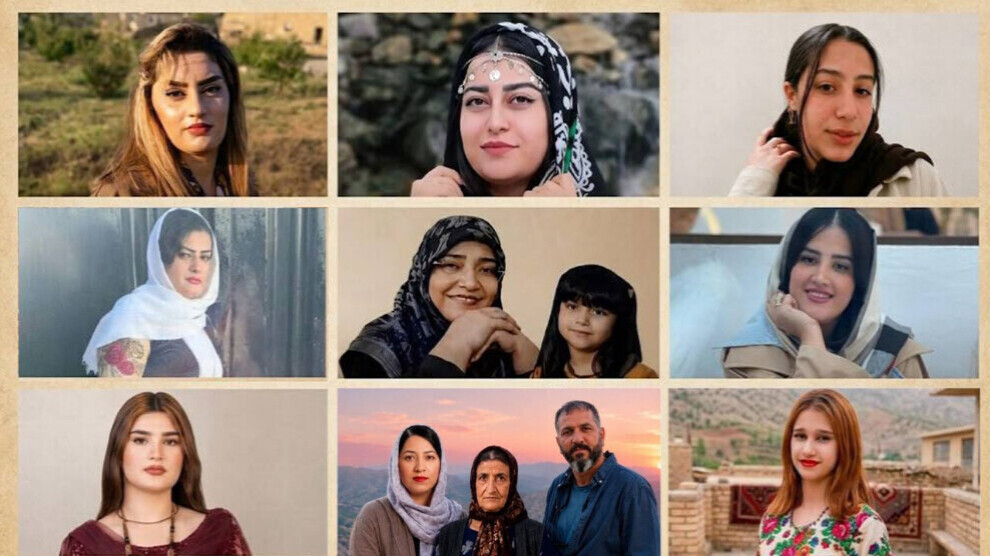
News Center_ Numerous reports have been published about the killing of women and children in various regions of Iran and eastern Kurdistan. Among these cases are women who had previously been repeatedly threatened or subjected to violence, teenage girls and children who lost their lives in domestic violence incidents, and women executed after years of abuse on charges of killing their husbands.
According to statistics compiled by our agency, at least 15 women and 4 children were killed during the period from July 23 to August 22. Two women were also executed in Iranian prisons, and new cases of killings of women and children were recorded in May and June.
From Gunfire to Domestic Violence
In Qazvin, a man, assisted by his 17-year-old son, killed his 47-year-old wife, Esmat Jabari, and his eight-year-old daughter, Setareh Karbasi.
During a shooting carried out by IRGC intelligence forces on the road between Marivan and Baneh, Maryam Aslani was killed along with her daughter Somayeh Tavakoli and her son Mehdi Tavakoli, a cultural and artistic activist and director of the House of Photographers in Kurdistan.
On July 25, Soma Moghadami, 18, a victim of child marriage, was taken to hospital after setting herself on fire in Piranshahr, but she died from her severe burns.
On July 28, a 32-year-old woman died in the village of Sarroud in Kalat County after her husband set her on fire with gasoline, due to the severity of her burns.
In Shahrbabak in Kerman Province, a man killed his wife, while a woman was killed by her husband in Qayamdasht, and her body was buried in desert areas. Reports indicated that the motive for the crime was an argument over the killing of the family's daughter—the man himself had killed her several years earlier.
In Mashhad, a woman named Leila was killed with a sharp weapon by her husband in front of her 17-year-old daughter. The motive for the killing was reportedly her opposition to selling household furniture to fund drug purchases.
Neda Jalilian, 26, a mother of a four-year-old from Malekan, was also killed by her husband. Sanaz Mehrabi Dashti, 15, from Marvdasht, was shot with a hunting rifle by her uncle.
In Chabahar, Azita (Sohaila) Rahmat Zehi, 24, a university student and pharmacy employee, was beaten and shot by her husband just 12 days after her forced marriage.
Somayeh Rezaei was also killed by her ex-husband in Babol. In Parand, a 33-year-old woman was killed for refusing a marriage proposal.
In Noor County, a man shot his father-in-law, mother-in-law, and brother-in-law, killing them. Another man in Ray County killed his middle-aged wife.
On August 20, Latifa Mohammadzadeh, 40, from Saqqez, was stabbed multiple times by her husband. She had previously been subjected to repeated death threats and had even been beaten by him inside the courtroom.
Atousa Jafari, 27, a postal service employee in Sanandaj, was also killed by her ex-husband after he stabbed her with a knife before fleeing.
In Saadatabad, a young woman died on August 18 after falling from an office window. No further details were published regarding the cause of the incident.
In Mashhad, a 15-year-old Afghan girl died after being declared brain dead following her transfer to Hasheminejad Hospital. Reports indicated extensive marks of whipping and beating on her head, and her husband was identified as responsible for her death.
Near a gas station in Mohammadabad, Zabol, a young child died during gunfire targeting a Baloch family, while his mother was seriously injured.
Execution of Women Who Were Victims of Violence
Alongside these murders, punishments imposed on women in some cases have led to their deaths. The death sentence was carried out on Marziyeh Niri, 24, a victim of forced marriage, who had previously been sentenced to retribution for the intentional killing of her husband. The sentence was executed in the central prison of Qazvin.
On August 19, 2026, the death sentence of Donya Mohammadi, from Ivan-e Gharb, was carried out in the central prison of Ilam. She was 18 years old at the time of her arrest.
Previously Undocumented Statistics
Between May 22 and June 21, 2026, a man killed his wife in Mashhad, and a 19-year-old young man killed his mother during the same period.
On June 24, Roshana Nouri, 15, from the village of Sarhweh in Sanandaj, was shot by her brother.
A Case Still Labeled a "Family Dispute"
From the perspective of women's rights activists, one of the most prominent problems in dealing with these cases is the reduction of femicides and violence against women to labels such as "family disputes" or "honor crimes." This language transforms violence from a social and legal issue into a private matter, paving the way for the continued dominance of men and the exercise of power over women within the family.
Activists believe that when threats, beatings, control, forced marriage, and even murder are framed as family disputes, the root causes of violence are obscured, and the responsibility of legal and governmental institutions is pushed to the margins.
Under such circumstances, women do not receive effective legal protection. Even in cases where they turn to judicial institutions to protect their lives, they still face insufficient protection mechanisms.
On the other hand, women and civil activists have repeatedly protested the absence of effective protection, the lack of safe shelters, and the weakness of deterrent laws.
Critics argue that the presence of women in state structures and legal institutions has not yet achieved practical and effective protection for women at risk of violence. In the absence of fundamental reforms in the law, the protection system, and family culture, news of the killing of a woman or child continues to emerge every day.