
MKG: Detentions, Trials, and Digital Blocks Restrict Journalists' Work in Turkey
The report by MKG revealed escalating violations against media workers during the past month of August, including detention, arrest, summons, and investigations, in addition to widespread digital censorship.
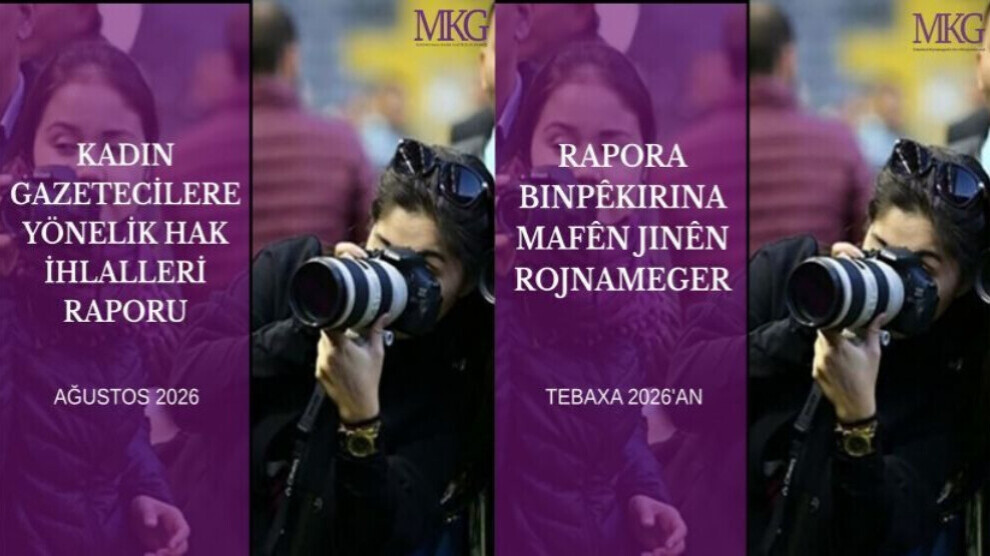
Amed — Journalists in Turkey face an escalating wave of violations including arrests, judicial summons, and digital platform blocks, as censorship on journalistic work continues to increase.
The Mesopotamian Journalists Association (MKG) issued its report for the past month of August on human rights violations against media workers. The report stated that the month saw the detention of two journalists, the arrest of one journalist, in addition to a journalist being summoned for interrogation and an investigation opened against a third journalist.
It also noted that the trial of one journalist is still ongoing, while the number of journalists in prison as of August 1 reached nine journalists.
The report also addressed the escalation of digital censorship, stating that one account was closed on social media platforms, access to 28 digital media platforms was blocked, in addition to the blocking of access to one media item.
The report indicates that in August, journalists who reported news and sought the truth faced investigations, detentions, arrests, and censorship, stressing that authorities continue to pressure the press by various means: "Journalists' areas of work are restricted, and obstacles are placed before the news reaching the public."
The report affirms that journalists appearing in courtrooms because of the news they publish has become common, noting that any news, interview, or social media post may be used as the basis for an investigation.
The report stresses that journalists who criticize state policies, reveal human rights violations, and follow events on the public stage face increasing pressures.
Repression and Censorship
The report indicates that censorship in the digital space has become a daily practice, manifested in blocking news, hiding or closing journalists' and media institutions' accounts on social media platforms. It added that every time an account is closed and another opened, and a news story is blocked, journalists turn to alternative means to reach the public: "What happened during the past month shows that new obstacles are constantly being placed in the path of this professional effort."
The report explained that women journalists face general pressures on the press, in addition to the tendency of the male‑dominated system to marginalize women's voices, stressing the importance of shedding light on violence against women, suspicious deaths, impunity policies, rights violations, and women's struggle: "Every news story that highlights women's experiences also reveals another truth that some try to obscure."
It noted that pressure on the press is not new, explaining that journalists have been subjected to detention and arrest, media institutions have been closed, and news has been censored for years. It stated that despite all these pressures, journalists continue to write, photograph, and document the truth.
The Mesopotamian Journalists Association (MKG) affirmed its commitment to continuing to amplify women's voices, shed light on human rights violations, and pursue the truth: "We will not remain silent in the face of repression and censorship, and we will persist in the field of journalism."
The report drew attention to the names of detained women journalists: Elif Bayburt, correspondent for ETHA news agency; Hatice Duman, owner and editor‑in‑chief of Atılım newspaper; Nadia Gürbüz, editor at ETHA; Özden Kenik, employee at TRT; Pınar Cayip, editor at ETHA; Yelis Ayaz, owner of Aydınpost website; Önsöz magazine editor‑in‑chief Sonkül Yücel; Fatma Sebil Kurjehan, journalist; Erem Delis, correspondent for Aydın Denge newspaper.