
Lebanese women stress the need for comprehensive policies to enhance digital security.
A Beirut seminar underscored rising digital threats to women and the need to combat tech-driven gender-based violence, stressing civil society cooperation to build inclusive national policies that strengthen digital security.
Suzan Abu Said
Lebanon — Participants in the seminar emphasized the importance of empowering women in decision-making positions, promoting equality in legislation and policies, and launching training and awareness initiatives targeting youth to combat digital violence.
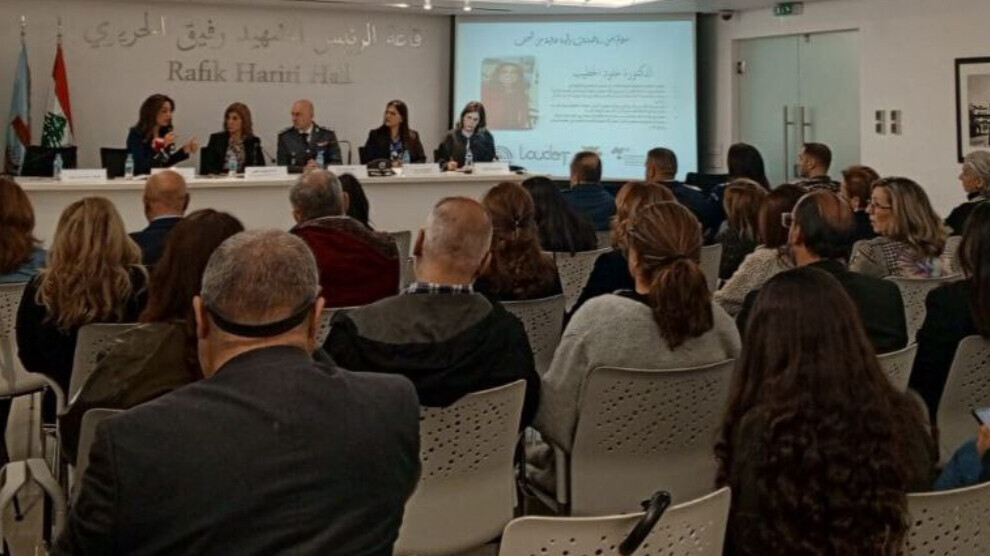
On the occasion of International Human Rights Day, within the 16 Days of Activism Against Gender-Based Violence, and marking the 25th anniversary of UN Security Council Resolution 1325 on Women, Peace and Security, a dialogue seminar was held on Tuesday, December 9, in Beirut, under the title “Safe Peace and Digital Spaces Free of Violence.” The event was organized by the Municipality of Beirut in cooperation with the Lebanese Association for the Defense of Equality and Rights (LOUDER) and the SMART Center for Media and Digital Development.
Participants discussed the growing challenges women face in digital spaces, ways to address gender-based violence driven by technological developments, and explored mechanisms for effective joint protection between state institutions and civil society. The aim was to build comprehensive national policies that support women’s rights and turn current challenges into opportunities for empowerment, helping build a future that ensures digital peace and human security for all.
Awareness videos were presented during the seminar on mechanisms for reporting cybercrimes. The event also addressed key issues including digital violence against women and girls, law enforcement and human rights, women’s empowerment in governance and political participation, the role of digital advocacy in promoting civil peace, and the importance of technology and the Women, Peace and Security Agenda in contexts of peace and conflict.
“Women Must Be Supported”
Joumana Sleilati, a member of the National Commission for Lebanese Women, affirmed that the commission works to establish legal and social rejection of violence against women and girls while ensuring protection and support for survivors at the security, judicial, financial, and psychological levels. She stressed the need to empower women academically and economically and integrate them into leadership and development-oriented reform processes.
She explained that while the principle of equality between women and men is adopted in laws and policies and monitored through specialized mechanisms, women still face legal discrimination, especially within personal status laws. “Some laws exist but are not applied effectively,” she said. Sleilati added that the Commission’s future plan is to further develop the National Action Plan for the implementation of UNSCR 1325, ensuring that women are partners not only during conflicts but also in making peace.
“Enhancing Women’s Role and Collaboration to Support the Most Vulnerable”
Joumana Halabi, member of the Beirut Municipal Council and head of the Social Affairs Committee, affirmed the municipality’s ongoing work to strengthen women’s roles and support them. She explained that municipal committees are responsible for overlapping social, structural, and legal duties, and work through the Social Affairs Committee to cooperate with civil society organizations and international bodies to secure assistance for citizens—especially women, children, and people with disabilities. She stressed that several projects target these groups, with attention to addressing existing gaps to better support women.
“A Roadmap to Confront Digital Threats”
Randa Yassir, Executive Director of SMART and an international consultant in strategic planning, gender equality, and peacebuilding, stated that the new platform represents the beginning of a roadmap the organization has been developing to create cooperative strategies among civil society organizations to ensure safety in digital spaces.
She emphasized that digital threats affect social, political, and economic security, requiring a strategic framework that identifies the strengths and weaknesses of stakeholders. Initial steps include developing a specialized training program to combat digital violence and launching awareness campaigns targeting youth and students in schools and universities. “If we work on these points in the coming phase with associations, experts, and specialists, we can create a major and meaningful impact, accelerating the process of ensuring protection and prevention for young groups,” she said.
“Confronting Digital Violence Requires a Comprehensive National Framework”
Dr. Khouloud Khaddib, Executive Director of LOUDER and an expert in human rights, peace, and security, emphasized that comprehensive peace must include everyone, noting that digital security is an essential component of the system of security and peace. “Digital security means protecting privacy and ensuring access to safe platforms, especially as challenges like cyber blackmail, hacking, and daily threats increase.” She highlighted the central role of families in protecting children—especially girls—from the risks of the digital sphere.
She stressed that confronting digital violence cannot be achieved by a single entity but requires a comprehensive national framework, pointing to the importance of schools in cultivating awareness and the key role of civil society in raising public understanding and forming meaningful partnerships to combat this threat. “Protecting society from digital violence is a core part of upholding the rule of law and justice. It cannot be achieved without an integrated digital security system that provides real protection,” she said.
Khaddib added that the rise in cyber violations is a warning bell that necessitates declaring a state of emergency to implement preventive measures urgently. She emphasized that fighting hacking and cyber extortion requires a unified strategy and institutions dedicated to both protection and awareness, calling for a comprehensive national approach to safeguard digital security and privacy.
Closing and New Initiative
At the end of the seminar, organizers announced the launch of a new national initiative titled “A Partnership to Empower Women Digitally.” This joint project brings together civil society organizations, NGOs, and governmental institutions to empower women—especially those with disabilities—to combat violence against women and enhance their digital and real-world rights. The initiative begins by training 20 women with disabilities early next year in globally accredited technology programs for six months, after which they will be placed in jobs in both the public and private sectors.
The seminar concluded by emphasizing the need to develop comprehensive national policies that enhance digital security, ensure safe digital spaces that protect the dignity of women and girls, uphold their rights to freedom, equality, and justice, and transform digital challenges into opportunities for empowerment and active participation in public life.