
Kurdish Language Teachers: We Will Continue Our Struggle for Education in Our Mother Tongue
Rojava's Kurdish teachers rejected the August 27 decision restricting Kurdish teaching, warning it harms students' education and their right to mother tongue study.
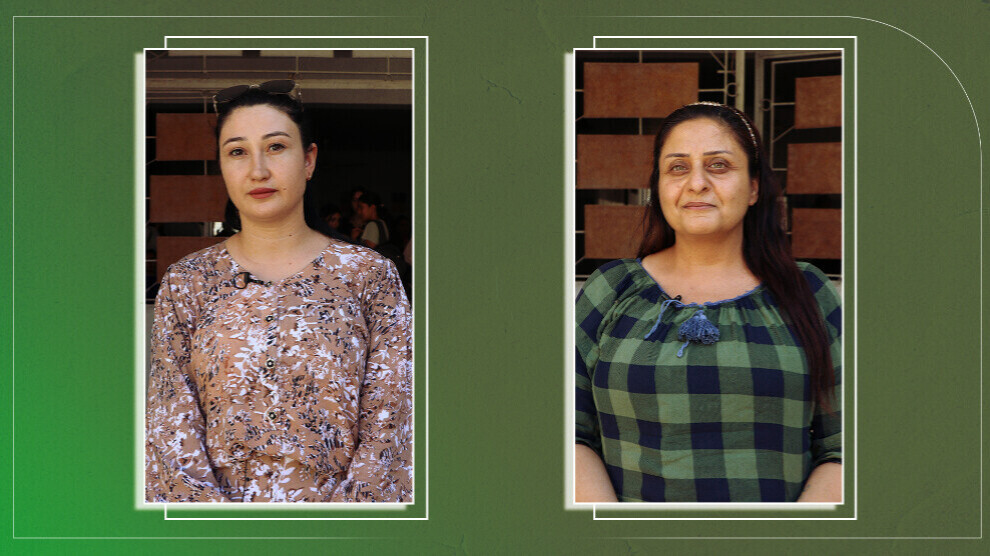
NAGHAM JAJAN
Qamishlo — Education in the Kurdish language does not represent merely a field of learning for students; it also provides them with an opportunity to read and write in their mother tongue. However, with the August 27 decision restricting the teaching of the Kurdish language in Rojava areas, this opportunity has entered the framework of discussions related to education.
The decision sparked widespread objection among teachers and students, who insist on continuing Kurdish language education and expanding the scope of its teaching in line with students' needs. Kurdish language teachers see that the decision affects the right of one of Syria's authentic components to teach and preserve its language.
"Transitioning from Kurdish to Arabic Is Difficult"
Teacher Linda Khalaf affirmed that there are thousands of students who have studied in the Kurdish language from the primary stage all the way to university, but the Ministry of Education issued a decision on August 27 stipulating that the Kurdish language be taught for only three classes per week.
She said that students do not accept this decision, and they say that "transitioning from Kurdish to Arabic is difficult for those who have studied in Kurdish since primary school." They also affirm, according to the teacher, that three classes per week are not enough to learn the Kurdish language.
She stressed that if the Kurdish language is not recognized as a second language in the constitution, students will not be able to obtain their right to education in their mother tongue, and that "it is necessary for every student to obtain their right to education in their mother tongue."
Practices That Reduce Trust in Education
Teacher Samira Hassan, who teaches the Kurdish language, affirmed her categorical rejection of the decision: "We absolutely do not accept the decision stipulating that the Kurdish language be taught for only three classes per week."
She believes that "a student who begins their education in the Kurdish language from the early stages, and then this changes, will lose trust in mother‑tongue education, and this decision will have a negative impact on all students."
She said that this decision shows, in her view, that the existence of the Kurdish people, their culture, and their knowledge are not taken into account: "A language that reached this level through struggle and the blood of martyrs cannot ultimately be restricted to only three classes."
Samira Hassan noted that the teachers are not against any language, as every student has the right to learn their mother tongue officially, and to learn other languages alongside it as well. However, "restricting the Kurdish language to only three classes per week—we absolutely do not accept it, and we will continue our struggle until the right to education in the Kurdish language is guaranteed in the constitution."