
Kurdish Female Jounalists Recall the Jouney of Struggle and Free Media
On Kurdish Women, Journalists’ Day, two journalists said women prominently documented the Rojava Revolution and conveyed women’s voices globally, stressing legal protection and safe environments for their work.
NAGHAM JAJAN
QAMISHLO_ Female journalists are no longer just conveyors of news; they have become an essential part of making and documenting the truth, a voice for women and society, and a space for raising issues that are often marginalized or silenced. Through the word and the image, female journalists conveyed the details of daily life, documented violations and achievements, defended rights and freedoms, and carried women's issues to the world.
Despite the presence and achievements women have made in the field of media, their path is still fraught with obstacles and challenges, from societal discrimination to pressures and attacks targeting their work and voices. In this context, the seventh of October was declared Kurdish Women Journalists' Day, to be an occasion to shed light on their journey, commemorate those who lost their lives for the sake of free media, and emphasize the importance of the role female journalists play in society.
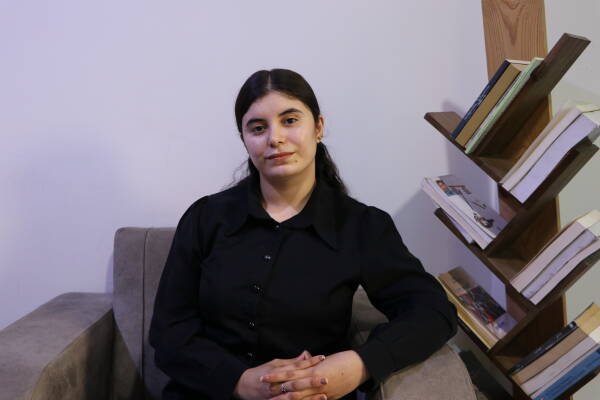
Female Journalists Documented the Journey of the Revolution"
Journalist Perivan Qassem began her speech by recalling the two journalists Jihan Belkin and Gurbetelli Ersöz, and all the women who were martyred in the journey of struggle for women and free media, confirming that women's media was one of the most prominent tributaries of the Rojava Revolution.
She said: "The founding of Jin TV channel, JINHA News Agency, and Star FM radio were among the most prominent fruits of the Rojava Revolution. Female journalists proved their presence in the field, and were able to convey the voices of the community's women to the world, even in the most difficult conditions, as they kept pace with events, documented their details, and conveyed their truth."
She added: "Through their cameras and pens, female journalists were able to turn into a voice for the truth, convey the pains and suffering of their society, and document what is happening on the ground in all its details. Certainly, this presence and insistence were among the most prominent achievements of the women's revolution, which opened new horizons for women in the field of media and the struggle to convey the truth."
"We Will Continue to Convey Women's Voices to the World"
Regarding the reality of women in Syria, she said: "During the rule of the Baath regime, women were pushed away from many fields, and the same is the case under the interim government, where we witness attempts to reproduce the same approach and reduce the role of women who have proven their presence and capabilities over years in various fields, including female journalists who have not yet obtained their legitimate rights in the media field."
She continued: "As female journalists in Rojava, we affirm that we will continue working, and we will continue to follow women's voices, their struggle, and their achievements, and convey them to the world. We will not retreat from performing this task, because conveying women's voice is an essential part of our media mission."
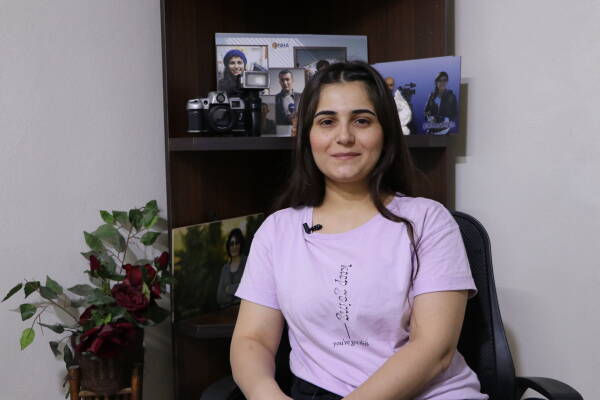
"Female Journalists Face an Extremist Mentality"
For her part, journalist Yara Mohammed, on the occasion of Kurdish Women Journalists' Day, recalled the fighter Gurbetelli Ersöz, who was the first female journalist to assume the position of editor in Kurdish journalism. She said: "We remember all our colleagues who were martyred in the path of women's struggle and free media, and we affirm that we will continue our journey in their footsteps, and preserve the path they opened before women."
She pointed to the obstacles facing female journalists. "Female journalists still face an extremist mentality that seeks to push women away from the media field and confine their roles. But women have proven their ability to enter all fields, including media, news production, documenting the truth, and influencing public opinion."
Regarding the role of female journalists in documenting the achievements of the Rojava Revolution, she said: "Thanks to the revolution led by women, new spaces were opened before Kurdish women to convey their struggle to the world. The cameras and pens of female journalists contributed to documenting and preserving the achievements of the revolution. Women in society also trust female journalists because they convey their voices, struggle, and experiences to public opinion."
"Female Journalists Are Being Targeted"
Yara Mohammed noted the pressures and attacks to which female journalists are subjected. "Through digital media, female journalists are exposed to abusive campaigns and inappropriate interference, in an attempt to undermine their work, diminish the value of their efforts, and empty them of their content. Undoubtedly, this is not only a personal problem, but is also linked to a mentality that sees women as tools that can be exploited, and seeks to weaken their presence when they raise their voices and defend their rights."
She noted that female journalists have become the voice and eyes of the women of society, and therefore targeting female journalists is at the same time an attempt to strike this voice and silence these eyes that document the truth. "Kurdish female journalists must stand up to these pressures, show solidarity among themselves, and continue their struggle for a free media in which women have a role and decision."
"Female Journalists Need Laws and Protection Mechanisms"
Yara Mohammed stressed the necessity of protecting the rights of female journalists and providing a safe environment for their work. "In the media field, which is viewed as the fourth estate, it is necessary for women to take their natural place, and to enjoy the rights and protection that guarantee them the ability to perform their work freely and safely. Therefore, female journalists need clear laws and effective protection mechanisms that guarantee their rights and security, enable them to work freely in the political and social fields, and be decision-makers in media institutions."
She said at the end of her interview: "Female journalists cannot truly protect and defend women's rights except when a safe and just environment is available to them, and when their rights are protected and their work is respected. Hence, protecting female journalists is not an issue concerning women alone, but is an essential part of protecting media freedom and society's right to know the truth."