
Iranian Judiciary Tightens Hijab Measures Amid Government Division and Popular Resistance
Iran’s strict hijab measures face widespread social resistance after the popular uprising and protest compulsory imposition, with this clash between strict laws and popular rejection driving division.
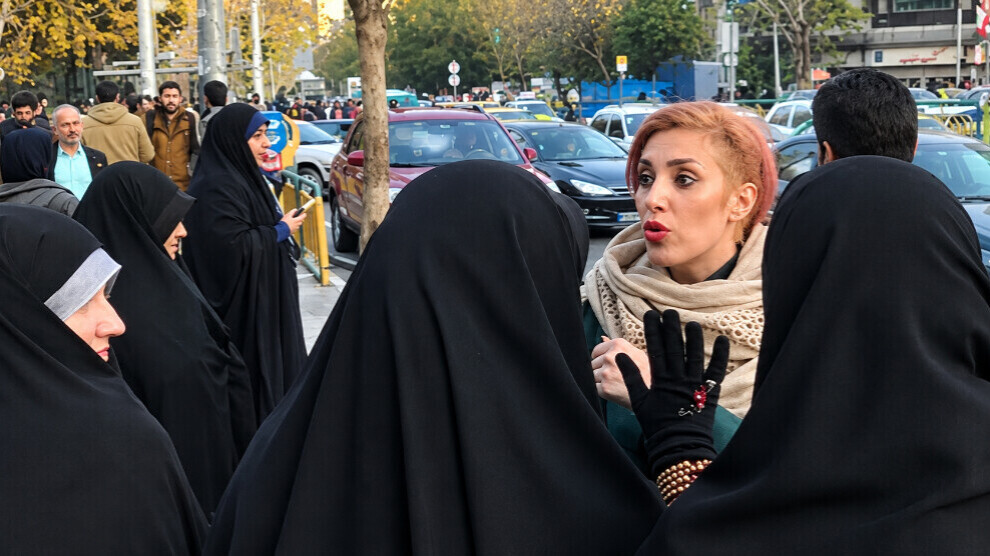
NEWS CENTER– The Iranian judicial authority has launched new and strict measures to deal with what it describes as "violating norms" and "not wearing the hijab," amid escalating calls from officials and figures close to the regime to settle this file.
In recent weeks, there have been increasing demands from the head of the judicial authority, the editor-in-chief of the "Kayhan" newspaper, and a number of Friday prayer imams, to tighten oversight and enforce laws related to dress. In contrast, statements by government officials reflect a divergence in viewpoints regarding timing, implementation mechanisms, and their effects.
The head of the Iranian judicial authority stressed the necessity of a decisive response to confront what he described as "vulgarity and nudity," directing the Attorney General to follow up on the file to ensure "putting things in their proper place," and demanding that judicial officials not pay attention to "media uproar." The head of the judicial authority noted that this move has the approval of President Masoud Pezeshkian and the Speaker of Parliament.
In the same context, pressures escalated from figures close to the regime; the editor-in-chief of the "Kayhan" newspaper and the representative of the Iranian Supreme Leader addressed a memorandum to the heads of the three authorities (executive, legislative, and judicial), in which he described laxity in dealing with women not committed to the compulsory hijab as "dereliction" amounting to "unintentional cooperation with the enemy."
He stressed that military conditions or states of war do not justify stopping the enforcement of the hijab as a "religious and legal necessity," calling for immediate action against what he called "unveiling and assaulting public modesty."
These statements came in response to a discussion that previously took place between some officials of the Islamic Republic about the conditions for implementing the hijab policy. A member of the Expediency Discernment Council said that the government cannot delve into the "hijab issue" sufficiently due to "war conditions," noting that the Supreme Council of the Cultural Revolution had issued the necessary approvals in this regard during past years, and that there is no need to draft new approvals.
On the other hand, the Iranian Vice President for Legal Affairs had previously stated regarding the "Chastity and Hijab" law that government studies showed that the law suffers from "serious problems," that many of its articles are unenforceable, and that its application may cause problems related to individuals' job security and social cohesion. This position, alongside the previous decision not to issue the "Chastity and Hijab" law, is one of the factors that made its full implementation uncertain.
On the parliamentary level, the Speaker of the Iranian Islamic Consultative Assembly announced that the "Chastity and Hijab" law was not issued because he received a written order from the secretariat of the Supreme National Security Council not to issue it.
The pressures demanding the imposition of strict hijab went beyond the corridors of senior Iranian officials to reach local levels and religious platforms in the provinces. On the one hand, the Friday prayer imam of Bojnord demanded that the government intervene to cleanse society and enforce the law in public places, while the governor of Yazd announced a tendency to implement cultural and social programs directed locally at the level of residential neighborhoods to impose compliance.
These movements as a whole reflect a radical transformation in dealing with the hijab issue, taking it out of the framework of "cultural recommendations" to the arena of direct "judicial and legal prosecution." While the judiciary today grants public prosecutors throughout Iran broad powers to impose "special measures" to confront what it sees as "organized" collective behavior, and political and media elites close to the regime push toward strictness; in contrast, the positions of other officials (such as the President's legal assistant and Haddad Adel) remain an indicator of the existence of muted internal differences and controversies about the extent of the possibility of implementing these decisions and their potential consequences for the country's stability.