
Integration of the Women's Body: New Horizons for Institutional Work While Preserving Women's Achievements
In a notable step within the path of institutional integration, the merger of the Women's Body affiliated with the Autonomous Administration into the Syrian Commission for Family and Population Affairs has been officially completed.
SILVA AL-IBRAHIM
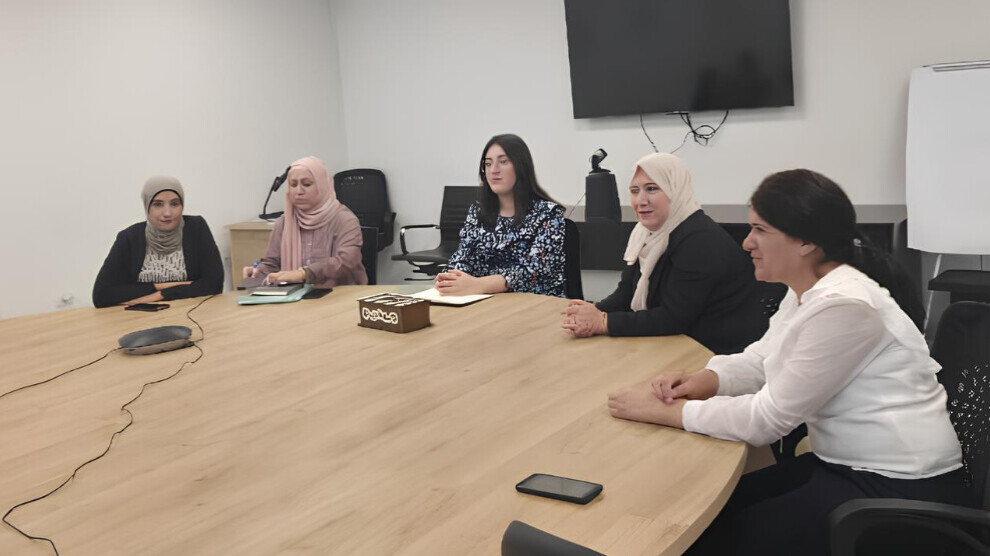
News Center— The "Women's Body" in the Autonomous Administration has announced its official integration into the Syrian Commission for Family and Population Affairs, under the Government of Syria, in a step that completes the agreement concluded between the Syrian Government and the Syrian Democratic Forces (QSD ), thereby opening new horizons for participation in institutional and rights-based work, while striving to preserve women's achievements.
The process of integrating the Autonomous Administration's institutions into the structures of the interim Syrian government has entered a new phase in the Jazira Canton. The Ministry of Social Affairs and Labor announced, on Wednesday, July 15 of the current month, the completion of the merger of the Women's Body in the Jazira Canton pursuant to this measure.
This step comes within the framework of implementing the provisions of the agreement concluded on January 29, which stipulates the gradual integration of the military, security, and service institutions affiliated with the Autonomous Administration into Syrian institutions.
Details of the Integration Process
Since its establishment in 2014, the Women's Bodies have operated as part of the Autonomous Administration's structure. Regarding this trajectory, Ruhayat Khalil, Head of the Women's Body in the Jazira Canton, explained that the Body's accession was not part of the initial integration plan, while indicating that the insistence on the continued operation of the Body resulted in reaching a consensual formula.
She explained that "after communicating with the relevant authorities, we found that the Commission for Family and Population Affairs was the most appropriate framework for integrating our Body. Accordingly, we held a series of meetings to reconcile the internal regulations of both parties, and consensus was reached on the integration process after submitting lists of members, numbering 390 members."
Subsequent Steps and Task Distribution
Concerning the next phases of the integration process, she indicated that the subsequent step will consist of "forming a joint committee from both parties to screen the members and distribute them according to their qualifications and experiences within the structure of the new commission." She affirmed that, in order to preserve achieved gains, the structure would undergo some changes to align with the working system of the "Commission for Family and Population Affairs," while maintaining the continuity of all currently operating centers, such as nurseries, women's protection centers, and the psychological counseling center.
She emphasized that work would be shared between both parties to address women's and family issues, and members would be redistributed based on this new institutional collaboration.
Challenges of Integration and the Women's Body's Vision for the Future of Rights Advocacy
In the context of her commentary on this transitional phase, Ruhayat Khalil affirmed that the Women's Body has undergone a long struggle that deserves to be crowned through its formal crystallization within government institutions, stressing that preserving the achievements of the women's revolution requires continued struggle, especially given the sensitivity of the current phase.
She pointed to a divergence in organizational visions between the Autonomous Administration's experience and the structure of the interim Syrian government, illustrating this with the system of co-presidency, which is considered one of the successful experiments that the government has not yet adopted, as it relies on the "president and deputy" system. In this regard, she emphasized the necessity of adhering to change and striving to revive these administrative models: "Our insistence on change must remain present in order to revive our own systems."
She also addressed the file of the women's quota, affirming that their experience in the Autonomous Administration was equitable and actually implemented, not merely legal texts, explaining that transferring this experience to government institutions faces challenges related to differing participation rates and legal formulations. "Transferring our experience requires a comprehensive struggle that is not limited to the Women's Body alone, but extends to include working to amend legal frameworks to ensure the effective participation of women in all state institutions."
Evaluation of the Consensus Path and Future Prospects
Regarding her evaluation of the meetings that brought both parties together, Ruhayat Khalil described the atmosphere as "positive," noting that the governmental side praised many of the experiences presented by the "Women's Body," expressing their desire to generalize some of the Women's Body's experiences in other Syrian cities, considering that integrating the expertise of their Body represents a qualitative step to enhance the performance of the "Syrian Commission for Family and Population Affairs," whose previous activity they described as limited.
Concerning the timeframe for implementation, she acknowledged that these transformations might require time due to their association with amendments and legal texts, adding, however, that "the smooth progress of the integration process removes many obstacles. We may face some delay in executive procedures but it is a natural delay that does not carry negative dimensions."
Ruhayat Khalil, Head of the Women's Body in the Jazira Canton, concluded her remarks by invoking the struggle-oriented dimension of the file, affirming that what has been achieved is the fruit of the sacrifices and long struggles of the "comrades on the path" who gave their lives in pursuit of women's rights, emphasizing that this phase represents a culmination of those sacrifices, pledging to continue the struggle at a higher pace to achieve the ultimate goal of "building a free society, the essence of which begins with the liberation and empowerment of women."